
“我只想待在你身边,因为我喜欢你。”
“Jag kommer inte att försvinna, jag gillar ju dig.”
“I won’t go anywhere else, because I like you.”
⸺《简单西蒙》/ I rymden finns inga känslor (Simple Simon)
出发去瑞典念书前和家人说瑞典在世界地图上的样子就像一只绷直的芭蕾舞者的脚,而自己在瑞典的目的地又恰好位于脚后跟的位置,令人想起古希腊神话中“阿喀琉斯之踵”的典故。在抵达乌普萨拉之前,本自信坚决崇尚理智的自己在情感上就如有在冥河之水中浸泡过的不死之身的阿克琉斯,坚不可摧,也最终在遇到喜欢的人之后像被射中脚后跟一般,金刚之身却溃不成军,钢筋铁骨竟一触即溃。
Before leaving for Sweden to study my master’s degree, I once told my family that Sweden’s shape on the world map resembles the extended foot of a ballet dancer, and that my destination in Sweden happened to lie right at the heel. The image inevitably evokes the Greek myth of the “Achilles’ heel.” Before arriving in Uppsala, I—confident, resolute, and devoted to logic and reason—felt emotionally invulnerable, like Achilles after being dipped in the waters of the River Styx, seemingly indestructible. Yet after meeting someone I fell for, feels like I was struck precisely at that heel: a body thought to be invincible collapsed in an instant, and what seemed like iron and steel gave way at the lightest touch.
几乎认识我的所有人都知道本人最喜欢的瑞典语电影是《简单西蒙》,在十四岁时比尔·斯卡斯加德成为自己最喜欢的电影演员后几乎每年都要把这部电影翻出来看上几遍,对剧情台词烂熟于心,在还未系统性地学习瑞典语前提里面任何一句台词我都能立马接上下一句。其中片尾比尔·斯卡斯加德出演的角色对着镜头露出的笑容一直让我铭记至今,算起来到今年已经是把他作为自己最喜欢的演员的第十四个年头了。与擅长拍摄史诗题材宏大叙事的南欧人不同,觉得北欧人拍出来的电影风格是摩登简单剧情却是温馨动人的,随便选一部都可以当作现代生活指南来看的,例如简约利落的穿搭,古怪有趣的配饰,下午茶吃何种茶点,周末逛公园时选什么休闲娱乐的活动,家居装修怎样设计搭配,甚至最流行养什么宠物,都可以从色调明艳,配乐轻快的北欧电影中获得灵感。剧情中展现出来的北欧人最擅长的冷幽默,对身心障碍者的包容关怀,以及对亲密关系相处模式的探讨思考都是值得作为现代人的我们学习甚至模仿的。
Almost everyone who knows me is aware that my favorite Swedish-language film is I rymden finns inga känslor (Simple Simon). Since Bill Skarsgård became my favorite actor at the age of fourteen, I have revisited this film several times almost every year, to the point where I know the plot and dialogue by heart. Even before I began studying Swedish in any systematic way, I could effortlessly continue to recite any lines from the film with the one that followed. The smile Bill Skarsgård’s character gives directly to the camera at the end of the film has engraved in my brain ever since. By this year, it has been fourteen years since I first chose him to be my favorite actor.
Unlike Southern Europeans, who excel at epic themes and grand narratives, I find that films made by Nordic directors tend to be modern and understated in style, yet warm and deeply caring in substance. Almost any of them can be viewed as a guide to contemporary living: from clean, minimalist fashion and quirky, interesting personal accessories, to what pastries to enjoy during fika, what leisure activities to choose when strolling in the park on weekends, how to design and coordinate home interiors, and even which pets are considered currently trendy to be kept. Inspiration for all of this can be drawn from Nordic films with their bright color palettes and light, lively soundtracks. The distinctly Nordic deadpan humor, the empathy and inclusiveness toward people with physical and mental disabilities, and the thoughtful exploration of intimacy and relationships portrayed in these stories are all qualities worth learning from—and even emulating—as modern individuals.
就和本人最喜欢的法语电影《天使爱美丽》一样,个人觉得《简单西蒙》虽然没有宏大的历史背景和叙事,但两部电影对电影里角色的介绍方式都是类似的,由他们的喜恶,平日里个人的小兴趣入手,而不是将他们片面地脸谱化,这种蒙太奇的介绍方式将两部电影里的各个人物塑造得鲜活有趣细节丰富,而剧情本身就像Videoclub的那首VHS里面的那句歌词一样,两部电影也都是有关“Jolie fille au garçon bizarre”的普通人的爱情故事。
Much like my personal favorite French film, Le Fabuleux Destin d'Amélie Poulain, I feel that Simple Simon (I rymden finns inga känslor) takes a similar approach to introducing its characters, despite the absence of epic themes and grand narratives. Both films introduce their characters through their likes and dislikes, their everyday routines, and the little things they take pleasure in, along with their pet peeves, rather than reducing them to one-dimensional caricatures. This montage-like approach brings each character to life, making them feel vivid, endearing, and richly detailed. And at both’s films’ plot’s core, it is much like the lyric from Videoclub’s song “VHS” —“Jolie fille au garçon bizarre” — both films tell ordinary love stories about a common yet ordinary couple.
Amélie’s Parents: https://youtu.be/FJpVmGiAA_c?si=NDYj_r-_xaSXhc7g
Amélie’s little quirk: https://youtu.be/_XI0wPGbf7Q?si=VBArMjrLw497Pe5y
Simon’s likes and dislikes (0:40): https://youtu.be/i-7DcNrgF0I?si=GEYBLbum1F1ywrnG
“Jolie fille au garçon bizarre”: https://youtu.be/WOWInMGctTg?si=7_bcZ4tjt5LKZbvk
虽说自己自愿甚至顽固性地单身了多年,但坦诚来说对于爱情自己完全没有设想也不现实。在27岁遇到喜欢的男生之前别人问我的理想型是哪类男生,自己每次也是总开玩笑回答说是蜂蜜味Jack Daniel’s,甚至和家人朋友逛酒类商店的时候看到都还要尖叫:“看!是我的理想型诶!”而每次对方听到答案觉得好笑或者诧异追问下去时我也会列出三个理由:“1蜜糖般的肌肤,2总让我觉得开心,3性格沉稳安静”。有时对方听了也会觉得合理表示赞同。而在上海是买来解愁的Jack Daniel’s当时喝得醉眼迷离看瓶身信息还都是比利时进口的,每周五回到当时租住的公寓开始准备进入周末状态时,总会在进门时喊一句“亲爱的我回来了”,再拿起放在架子上的700毫升装Jack Daniel’s 亲一口,然后倒满宜家买的六个小烈酒杯一口气喝完。而受《绯闻女孩 》的影响,迷恋过里面Damien Dalgaard这个角色一阵子,所以在那之后在自己总觉得深色头发会讲法语的瘦高比利时男生都长了一张胜似初恋的脸。
注:《绯闻女孩 》中的Damien Dalgaard一角是比利时大使的儿子,因此他与比利时的关系主要来自他的外交家庭背景。他在富裕、优越的欧洲上流社会环境中长大,Serena 以前甚至开玩笑说他可能会成为比利时王子。不过,剧中并没有确认他实际上是比利时王室成员。
Although I had chosen to remain single for years, quite deliberately and even stubbornly so, but if I’m asked to be honest, it would be unrealistic to say that I had never entertained the idea of falling in love. Before I met a guy I genuinely liked at the age of twenty-seven, whenever people asked me what my ideal type of man was, I would jokingly answer, “Honey-flavoured Jack Daniel’s.” Whenever I spotted a bottle while shopping alcohol with family or friends, I would even squeal, “Look! Man of my dream!”
Whenever the other person found my answer amusing or baffling and asked me to elaborate or explain, I would give them three reasons: “First of all, honey-glazed skin. Secondly, he has never failed to make me smile. Last but not least, Don’t really talk much.” Sometimes, after hearing my explanation, people would actually concede that my reasoning made a surprising amount of sense.
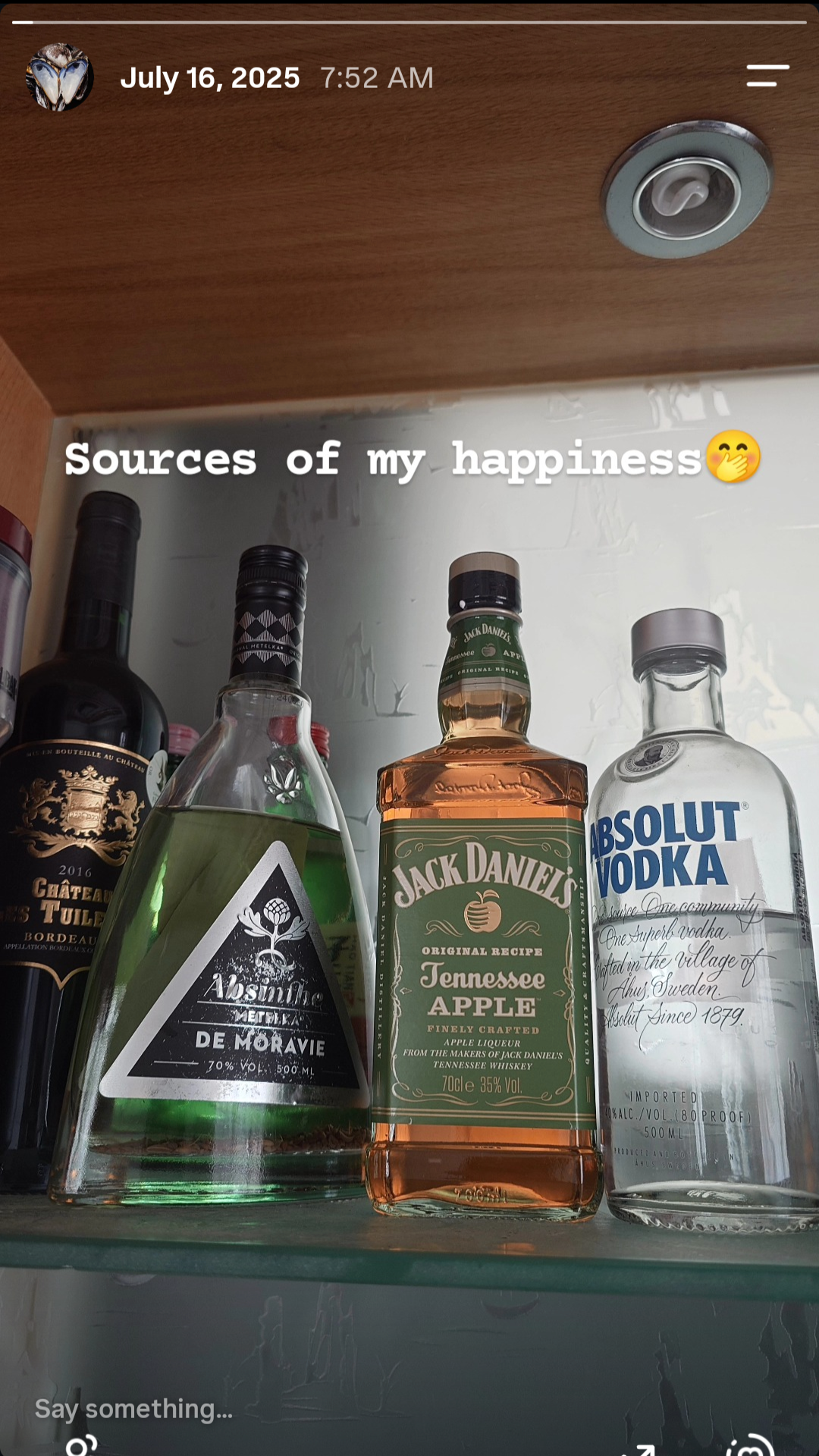
我在上海工作期间购入的部分酒。/Part of my alcohol collection while I was working in Shanghai.
Back to the days when I was working in Shanghai, Jack Daniel’s was something I bought to drown my sorrows. In those days, I would drink until my eyes grew hazy, yet somehow still manage to read the label, which told me the bottle was imported from Belgium. Every Friday, when I returned to the apartment I was renting and began settling into the weekends, I would call out “Honey, I’m home!” the second I walked through the door. Then I would pick up the 700 ml bottle of Jack Daniel’s sitting on the shelf, give it a kiss, fill all six of the small shot glasses I had bought from IKEA, and pour the liquor in them one after another.

如今我唯一会碰的 shots。/ The only shots I would be doing nowadays.
Influenced by Gossip Girl, I also went through a phase of being rather infatuated with Damien Dalgaard. Ever since then, I have found that, in my eyes, every tall, slender Belgian boy with dark brown hair who speaks French fluently seems to have the face of a girl’s first love.
Note: Damien Dalgaard from Gossip Girl is the son of the Belgian ambassador, which connects him to Belgium through his family’s diplomatic background. He grew up wealthy and privileged in European high society, and Serena once jokingly thought he might become a Belgian prince. However, he is not actually confirmed to be a Belgian royal.
“Or, we could skip the party.” Awwww the sweet bad boy(>᎑<๑)/♡: https://youtu.be/wLaADkz8i-o?si=W6UQoUJyBevE2Jo0
到了瑞典念书后在乌普萨拉和同学朋友打交道或者是在欧洲的其他城市出行观光时也在想,或许当初直接选择来欧洲念书境遇会完全不一样,或许与喜欢的人相遇的时候两个人都是二十岁刚出头的年纪,都对世界充满了好奇又天真的幻想,挤在欧洲中大型城市近市中心没有空调也没有电梯的公寓里,或许是斯京,或许是柏林,或许是巴黎,也或许是布鲁塞尔,或许选在乌普萨拉更贴近现实。他是戴一副黑框圆眼镜的欧洲当地男生,因为一口流利没有什么口音的英语时常被认成美国人,但讲话语速快的时候又会露出明显的欧洲腔。我是留一头毛毛躁躁的自然卷长发东亚女生,却因为穿着打扮不爱社交经常被认成是日本人。或许我同他是在某一节共同的选修课上认识,或许是在实验室做不同的项目因为要用同一台设备或者仪器搭上了话,或许是开学时凑巧被学校分到了同一栋学生公寓,也或许是在共同参加的学生俱乐部举办的活动上和对方互相看对上了眼,或许是某日课后在图书馆或咖啡馆我戴着索尼的隔音耳机写作业时,他一脸紧张羞涩地问我是不是在读放在手边的书,因为那是他最喜欢的作家的作品,很少见有人读。我也因为他秀气的长相,温暖的气质,主动向我搭话的举动对他一见钟情。认识后从未交过女友的他还告诉我说当时看我手上装饰性的戒指还在一直祈祷我千万别是交往了男友或者已经结了婚,我听了只是觉得好笑,还调侃他平时不修边幅的穿衣风格配不上他漂亮的脸蛋。认识后几个月的圣诞节假期我因为忘了提前预定而机票溢价所以不能回家而感到懊恼向他随口抱怨,他听了只是问我如果假期回家的话是不是要好几周都不能同我见面,顺水推舟地提议问我要不要和他回他家位于离市中心不远的宽敞的公寓庆祝一起圣诞节。当他结结巴巴地将我作为“普通同学/朋友”介绍给他的家人时大家的脸上似乎都带着意味深长的笑容。吃完圣诞晚餐他的家人坐在客厅的沙发和餐厅里谈天看电视里的圣诞主题节目,我和他蹲坐在客厅角落的圣诞树前拿了一瓶红酒东拉西扯地聊天,并喝到微醺两个人的脸颊都变得有些红红的,我盯着他的眼睛里反射出的圣诞树上挂着的彩灯,觉得就像在看夜空里的一闪一闪的星星,借着酒劲情不自禁地主动吻了他。结果一抬眼就看到他坐在不远处的叔叔冲我们眨眼,并举起手里的酒瓶子作敬酒状:“普通同学/朋友哈?”之后他经常来我的学生公寓串门,一起看书或者做手工,有时我会开投影仪让他选他想看的电影,时常他会倚靠在我的沙发或者床上电影还没看到一半就睡着了,第二天早上我轻手轻脚地起床给他做简单却丰盛的早饭,吃完两个人再一起出门上课或者去工作。过生日的早上听到有人敲我的门,开门一看是他,手里捧着一束蓝绣球和一张卡片,打开一看上面写了生日祝福以及问我要不要当他的女友,我有点疑惑地抬头看他,他一脸不好意思地表示:“想正式一点嘛。”后来也因为喜欢对方也因为节省房租和日常开销认识两三年后搬到一起住,平日里白天各自去同一大学的不同专业上课,为各自的梦想目标努力,傍晚回家轮流做饭洗碗,在窗外华灯初上时窝在沙发里看无脑综艺偶尔互相看对方一眼再一起傻笑,睡前吐槽几句课上或者平时打零工时遇到的衰人烂事,他把一张我的宝丽来相片一直夹在他的手机壳里,每次看他拿出手机查看信息或者在餐厅超市准备扫码结账时,我总能瞥见我自己在他的手机壳后向外露出傻笑,让我莫名觉得安心。偶尔他的系里办活动允许他带同行者的时候他会邀我一同前去,并大方地介绍我给他的同学教授认识。平时在学校里约了下课后去吃饭逛超市或者吃饭前我在他的教室外等他,他看见我兴奋地跑过来并给我看他课上在做并拿了高分的工程项目。周末得闲的时候我们手挽着手去逛城市里对学生免费开放的博物馆美术展,某次看展时两个人恶作剧的情绪上来了,一合计在博物馆里模仿电影里的情节手拉手嬉笑着一起跑过展馆内长长空旷的走道,被保安当场揪住撵出馆外同时还训话说,你们以为你们很特别很有创意是在这第一个模仿《法外之徒》和《戏梦巴黎》的小年轻吗?
After moving to Sweden for my studies, I often found myself wondering, whether while spending time with classmates and friends in Uppsala or travelling around other European cities, things might have turned out entirely differently if I had chosen to study in Europe from the very beginning.
Perhaps, when I met the boy I would fall for, we would both have been in our early twenties, full of curiosity towards the world and all the naïve yet hopeful personal perspective that come with it. Perhaps we would have been sharing a tiny apartment near the city centre of a mid-sized or crowded European city, one without air conditioning or an elevator. Maybe it’s Stockholm, maybe it’s Berlin, maybe it’s Paris, or perhaps it’s Brussels. Uppsala would have been the more realistic choice, though.
He would be a local European guy wearing round, black-rimmed glasses. His English would be so fluent and accent-free that people would often mistake him for an American, until he started speaking a little too quickly and his distinctly European accent slipped through and gave his identity away. I would be an East Asian girl with unruly, naturally curly hair, whose reserved nature and understated personal style of dressing often led people to assume I was Japanese.
Perhaps we would have met in an elective course we happened to take together as students from different programmes. Perhaps we would have struck up a conversation in a lab while working on different projects, simply because we needed to use the same piece of equipment or device. Perhaps we would have been assigned rooms in the same student apartment by chance at the beginning of the semester. Or perhaps we would have caught each other's eye at an event organised by a student club we both belonged to.
Or maybe, one ordinary afternoon after class, I would have been sitting in the library or a café, wearing my Sony WH-1000XM5 noise-cancelling headphones and working on an assignment, when he approached me with an unmistakably nervous, shy expression. He would have asked whether I was reading the book that set beside me, because it was written by his favourite author and he rarely came across anyone else reading their work. I, in turn, would have fallen for him at first sight: his delicate features, his warm presence, and the fact that he had worked up the courage to approach me and initiate a coversation.
A few exchange of words later, I would learn that he had never had a girlfriend before. He might even confess that when he first noticed the decorative ring on my finger to fit my personal style, which he had spent the entire time silently praying that it did not mean I already had a boyfriend or was married or engaged. I would find this hilarious, teasing him that his rather careless sense of dressing style did absolutely no justice to his pretty face.
A few months into knowing each other, Christmas break would arrive. I would be frustrated because I had forgotten to book my flight home in advance, and ticket prices had skyrocketed beyond what I could afford. I would complain about it to him almost absent-mindedly, expecting nothing more than a sympathetic response. Instead, he would ask whether going home meant we would have to go several weeks without seeing each other. Then, as though simply following the conversation to its natural conclusion, he would suggest that I spend Christmas with him at his family's spacious apartment not far from the city centre.
When he introduced me to his family, stumbling over his words as he described me as “ just an ordinary classmate” or “just a friend”, everyone seemed to be wearing the same knowing smirk.
After Christmas dinner, his family would settle into the living room and dining area, chatting among themselves and watching festive programmes on television. Meanwhile, he and I would sit on the floor in the corner of the living room, in front of the Christmas tree, with a bottle of red wine between us. We would talk about everything and nothing until we were both a little tipsy, and our cheeks turning pink.
I would look into his eyes and see the colourful Christmas lights reflected in them, twinkling like stars in the nightly sky. Perhaps it would be because of the effect of the wine, perhaps because of the warmth I felt from that evening, or perhaps I simply cannot to convince myself to resist him any longer, I lean forward and kiss him.
Then, looking up, I would catch his uncle sitting a little way away, grinning at us and raising his wine glass toast in our direction with a mocking gesture, wink with his left eye and said:
“Just ordinary classmates and friends, huh?”
After that, he would start dropping by my student apartment regularly. We would read together or work on little craft projects. Sometimes I would switch on the projector and let him choose whatever film he wanted to watch. More often than not, he would end up leaning against my sofa or curling up on my bed, falling asleep before the film had even reached its halfway point.
The following morning, I would get up quietly so as not to wake him and prepare a simple but hearty breakfast. After eating, we would head out together, off to our respective classes or work.
On the morning of my birthday, I would hear someone knocking at my door. When I opened it, there he would be, holding a bouquet of blue hydrangeas and a little card. Inside, I would find a birthday wish, followed by a question asking whether I would like to be his girlfriend.
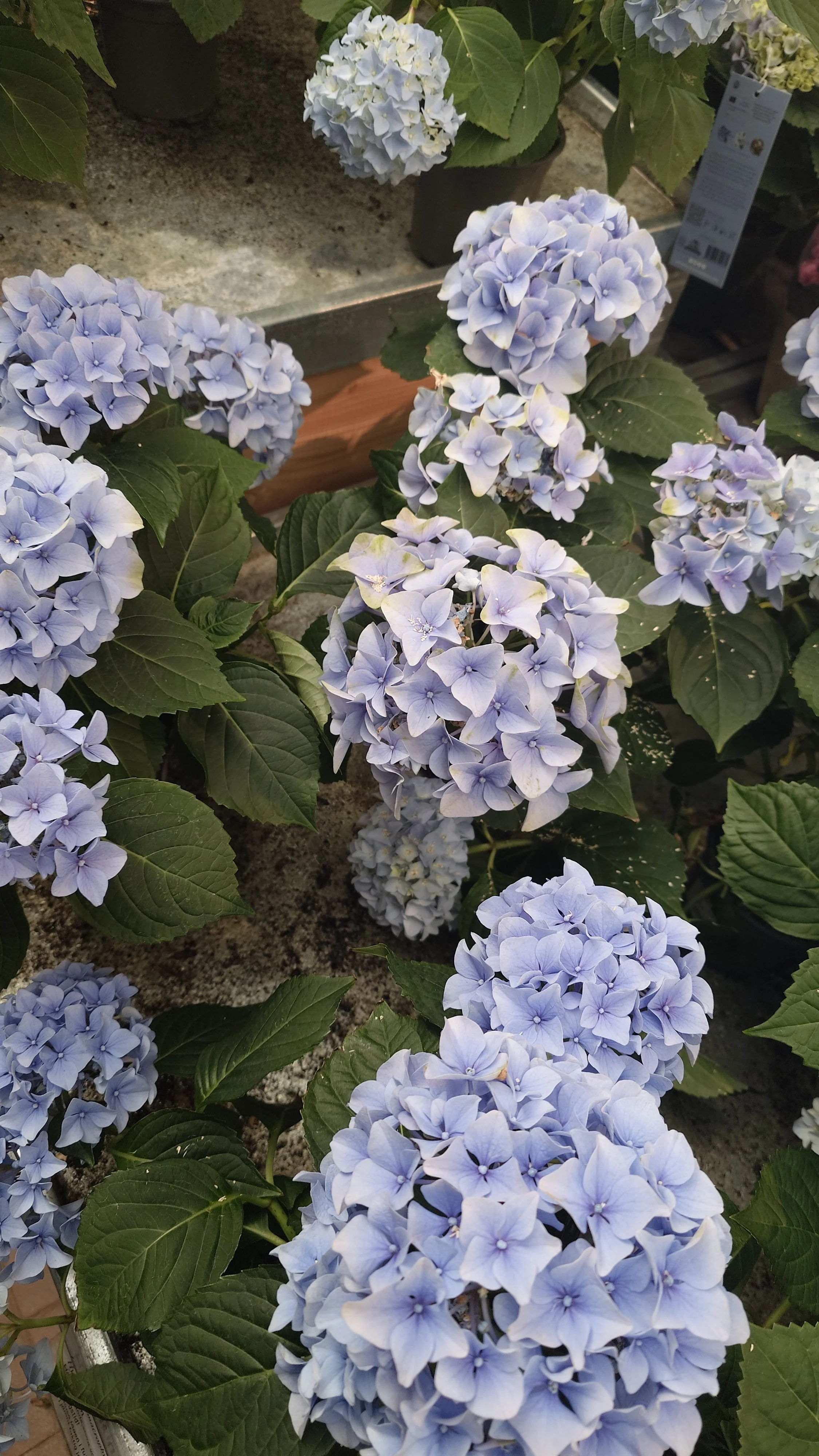
I would look up at him, a little puzzled. He would look embarrassed, perhaps rubbing the back of his neck, and explain:
“I just wanted to make it official, you know?”
A couple of years later, after having known each other for two or three years, we would move in together, partly because we loved each other and partly because sharing rent and everyday expenses made practical sense.
On weekdays, we would head off in the mornings to attend classes in our respective departments at the same university, each working towards our own ambitions and dreams. In the evenings, we would take turns cooking and washing the dishes. Once the city lights began to glow outside the windows, we would curl up together on the sofa, watching mindless reality TV shows, occasionally glancing at each other and dissolving into stupid laughters for no particular reason.
Before going to bed, we would trade complaints about the irritating people and ridiculous situations we had encountered in class or at our part-time jobs that day.
He would keep a Polaroid of me tucked behind his phone case. Every time I caught sight of him pulling out his phone to check a message or scanning a QR code to pay at a restaurant or supermarket, I would see my own goofy, smiling face peeking out from behind the case. For reasons I could never quite explain, that tiny detail would always make me feel inexplicably safe, especially when he’s around.
Sometimes, when his programme organised events and allowed students to bring a guest, he would invite me to come along, introducing me openly and proudly to his classmates and professors.
On ordinary days, we might arrange to grab dinner or go grocery shopping after class. Sometimes I would wait outside his classroom for him till his class ends. The moment he spotted me outside his classroom, he would hurry over with unmistakable excitement, eager to show me the engineering or science project he had been working on in class and the high grade his professor had awarded him for it.
On weekends when we had some free time, we would walk hand in hand through the city's museums and art exhibitions that offered free admission to students.
Once, while visiting an exhibition, we would both suddenly succumb to a mischievous impulse. After exchanging a look, we would decide, without much discussion, to recreate a scene from a film. Hand in hand, laughing like two idiots, sprint down a long, empty corridor inside the museum.
Only to be expected, a security guard would catch us almost shortly after that and march us out of the building, delivering a stern lecture as we went outside.
“Do you two really think you're that special or original? So you think you're the first young idiots to come in here and trying to recreate those stupid scenes from Bande à Part and The Dreamers?”
Hehe:D :https://youtu.be/P4MV1NLejQ0?si=aZCj_gfa1csV5b_S
And we would probably still be laughing with each other by the time we reached the pavement outside.
平时会一起去对学生有折扣的餐厅吃饭,过简单却平静温馨的日子,我不是谁家的大小姐,他也不是谁家的小少爷,偶尔出门和对方约会会在游客扎堆的米其林餐厅前驻足一起看门口被玻璃框住的信息栏里的当季新品菜单,对着食材清单里陌生的词汇研究一阵子,再扳着手指和对方说主题套餐的价格是我一周零工的薪水诶,然后再一起去超市买打折的简单食材回家做晚饭,很擅长做饭的他总是在了解食材配料后能做出和餐厅或者网路上的菜谱图片不多的菜式。
We would often eat together at restaurants that offered student discounts, living a simple, peaceful, yet homely life. Neither of us came from a wealthy family, and neither of us was anyone’s little spoiled brat, beloved little princess or prince.
Occasionally, when we went out on dates, we would find ourselves stopping in front of a Michelin-starred restaurant crowded with tourists, peering at the seasonal menu displayed behind glass case by the entrance. We would spend a while trying to decipher unfamiliar ingredients’ name on the list, then I would calculate in my head and turn to him, exclaiming, “Wait, the set of tasting menu costs as much as I make in an entire week of part-time job!”
And then we would head to the supermarket together, pick up some simple ingredients on sale, and go home to make dinner instead.
He was an excellent culinary hobbyist. Once he had familiarized himself with the ingredients and seasonings, he could somehow recreate dishes that looked remarkably close to the ones in restaurant menus or recipe photos online, even without following a recipe to the letter.
也不会完全没有争吵,起因可能是因为他在我上了一天课打了一天的零工后回家看到客厅乱糟糟的,脏碗碟满满当当地堆在厨房水池里,而他坐在电脑前和他的朋友连麦打了一下午的网游,可能因为我和系里的男同学在他眼里走得有些近而吃飞醋指责我,可能因为他在我生日当天工作忙而忘了给我买花庆祝,可能因为他因为工作压力大而偷偷抽烟被讨厌烟味并担心他健康的我闻到了,可能是因为被他发现我因为学业生活压力又开始偷偷酗酒,也可能因为被我发现他开始和一些不三不四的朋友频繁来往。因为清楚自己的牙尖嘴利,不想对他恶语相向,总是会在冲突爆发之前匆匆出门,并赌气一般把门摔得震天响,一路小跑来到城市的河边蹲坐着,看着水流的方向开始想千里之外的父母亲人,觉得委屈并开始流泪。片刻之后听到身后悉悉索索的声音,转头一看是他拎着我的夹克衫站在河边的草丛里,我赌气地转过头装作没看见他,他走近后把外套披在衣着单薄的我身上,不说话也只是静静地蹲坐在我身边,把脸转向我,隔着镜片瞪大眼睛用故作无辜的语气问我:“还生我气啊?”此时我气消了一半但又觉得无语就把脸别过去,他叹了一口气说:“我把碗都洗好摞整齐咯”。过了一会儿他从口袋里掏出香烟盒,冲河里扔出一条抛物线,在我讶异地看向他的时候他语气讪讪地说:“诶呀以后不再抽了嘛。”我只是觉得又好气又好笑,站起来冲他发狠说了一句:“明天一早就把你举报到城市管理局去。”并往家的方向走去,他紧跟在后面也不说话。
Of course, it wouldn't be a relationship entirely free of arguments and conflicts.
Maybe it could be because I came home after a full day of classes and a shift at my part-time job, only to find the living room in complete disarray and the kitchen sink overflowing with dirty dishes, while he had spent the entire afternoon at his computer, gaming online with his friends connected with voice chat.
Maybe it could be he might get jealous because he thought I was getting a little too close to the guys from my program at university, and end up accusing me of something I hadn't never done.
Maybe it could be he might be so caught up with work on my birthday that he completely forgot to buy me my favorite blue hydrangeas.
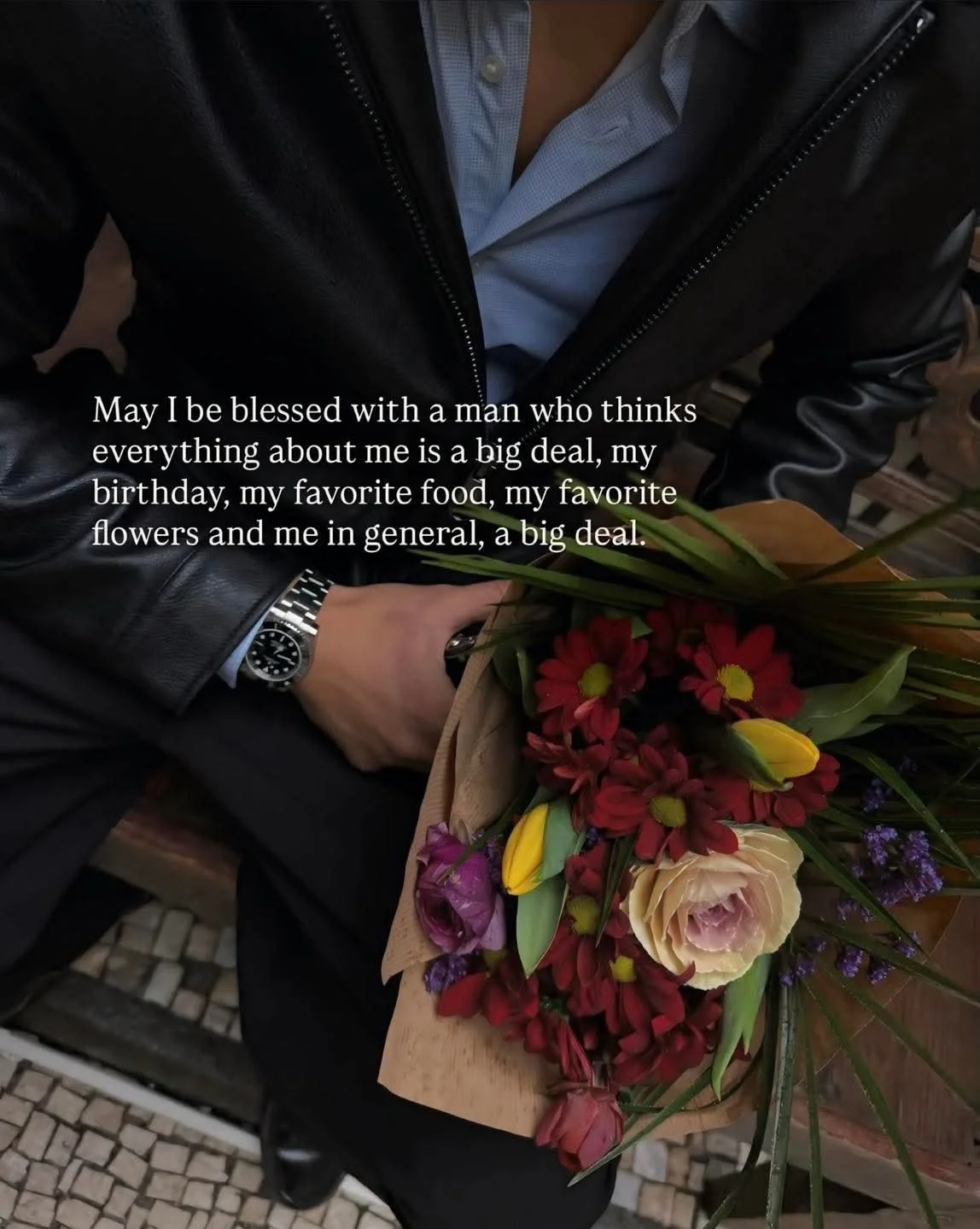
最起码的事。/ Bare minimum.
Maybe it could be I might catch him secretly smoking because he was overwhelmed by work or school; despite knowing how much I hated the smell of cigarettes and how worried I was about his health.
Or perhaps it could be he might discover that, under the pressure of academic life and everything else I was trying to keep together, I had quietly slipped back into drinking far too much on my own.
Maybe it could be I might discover that he had started spending far too much time with a crowd of friends with questionable characters.
Knowing full well how sharp my words could be when I was angry, I would never want to say something cruel or vicious to him in the heat of the moment. So, before an argument could properly erupt, I would hurry out of the apartment, slamming the door so hard it seemed to shake the entire building, almost as if I were doing it out of spite.
Then I would scurry all the way to the river, crouching down on the riverbank and watching the water flow by, my thoughts drifting towards my parents and the rest of my family thousands of miles away. The longer I sat there, the more wronged and miserable I would feel, until the tears finally began to fall.
After a little while, I would hear rustling behind me. Turning around, I would find him standing among the grass by the river, holding my jacket.
I would turn away again in a huff, pretending not to have seen him.
He would walk over and drape the jacket around my shoulders, since I had come out wearing so little. Then he would crouch down beside me without saying a word, turning his face towards mine. Through his glasses, he would widen his eyes and put on an exaggeratedly innocent expression before asking, in a deliberately sheepish voice,
“Still mad at me?”
By then, half of my anger would already have melted away, although I would still find the whole thing so ridiculous that I couldn't bear to look at him. I would turn my face away again.
He would let out a sigh.
“I washed all the dishes and stacked them in the cupboard, you know.”
After a little while, he would fish a packet of cigarettes out of his pocket and send it sailing into the river in a neat little arc. When I turned to stare at him in astonishment, he would look rather abashed and mumbled,
“Oh, come on. I won't smoke anymore, okay?”
I would find myself caught between wanting to strangle him and wanting to laugh.
Finally, I would get to my feet, glare at him, and threaten in my most menacing voice,
“I'm reporting you to the municipal authorities for littering first thing tomorrow morning.”
Then I would march back towards home, with him trailing closely behind me in silence.
或许也会在毕业各自工作三到五年之后结婚,岁月磨平了我们作为年轻人张扬锋利的棱角,但初次见面时的互相心动和喜欢却一直没被两人忘掉,会去海岛度蜜月,平时过简单温馨的白领工薪族的生活,每年休假时去东亚南亚抑或是南欧南美旅行。
Perhaps we would get married after working for three to five years following graduation, by which time the passing years would have softened the sharp edges and youthful restlessness we once carried. Yet neither of us would ever forget the spark of attraction and the feelings we had for each other when we first met.
We would spend our honeymoon on a tropical island, then settle into a simple, warm, and wholesome life as ordinary white-collar professionals, earning our salaries and building a home together. Every year, during our holidays, we would travel somewhere new, whether in East or South Asia, Southern Europe, or South America.
但设想终归是设想罢了,也因为个人境遇以及一些外界因素,在来瑞典念书前一直保持单身,从未遇到过合适的人,自己也是货真价实的有钱人家大小姐,绝对不会屈尊去找什么穷小子抑或是二手货来委屈感情经历非常简单且干净的自己。不过上面这些也是在瑞典生活之前以及期间所产生的设想。在上海工作期间,自己也是一直想专心工作,准备打算在到了30岁积累了一些工作经验以及行业人脉之后再出发去美国念一个工程管理的硕士学位,到时候在学校或者工作环境里认识的男生也会更加成熟理智,两年的时间也够自己谈恋爱或者发展一段有意义的长期关系,但无奈在国内一直被介绍各种无关紧要并不被自己看入眼的男的,被逼无奈直接快进甚至改动了自己的计划,直接来自己向往已久的瑞典念书了,不过就此在学校的男生也确实质量素质一位比一位高就是了。其实自己想要的从始至终无非就是在定居的城市偶尔加班回到两人合住的公寓时站在楼下就能看到他早早回家开的暖光灯,回家后他告诉我我给他做的午饭便当饭菜式很好吃,能不能之后经常做,我笑着回应说好,工作的疲惫也因他的正面回应也一扫而光,说周末再一起去两个人都喜欢的那家餐厅吃饭好不好罢了。
But envisions are, after all, just envisions.
Partly because of my own circumstances and partly because of factors beyond my control, I remained single throughout the years before moving to Sweden for my studies, never having met anyone I considered suitable. I was, after all, a genuine heiress, a “beloved little princess” from a wealthy family, and I certainly wasn't going to lower my standards by settling for some penniless boy or someone else's romantic leftovers, compromising my own feelings or staining remarkably simple, unblemished history of my romantic life.
Of course, all of the scenarios I described above were just envisions I had entertained before moving to Sweden and while living here.
While working in Shanghai, I had always intended to concentrate on my career first. My original plan was to accumulate several years of professional experience and build a network of industry contacts before turning thirty, then head to the United States to pursue a master’s degree in Business Administration. By that point, I imagined, the men I met at university or in a professional environment would be more mature and level-headed. Two years would also be enough time for me to date someone or develop a meaningful, serious, long-term relationship.
Unfortunately, back home, I kept being introduced to one entirely irrelevant man after another, none of whom I found remotely appealing. With the pressure of these introductions becoming increasingly tiresome, I eventually decided to fast-forward my plans, revising them almost entirely and moving ahead to Sweden, a country I had long dreamed of studying and living in.
As it turned out, the men I encountered at university in Sweden really did seem to get better and better in terms of both character and overall quality. So there was that, at least.
But really, what I had wanted all along was something much simpler yet sweet.
I wanted to live in a city I could call home, where, on the occasional evening when work ran late, I could return to the apartment we shared and see the warm glow of the lights he had switched on hours earlier, even before reaching the entrance. I wanted to hear him telling me that the lunch I had packed earlier for him that day was delicious and ask whether I could make it for him more often. I would smile and say yes, and somehow, all the exhaustion of the working day would disappear from the sound of his appreciation.
Then I would ask, “How about we go to that restaurant we both love this weekend?”
Everyday would be unrealistic, probably once or twice per week, I mean bento boxes: https://youtu.be/TWd_wIQGxIk?si=nqkFiNJ4efz2oNog
下定决心决定来瑞典念书也踌躇了很久,因为工作给自己带来的精神负担和压力,一度不想再和任何人——甚至包括家人在内——打交道,只想找一个人烟稀少的陌生环境做自己感兴趣的事情避世一阵子。回顾自己在上海工作的三年,我有时会不由自主地想起拉斯·冯·提尔执导的电影《狗镇》(Dogville),尤其是妮可·基德曼饰演的格蕾丝所遭受的苦难。真正触动我的,并不仅仅是她所经历的残酷对待,而是人们如何逐渐将她的脆弱视为可以加以利用的机会。最初建立在条件之上的接纳,慢慢演变成一套不断升级的索取、对个人边界的侵犯,以及愈发肆无忌惮的权力滥用。最令人不寒而栗的,或许是人们竟然能够如此轻易地为自己的行为寻找借口,使每一次新的伤害都变得比上一次更容易被合理化。
Even after making the decision to move to Sweden for my studies, I spent a long time wavering before finally committing to it. The psychological toll and stress of my work had become so overwhelming that, for a while, I no longer wanted to interact with anyone at all, even included my own family. All I wanted was to retreat somewhere unfamiliar and sparsely populated, where I could spend some time pursuing the things I genuinely cared about and temporarily withdraw from the world.
Looking back on my three years of working in Shanghai, I sometimes found myself thinking of Lars von Trier’s Dogville, particularly the suffering endured by Grace, the character played by Nicole Kidman. What struck me was not simply the cruelty she experienced, but the way people gradually came to regard her vulnerability as an opportunity to exploit her. What began as conditional acceptance slowly turned into a system of escalating demands, violations of personal boundaries, and increasingly blatant abuses of power. Perhaps the most disturbing aspect was how readily people rationalised their own behaviour, allowing each successive act of cruelty to become easier to justify than the last.
“If there’s any town this world would be better without, this is it”: https://youtu.be/5c4jEEpUsYs?si=BinzP7rr5nHW_0h6
当然,我自己的经历与格蕾丝所遭遇的一切并不相同,我也不会声称两者在具体处境上可以直接相提并论。然而,这部电影让我找到了一种方式,去表达自己在上海工作的几年间逐渐认识到的一件事:偶尔一次的自私行为,与持续不断、蓄意伤害他人的行为之间,存在着本质上的区别。当一个人,甚至一个群体,在充分知晓自身行为会给他人造成何种后果的情况下,依然一次又一次地选择伤害对方,而且根本没有真正停止这种行为的打算时,再把宽恕说成一种理所当然的义务,就变得越来越难以令人信服。对于一个人的痛苦,如果始终被视为满足他人私利、便利或权力欲望所必须付出的代价,那么要求这个受伤的人宽恕施害者,本身就很难说是合理的。
My own experiences were, of course, different from Grace’s, and I would not claim that the circumstances were directly comparable. Yet the film gave me a way to articulate something I had come to understand through my years in Shanghai: there is a profound difference between an isolated act of selfishness and a sustained pattern of deliberate harm. When someone—or an entire group of people—repeatedly chooses to hurt another person, fully aware of the consequences and without any genuine intention of stopping, it becomes increasingly difficult to speak of forgiveness as though it were an obligation. Forgiveness cannot reasonably be demanded from someone whose suffering has been treated as an acceptable price for another person's convenience, gratification, or sense of power.
当时工作间隙一个人出行选择下榻的地方都是选择有机器人送餐的中高档酒店,尽量减少甚至避免与人打交道。因为自小出门自己念书,大学期间又住了几年的高档酒店式公寓,所以有时候下榻宾馆反而有一种回家了的亲切感,整个人的状态也变得非常轻松自如,平时周末因为赶加班也会选择住公司附近的酒店,当时还被造谣生疑说经常住酒店是不是因为私生活不检点,只是觉得又好气又好笑,毕竟无论是家人还是自己订酒店都会选择中高档的,尤其国内入住酒店时查个人证件都非常严格,还和公安联网,就算请当地认识的人去自己的房间作客也是要去前台凭个人证件登记注册的。在国内陪妹妹出行游玩时还因为没法证明亲姐妹关系让我一个电话打到母亲那里去和前台确认。
During breaks between work assignments, whenever I travelled alone, I would deliberately choose mid-range to upscale hotels that offered robot-delivered room service, doing whatever I could to minimize, or even completely eliminate, unnecessary interactions with other people.
Having lived away from home for my education since early adolescence and having spent several years of university living in upscale serviced apartments, I had grown accustomed to that kind of accommodation. Sometimes, staying in a hotel actually gave me a peculiar sense of coming home. I would feel more relaxed, more at ease, and entirely comfortable in my own space.
Even on weekends, when overtime work kept me busy, I would sometimes book a hotel near the office rather than commute back and forth.
At the time, this even became the subject of rumours and insinuations. People wondered whether my frequent hotel stays meant that my private life was somehow improper. I could only find the whole thing both infuriating and absurd.
After all, whether the accommodation was booked by my family or by me personally, we would generally choose mid-range to upscale hotels. More importantly, hotel check-in procedures in China were particularly strict about verifying guests’ identity documents, with registration systems connected to the public security authorities. Even if I invited someone I knew locally to visit me in my room, they would still have to present their own identification and register at the front desk.
On one occasion, when I was travelling around China with my younger sister, the hotel staff would not simply take our words for it that we were biological sisters. Since we could not immediately provide the required proof of our relationship, I ended up calling my mother so that she could confirm it directly with the front desk.
又因为自己非常喜欢狐狸,有那么几次都想回家从母亲的衣柜从她纯水貂皮大衣里顺其中一件走,准备去申请俄罗斯有养狐场的大学或者研究所工作生活了,自己之前也打算领养狐狸作为宠物过,不过在住别墅的养狐博主的介绍说,因为她自身本来就是养一些奇珍异宠的,但还是发帖劝大家不要养狐狸,因为狐狸和一些其他宠物不同,被家养化的时间不长,保留的野性也偏多,非常善妒,且领地意识和占有欲都极强,再加上有狐臭,有时有朋友客人来拜访她,车开到房子外的车道上就能闻见狐狸的味道,再加上自己搜查到的一些其他专业和民间资料,便也作罢。再加上一直对世界各国的饮食文化颇感兴趣,甚至在上海的时候周末还去了一位俄罗斯女士开的餐馆,就着切片列巴吃完一客罗宋汤后觉得自己可以适应当地饮食习惯。但这时候也和一位网路上认识在念俄语系的女生见面吃日料,听了我有去俄罗斯的想法后立马说:“不要去啦!那里经济水平不是很好的,像我这种会讲俄语的俄语系的学生去了也只能当老师,工资不过三千左右,那边没有能满足你生活方式的条件的!” 这时候还是听不进去意见,而当时自己的俄语词汇量也只有“хорошо”(好)和“нет”(不)(到了乌普萨拉后从俄罗斯裔的同学那里新学会一个“Спасибо”(Thank you)截止到目前为止个人总体词汇量为3个罢了)。因为毕竟自己也不是因为物质生活条件而想去的养狐场,就继续收集资料想哪天打包行李去俄罗斯摸狐狸,而且后来到乌普萨拉念书后和不同背景的国际学生交流后也发现,如果是去俄罗斯当工程师而不是中学教师的话,工资待遇也不算差。不过自己多年的留美背景,加上其他一些原因,例如美苏冷战后西方对俄罗斯这个国家整体持消极敌对态度,又因为当时自己在计划着去俄罗斯,结果闹出了不少误会。
And then out of my rather intense love of and interests in foxes. On several occasions, I seriously considered going home, sneaking into my mother's wardrobe, and making off with one of the mink coats she kept there, before applying for a job at a university or a research facility in Russia that had its own fox farm. I would move there, settle down, and spend my days surrounded by foxes.

觉得狐狸身上最可爱的部分就是从背影看过去的那两片耳朵。/ I think the cutest thing about foxes is their two little ears when you see them from behind.
At one point in college, I had even considered adopting a fox as a pet. However, I came across a post by a fox-keeping blogger who lived in a villa and kept various unusual and exotic animals. Despite being an enthusiast herself, she strongly advised people against keeping foxes as pets. Unlike some other domesticated animals, foxes have only been domesticated for a relatively short period and still retain a considerable amount of their wild instincts. They can be extremely jealous, with strong territorial instincts and a pronounced sense of possessiveness. And then there is the smell. The blogger explained that when friends or guests came to visit, they could sometimes smell the foxes before their cars had just entered the driveway outside her house.
在学校参加的一次徒步,偶然发现的一只雪地里的狐狸。/ Fox in the snow spotted during one of the hiking trail in Uppsala.
After reading her posts and looking into various other professional sources and anecdotal reports, I eventually abandoned the idea. As much as I loved foxes, I had to admit that loving an animal and being able to provide an appropriate home for it were two entirely different things.
I have also always been fascinated by the food cultures of different countries. Back when I was living in Shanghai, I even spent a weekend visiting a restaurant run by a Russian lady. I remember eating a bowl of borscht with slices of rye bread on the side, and thinking that I could probably adapt to the local cuisine if I ever moved to Russia.
Around the same time, I met up at a Japanese Bistro with a girl I had got to know online who was studying Russian at university. The moment I told her I was considering moving to Russia, she immediately tried to talk me out of it.
“Don't go! The economy there isn't very good. Even someone like me, who studies Russian and can actually speak the language, would probably only be able to find work as a teacher if I moved there. The salary would be around three thousand RMB a month at most. They simply cannot provide you with the living conditions to accommodate the kind of lifestyle you want!”
At that point, I was still rather unreceptive to other people's advice. My Russian vocabulary was also limited to two words: хорошо (good/okay) and нет (no). After moving to Uppsala, I learnt another word, спасибо (thank you), from a Russian-background classmate. And that, as of today, brings my entire Russian vocabulary to a grand total of three words.
After all, my interest in working at a fox farm in Russia had never really been about material comfort in the first place. So I continued gathering information, entertaining the idea that one day I might simply pack my bags, head to Russia, and spend my time petting foxes.
Later, after moving to Uppsala for my studies and talking to international students from a variety of backgrounds, I also came to realise that working in Russia as an engineer, rather than as a secondary-school teacher, could offer reasonably decent compensation. The prospects were not necessarily as bleak as the girl I had met in Shanghai had suggested.
Still, my years of living and studying in the United States, together with a number of other factors, complicated the picture. In the aftermath of the Cold War, much of the Western political and media landscape had maintained a broadly negative and adversarial view of Russia. Against that wider background, the fact that I was seriously considering moving there ended up giving rise to quite a few misunderstandings.
大学期间去看过以棱镜计划为现实背景基础为剧情所拍摄的电影《斯诺登》,看完除了把自己电脑摄像头用贴纸贴起来便也没其他想法便继续过自己的日常生活了,但记得其中一个剧情细节是,在美国中情局工作的斯诺登决定曝光棱镜计划后,把存有绝密信息的电子元件藏在魔方的一片色块后面,在过下班过安检时故作镇定地把魔方抛给已经混熟的安检人员,借口让他试试看,过完安检后又从保安手里要回魔方,这样带有绝密信息的魔方就不用通过检查被发现,棱镜计划也随之被揭露。疫情回国期间正好赶上中美芯片战争,两国关系似乎已经紧张到了临界点,还时不时看到在美中国留学生因为出于“爱国情怀”,抑或是受到社交媒体上的情绪煽动,把所在实验室的研究机密样本整个打包偷出来去机场准备带回去“报效祖国”的,只不过在过安检的时候被抓了个正着。抛开立场不谈,看了也只觉对方愚蠢至极。结果轮到自己回国,到隔离的酒店整理行李时就发现几个行李箱应该是被人打开仔细地翻查过。因为自己从来都不喜欢玩魔方,就个人而言一直觉得是名过其实的所谓“智力游戏”,但出于讽刺的目的,买过一个全黑的一直放在身边,也没怎么把玩过,回国的时候也没有当作累赘扔掉,结果后来发现《斯诺登》中斯诺登藏机密信息的相同位置的塑料色块和其他53块相比有明显松动,很显然是被人撬开检查过的,想起自己在美国入境时一直不怎么顺畅,再加上之前看过的新闻,大概猜到自己是又被当成了什么重点关注对象,但自己做事一直光明正直磊落,也自觉不受也不想受两国的极端国家主义影响,便耸耸肩也没太在意。
Back in the university, I watched Snowden, the film inspired by the real-life events surrounding the PRISM surveillance programme. After watching it, I didn’t do anything more than just cover up my laptop's webcam with a sticker before carrying on with my everyday life. One particular scene, however, stayed with me.
After deciding to expose PRISM, Edward Snowden, who worked for the CIA at the time, concealed a tiny electronic component containing highly classified information behind one of the coloured squares on a Rubik's Cube. As he was leaving work and passing through security, he casually tossed the cube to a security officer he had become familiar with, asking him to give it a try. Once he had cleared security, he simply asked for the cube back. In this way, the cube containing the classified information passed through the checkpoint without being discovered, and the PRISM surveillance programme was eventually brought to light.
¯\_(ツ)_/¯: https://youtube.com/shorts/DCO3JxPhJ7M?si=bTf4JVB_R7wMVVwc
During the pandemic, when I returned to China, I happened to be there at a time when the US–China chip war was intensifying and relations between the two countries seemed to be approaching a breaking point. Every so often, I would come across news stories about Chinese students studying in the United States who, driven by what they regarded as patriotic devotion—or perhaps swept up in the emotional rhetoric circulating on social media—had allegedly packed up confidential research samples from their laboratories and attempted to take them to the airport to bring them home and “serve the motherland”. Some were caught red-handed at security checkpoints.
Setting politics and national allegiances aside, I could only find such behaviour extraordinarily idiotic.
Then when I returned to China. While unpacking in the hotel where I was undergoing quarantine, I noticed that several of my suitcases appeared to have been opened and thoroughly searched.
I had never particularly enjoyed solving Rubik's Cubes. Personally, I had always thought they were rather overrated as so-called “brain teasers”. Nevertheless, partly for the sake of irony, I had once bought an entirely black Rubik's Cube and kept it with me. I rarely played with it, but I had never bothered to discard it as unnecessary baggage when returning to China.

在学校物理系的休息室看到的化学元素魔方。/ A periodic table Rubik’s Cube I spotted in the physics department lounge at Uppsala University.
Later, I noticed that the plastic square in precisely the same position as the one used to conceal Snowden's classified electronic component in the film was noticeably looser than the other fifty-three squares. It was fairly obvious that someone had pried it open to inspect what might be hidden underneath.
Thinking back to how unusually difficult my experiences entering the United States had been, and recalling the news stories I had seen earlier, I began to suspect that I had once again been treated as someone warranting additional scrutiny.
Still, I had always tried to conduct myself with integrity and transparency. I also felt that I had neither been swayed by, nor wished to be drawn into, the more extreme forms of nationalism espoused by either country. So I simply shrugged my shoulders and decided not to dwell on it.
And I want a billion dollars :D https://youtu.be/VhM-zvVAwpY?si=RtppT307KcyLsK0e
后来在学校跟朋友谈到这段经历的时候还觉得又好气又好笑地大叫:“美国人是有病吧?!斯诺登什么人我什么人?!我用Python都费劲!我一个学能源的能偷什么?偷他们的电?!” 在学校里交到自己欣赏并认可的朋友还会感慨说:“你能想象如果当时我要是但凡当时决定去俄罗斯的养狐场或是去爱尔兰的科技公司或者啤酒厂上班我就遇不上你了哦,哪怕一念之差这辈子我都没法在乌普萨拉碰上你诶!”
Later, when I told my friends from university about the whole experience in Uppsala, I would still find my relevant experience infuriating and hilarious, throwing my hands up and exclaiming, “What the heck is wrong with Americans?! Who the heck is Edward Snowden, and who the heck am I?! I can barely get Python to work! I'm just an engineering student interested in energy sector! What exactly am I supposed to steal? Their electricity?!”
Whenever I made friends at university whom I genuinely admired and respected, I would sometimes find myself reflecting on just how different things could have turned out. “Can you imagine? If I had decided to apply for university or research facility with a fox farm in Russia, or apply for a job at a tech company or brewery in Ireland, I would never have met you. Had I made a slightly different choice, and I might never have crossed paths with you here in Uppsala, not in my entire course of life!”
后来在网路上搜罗了一圈发现对狐狸的家养驯化研究周期已经完成,自己再作申请已经意义不大,便把母亲的纯水貂皮大衣又放了回去,放弃了这个念头。
Later, after scouring the internet, I discovered that the research project on the domestication of foxes had already been completed, so applying at that point would have served little purpose. And so, I quietly returned my mother's mink coat to her wardrobe and abandoned the idea altogether.
插个题外话,因为自己和妹妹都养过兔子,后来在琢磨怎么把自己送去俄罗斯养狐场养狐狸的时候发现,在日常生活中常见的已经成熟商业化宠物的驯化过程都差不多,最初都是从野生动物群中捕获,再在繁育过程中选取性格温顺的进行培育,三四代之后因为培育环境不愁吃喝再加上对性格以及外观上的有意选取,选育的动物多长出讨人类喜欢的毛色和外观,比如兔子中的荷兰侏儒兔,道奇兔,狐狸中的大理石狐,只不过对于已经完成驯化的动物来说再把他们放回自然环境中靠自己生存是十分残忍的,尤其是在野外环境中作为被捕食者的兔子,经过家养驯化后,已经完全脱离了作为伪装的杂草色毛发,在野外环境中非常容易被捕食者认出。这一点很契合马斯洛的需求层次理论,就像经济发达的国家的国民精神面貌和经济发展中国家的国民对比下来要从容美观很多,底层需求得到满足后,就和动物一样,会进一步满足更高层次的审美以及精神需求。
As a brief digression, both my sister and I have kept rabbits as pets. Later, while researching how I might get myself to Russia to work at a fox farm, I began to notice a similar pattern in the domestication of many commercially established companion animals that are now commonplace in everyday life.
The process often begins with animals taken from wild populations, followed by generations of selective breeding in which individuals with more docile temperaments are chosen for reproduction. After three or four generations, with food and shelter reliably provided and breeders deliberately selecting for desirable temperaments and physical traits, the animals may begin to exhibit coat colours and appearances that humans find particularly appealing. Examples include the Netherland Dwarf and Dutch rabbit breeds, as well as the marble fox colour morph.
However, for animals that have become dependent on domesticated environments, releasing them back into the wild and expecting them to survive independently can be deeply cruel. This is especially true of rabbits, which are prey animals in the wild. Through domestication and selective breeding, many domestic rabbits have lost the inconspicuous, earth-toned coats that would help them blend into their natural surroundings. In the wild, their conspicuous colouring can make them much easier for predators to spot, while generations of dependence on human care may leave them poorly equipped to survive on their own.
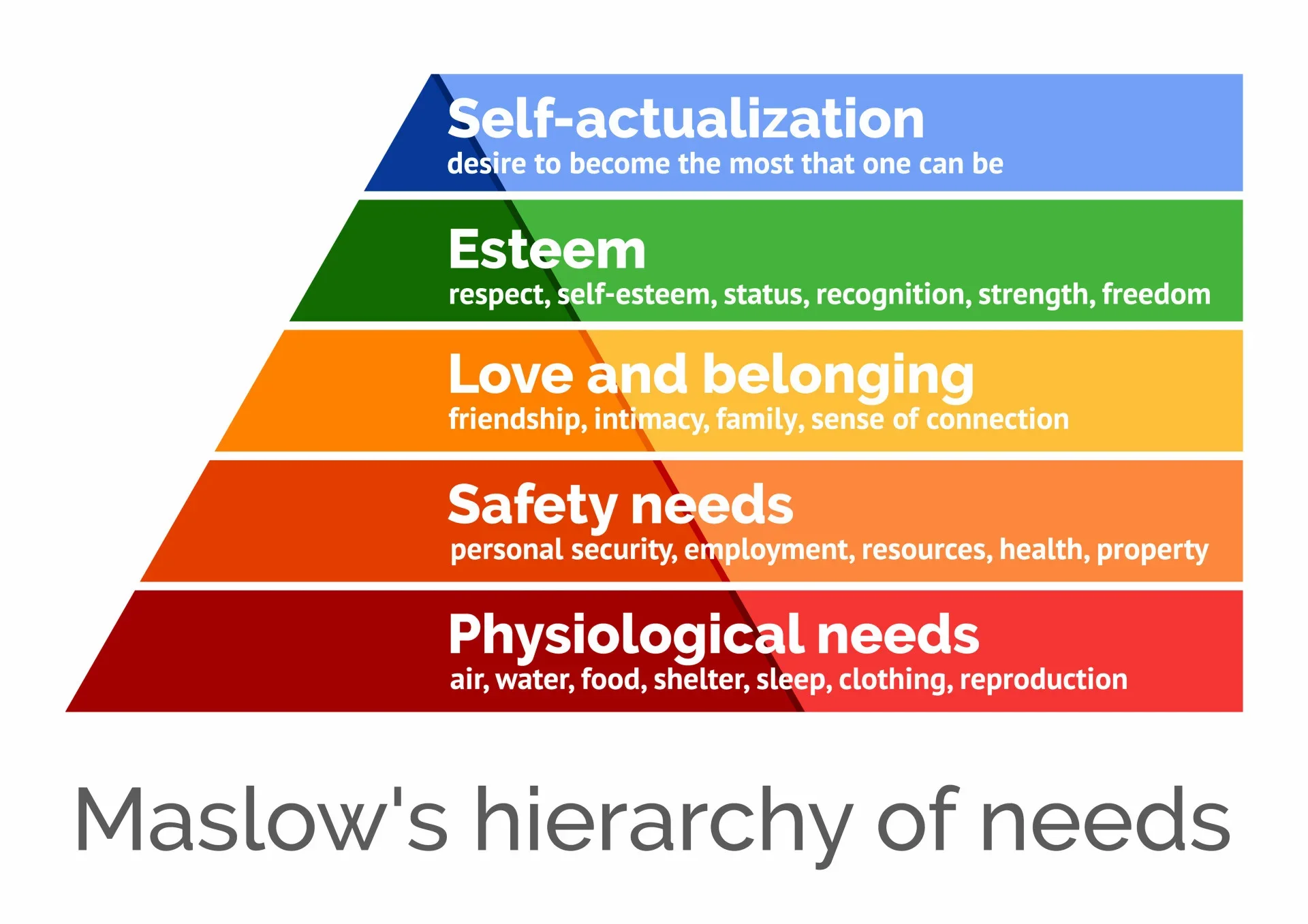
In a broader sense, this also brings Maslow's hierarchy of needs to mind. When comparing the general quality of life and outward demeanor of people in economically developed countries with those in developing economies, one can sometimes observe differences in the ease, confidence, and attention to personal presentation that people are able to afford. Once basic needs are met, both humans and animals may have greater scope to develop preferences and fulfil needs beyond mere survival, including aesthetic expression and, in human’s case, intellectual and spiritual pursuits.
Fox bounces on white bed sheets:https://youtu.be/1lFZLoCswH8?si=P21i-X9qii_Z7vB_
Fox jumps and hunts in snow: https://youtube.com/shorts/fT6CRZ8D8PU?si=Opd9hu1TCwtXHCca
Bunnies push bedsheet:https://youtu.be/QPjj1Rm1RC8?si=-0l_vEwhoN2AaPYZ
Bunny push snow (0:30): https://youtu.be/sBb2taWTrvY?si=c94BXU3blQjrcM_c
放弃去俄罗斯养狐狸的念头后,也作过其他参考,因为自己在美国生活过近八年,英语在沟通学习上已经完全没什么问题,但因为当初去美国是父母给我做的选择,十四岁第一次去美国修学旅行也是因为前一年自己想要去的日本的行程报名晚了没赶上,父亲为了补偿当时成绩不错的我大手一挥隔年就送我去了美国游学。行程的前几天住在长滩附近的当地居民家里,我和其他三位同学被分到了一位西裔老太太家里,早上去当地的语言学校上课,来上课的老师其中一位还是《粉红豹》的创作者,下午没课时由住家安排活动。同住的其他两位同学一看就是有些被宠坏的中产小孩,衣服穿的都是名牌大logo,早上上课时也不怎么听,只有在一位长得像约翰尼·德普(个人一直觉得他算长相偏清奇的那类演员,欣赏不太来)的老师来上课时疯狂拍照,每天下午都要求住家带她们去星巴克并拍照打卡的,对老太太下午给我们安排的活动也不满意,认为没什么意思。因为肯德基麦当劳当时在中国还算价格昂贵的洋快餐,所以一次导游带学生们去麦当劳吃午饭时,几乎所有人都在排队和导游讲清自己的订单时,这两位早早拿了别人点的单在就餐区堆满并摊开拍照。晚上回家时也并不和住家老太太有什么交流,对自己住的房间也满是抱怨。记得老太太相当热情地带我们去车程只有五分钟的海边玩,因为当时对防晒护肤方面完全不了解,还被加州的毒太阳晒到蜕皮,一次上完课回来还发现床上被放了一只送我的小绿熊。某天下午还带我们去她所在的社区中心的乐队体验钢桶鼓,大概是因为从小学琴,自己摸索了几下便可以敲出旋律简单的曲子,还被评价说乐感很好。一日下午被机构带去豪斯古堡参观,回程的路上随行的导游见有学生在加油站买了美国五十个州的25美分的硬币纪念册,就对美国政府出产的一些相对来说较为稀有的硬币以及纸币进行了简单介绍,比如50美分,一美元以及两美元的硬币。晚上回去照例和住家老太太坐在客厅里聊天提起时她拿出一袋硬币摊开给我们看,其中就有导游提到的少见的硬币类型。
After giving up on the idea of moving to Russia to work at a fox farm, I began exploring other possibilities.
Having lived in the United States for nearly eight years, I had no real difficulties using English for communication or conduct academic work. Yet the decision to go to America in the first place had never really been mine. It had been my parents' choice.
When I was fourteen, I went on my first study tour to the United States. The year before, I had wanted to join the trip organized by the school to visit Japan, but I had signed up too late and missed the opportunity. My father, wanting to make it up to me because I had done so well academically during that time, so he made an executive decision and sent me on a study tour to America the following year.
For the first few days of the trip, we stayed with local families near Long Beach. Three other students and I were assigned to the home of a Hispanic elderly woman. In the mornings, we attended English classes at a local language school, where one of our lecturers even happened to be one of the creators of The Pink Panther. In the afternoons, when we had no classes, our host would arrange activities for us.
Two of the other students staying with us immediately struck me as rather a bit spoiled typical middle-class children. They wore designer clothes covered in conspicuous logos and paid little attention during the morning classes. Yet whenever a teacher who looked like Johnny Depp—an actor whom I considered rather unconventional attractive which his appearance I have never particularly appreciated—came to teach, they would suddenly become extremely enthusiastic and starting to take photos of him nonstop.
Every afternoon, they insisted that our host take them to Starbucks so they could take pictures and post them on social media. They were equally unimpressed by the activities the elderly woman arranged for us, dismissing them as boring and pointless.
At the time, KFC and McDonald's were still considered relatively expensive dinning choices rather than cheap greasy American fast food in China. So when our tour guide took the students to McDonald's for lunch one day, almost everyone was busy queuing up and making sure the guide understood their orders. Those two girls, however, had already collected food ordered by other people and spread it all over a table in the dining area so they could photograph it.
In the evenings, they barely spoke to our host and constantly complained about the rooms they were staying in.
I remember the elderly woman being exceptionally warm and enthusiastic. One afternoon, she took us to the beach, which was only a five-minute drive away. Knowing next to nothing about sun protection or skincare at the time, I ended up getting so badly sunburned under the scorching California sun that my skin began to peel. On another occasion, when I returned from class, I found a little green teddy bear she had left on my bed as a gift.
One afternoon, she took us to the community centre where she played in a band and arranged for us to try the steel drums. Having studied piano since childhood, I found that after a little experimentation, I could already play a few simple melodies on the instrument. Someone even complimented me on my musicality.
Steel drum jamming session: https://youtu.be/lqeAf-DqE3I?si=KV5rK-oO4ANPmfIB
On another afternoon, our tour group visited Hearst Castle. On the way back, our guide noticed that one of the students had bought a commemorative album for the US state quarters, featuring the twenty-five-cent coins issued for all fifty states. This prompted him to give us a brief introduction to some of the less commonly encountered American coins and banknotes, including the fifty-cent piece and the one- and two-dollar denominations.
That evening, as usual, I sat chatting with our host in the living room. When I mentioned what the guide had told us about American currency, she brought out a bag of coins and spread them across the table for us to examine. Among them were several of the less common denominations the guide had mentioned.
第二天一早就离开了洛杉矶出发去了旧金山,晚上下榻宾馆的时候天已经黑了,收拾行李的时候在背包里摸出来几枚前一日在老太太家看到的稀有硬币。回想起前一晚自己在卫生间洗漱的时候有听见硬币隔着布料落在地板上的声音,便也猜到了硬币的由来,这时候当时年纪尚小比较重感情的我眼泪也止不住地流下来。
We left Los Angeles quite early the next morning and headed for San Francisco. By the time we checked into our hotel that evening, it was already dark. While unpacking, I felt around inside my backpack and found a few of the rare coins I had seen at the elderly lady’s house the day before.
I remembered hearing the sound of coins hitting the floor through the fabric of my bag placed in the living room while I was washing up in the bathroom the previous night, and I began to piece together where they had come from. At that point, still a teenager and rather sentimental, I couldn’t hold back my tears.
不过后来也听导游提起说行程里花销最大的是给当地住家的费用,其次才是往返机票。
Later, though, our tour guide mentioned that the biggest expense of the trip was the fee paid to the host families, with the round-trip airfare coming second.
当时随行的导游是一位讲话温和斯文的老华侨,已经退休但自己又闲不住所以又出来给来美国的中国旅行团当导游,还和我们分享说:“我的小孩都已经毕业在工作,我轻松啦~”
去加州环球影城的鬼屋被吓到哭,出来的时候导游还和随行的另一位信教的伯伯安慰我说以后觉得害怕时就喊“耶稣救救我”,只不过一直作为无神论者的我一直没有把这个建议当真过,在美国的学校遇到家里信教的男同学总还是要敬而远之的,因为觉得文化信仰差异过大实在交流不来。也被介绍过犹太男生,在美国念书的时候也被犹太男生搭讪过,只不过自己直到现在对感情方面的问题都相当迟钝,但是后来听说但凡嫁给头戴一顶圆圆的小帽子的犹太男生的女生都是要皈依犹太教的,爱吃海鲜和肉食的自己一听又不乐意了,表示说在双方经济条件家庭背景都差不多的情况下,凭什么单方面要求女方在宗教信仰上做妥协呢?凭什么不能让男方改为不信宗教,毕竟在自己眼中,大部分宗教只对女性受限,要求严苛,是限制女性发展经济独立精神自由的枷锁罢了。在家看母亲阅读并摘抄《圣经》时还和妹妹一起开玩笑说您不觉得把《圣经》的开篇以及《史记》的开篇放在一起作比较阅读是有些致命的么?都是无性怀孕,《圣经》直接作为几个宗教的宝典,甚至还要求信徒全文通读甚至背诵选段,再看开篇就有几段无性怀孕神话传说的《史记》,虽说是正史以及文学巨作,作者司马迁在写作当时却饱受折磨,甚至在官场备受排挤,比较下来直接让人质疑信仰的地步,怎么看都是时代久远性教育不普及的后果,结果两人被母亲不耐烦地瞪了一眼。后来到了乌普萨拉周末有空时作为也会去教堂参加礼拜,也主要是去欣赏建筑和教堂内五彩斑斓的玻璃窗,以及给自己悠闲的周日清晨找些事做。旅途中这位导游爷爷还拿着话筒坐在车前排和全车的学生闲聊,说当时的美国总统奥巴马虽然表面上看上去是混血,但是因为还是由自己的白人外公外婆带大,一些行为举止和个人爱好,以及一些语言上的措辞表达是典型的中产白人中比较常见的。后来在南加高中遇到的一些非裔或是混血学生也是由当地居民甚至是学校的校长领养并送来念书的,行为举止和美国中产白人也确实没有什么差异。在学校时唯一近距离接触过的一位非裔同学也是在法语课上的低年级生,结果就看到他的同年级生对他的态度非常不友好,在课上就对他推推搡搡的,不久后也听说他转学了。当时在学校两个中国学生在用中文对话时用到“那个”这个词的时候因为和英文中种族歧视的词汇同音,吃午饭的时候一个中国女生还被校长的女儿叫住小心翼翼地问他们之前是不是在骂她(韩语中“你”的发音也近似)。高中时在大学入学前就第一次去马里兰大学参观,其中两天去了DC观光,还去到了阿甘在影片中作演讲的国家广场观光闲逛。当时还处在奥巴马执政期间,给我的印象是DC的街道十分干净整洁,路边和公园的里尽是枝头盛放着花朵的樱花树,白宫前游行抗议的人群也不是很多,只是在大门前象征性地围了些围栏,当时还时不时地看到奥巴马去当地黑人社区价格亲民的普通餐馆排队等吃饭的新闻。结果在特朗普当选后平时再去DC过周末时就发现因为公务人员为了表示不满经常罢工,一些街道也因为缺少清洁工的维护而也变得脏乱差,每次再去路过白宫的时候抗议的人群总是挤得满满当当,有几次围栏甚至严严实实地栏到了白宫两侧的路口。自己分析了一下也是觉得奥巴马总体整体形象上而言当选总统有稳定美国社会的作用,美国的非裔人口大多数因为历史遗留问题经济水平不算太好,但看到奥巴马当选后也觉得自己被代表,是作为组成美国社会重要一份子,作为社会的一份子被“看到”在西方文化中是尤为重要的。而又因为奥巴马哈佛毕业生的精英身份,在公众面前多以冷静克制斯文包容的形象出现,美国的白人中产也能在他身上找到共通点,再加上种族歧视在美国是大忌讳,奥巴马在当时的美国算是非常理想的总统人选了。特朗普当选后,相比之下他有钱有权的老白男形象在当时身边多数年轻人或是少数群体里是相当不受欢迎的,还颇有一些作为他们剥削者的形象代表的意思,就算在整体偏红(共和党)的州的大学城附近的选区也是一片蓝色(民主党)。在金属社社交时认识的非裔小伙还在特朗普当选后社媒上发帖开玩笑说:“看来是时候练练我摘棉花的技巧了”。不过在工业革命美国农业完成机械化后谁再想要下地摘棉花也算困难了,特朗普在当地想要维护自身利益和社会结构的美国中年中产里倒是颇受欢迎。当时大选结果出来后隔天早上就在化学课上听到当地的同学看了看教室里的国际生叹气说“现在大家都要拿我们美国当笑话看了。”教授也一度停下讲课进度,一脸失望地对着讲台下议论大选结果的学生们说:“我不想做过多的评价,但是数字是不会撒谎的。”不过后来也证明,就算是数字只要被人为操控利用,也可以歪曲事实用以编造谎言的。
The tour guide accompanying us on the trip was a soft-spoken, gentle old man of Chinese descent who had emigrated to the United States. He was already retired, but apparently couldn’t enjoy his free time at ease, so he had taken up guiding Chinese tour groups visiting America to work again. He also shared a little about his family with us: “My children have all graduated and started working. I can finally relax a bit now~”
I was so frightened by the haunted house at Universal Studios Hollywood that I came out in tears. The guide and another older gentleman travelling with us, who was religious, tried to comfort me. They told me that whenever I felt afraid or terrified in the future, I could simply shout out, “Jesus save me!” As an atheist, though, I never really took their advice seriously. Back in school in the United States, I tended to keep my distance from male classmates who came from religious families. I felt that the cultural and religious differences were simply too huge for us to have much in common.
The cross looks good on you :D https://youtu.be/JPKj18aFWzU?si=lDQ_JARm-VNq0uNn
I was also introduced to some Jewish boys, and I was approached by Jewish boys a few times while studying in America. But I have always been rather slow on the uptake when it comes to romance, a trait I have apparently retained to this day. Later, however, I heard that women who married Jewish men who wore those little round skullcaps were expected to convert to Judaism. As someone who loves seafood and enjoys eating meat, I was immediately put off by the idea. More fundamentally, I wondered why, when both parties came from families of comparable financial means and social backgrounds, the woman should be the one expected to compromise and convey to her partner’s religious beliefs. Why couldn’t the man simply give up on his religion instead?
In my eyes, most religions place disproportionate restrictions on women, imposing strict rules that become shackles on their economic independence, personal development, and intellectual freedom.
Once, while watching my mother read and take notes from the Bible at home, my younger sister and I jokingly asked her, “Don’t you think it’s a little funny to compare the opening of the Bible with the opening of the Records of the Grand Historian in a side-by-side reading?”
Both begin with stories of conception without sexual intercourse. The Bible is a sacred text for several major religions, with some believers expected to read it in its entirety or even memorise passages. Then there is the Records of the Grand Historian, a monumental work of Chinese historiography and literature whose opening also contains several myths and legends involving miraculous conceptions. Yet its author, Sima Qian, endured tremendous suffering while writing it and was even marginalised within the imperial bureaucracy. Put the two side by side, and the comparison almost makes you question the very foundations of religious faith. To me, both seemed more like products of an era when people knew very little about the biology behind sexual reproduction than anything else.
Our mother responded by shooting us an impatient glare.
Later, when I had some free time on weekends in Uppsala, I occasionally attended church services myself. Mostly, I went to admire the architecture and the colorful stained-glass windows, and to give myself something to do on a leisurely Sunday morning.
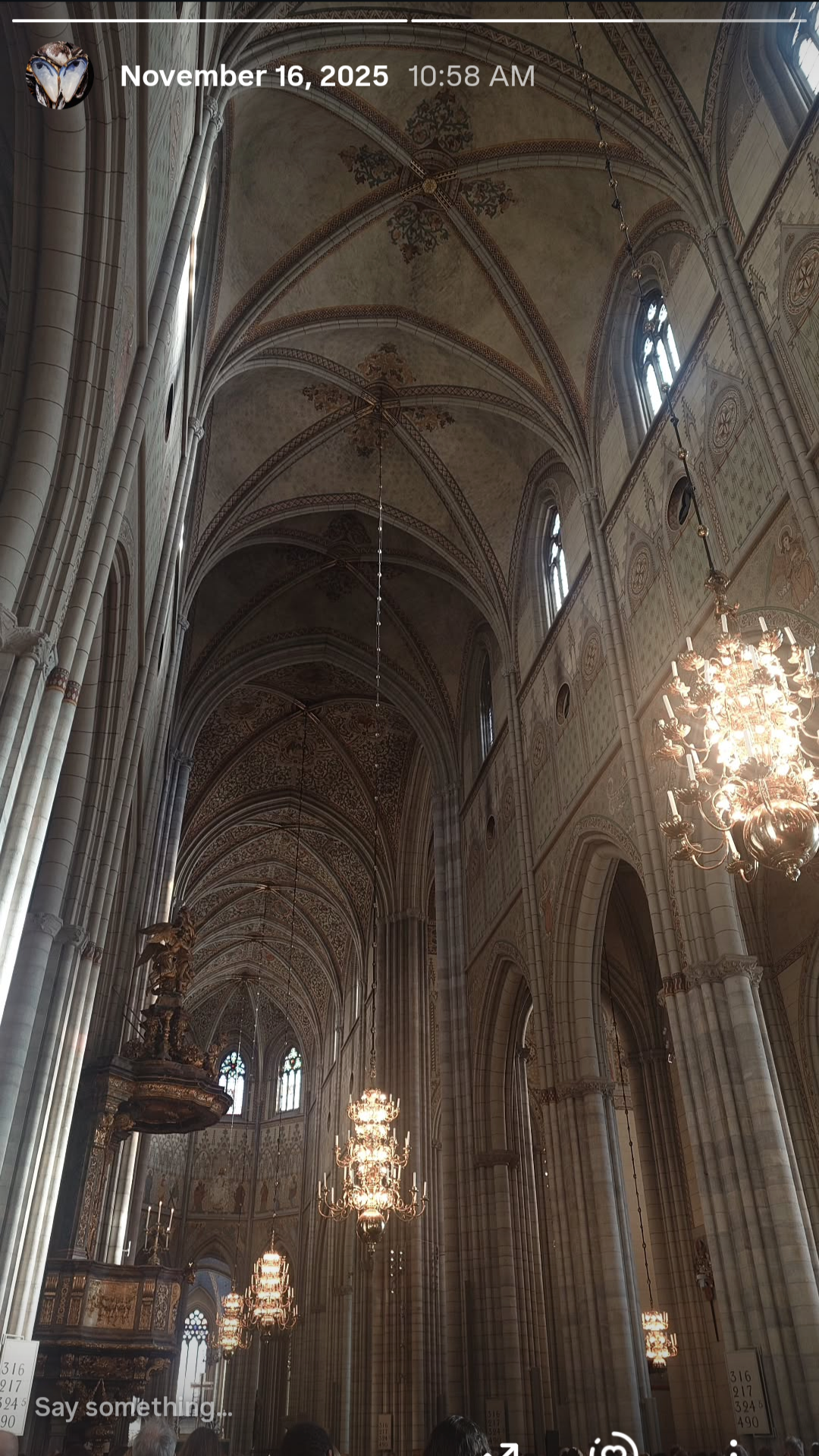
周日清晨的日常。/ Sunday morning routine.
During the trip, our elderly guide would sit at the front of the coach with a microphone and chat with all the students. On one occasion, he talked about Barack Obama, the American president at the time. Although Obama was mixed-race, the guide pointed out that he had been raised by his white maternal grandparents. As a result, some of his mannerisms, personal interests, and even his choice of words and expressions were typical of those commonly associated with the white American middle class.
Later, at the private high school I attended in Southern California, I met several mixed-race students who had been adopted by local residents, including the school principal himself, and sent to study there. Their behavior and mannerisms really were not noticeably different from those of their white upper-middle class peers.
The only African American student I got to know at close range at school was a younger student in my French class. I remember seeing his classmates treat him rather unkindly, shoving him around during classes. Not long afterwards, I heard that he had transferred to another school.
There was also an awkward incident involving two Chinese students speaking Mandarin. They used the word nàge—a perfectly ordinary Chinese filler meaning something like “that”—which sounds similar to an English racial slur. At lunchtime, the principal’s daughter approached one of the Chinese girls and, rather tentatively, asked whether they had been insulting her. The Korean word for “you” sounds similar, too, which only added to the potential for misunderstanding.
In high school, before I had even been accepted to university, I visited the University of Maryland for the first time. I spent two days sightseeing in Washington, D.C., wandering around the National Mall, where Forrest Gump gives his speech in the film.
“That’s all I have to say about that.” : https://youtu.be/RwAsZK7NFYY?si=bTZHmTTbGnzkTVlG
Obama was still president then. My impression of D.C. was that its streets were remarkably clean and orderly, with cherry blossom trees lining the roads and filling the parks, their branches covered in blossoms. There were relatively few protesters outside the White House, and only a modest arrangement of barriers stood in front of the gates. From time to time, I would also see news reports of Obama queuing up for a meal at an ordinary, reasonably priced restaurant in a local African American neighbourhood.
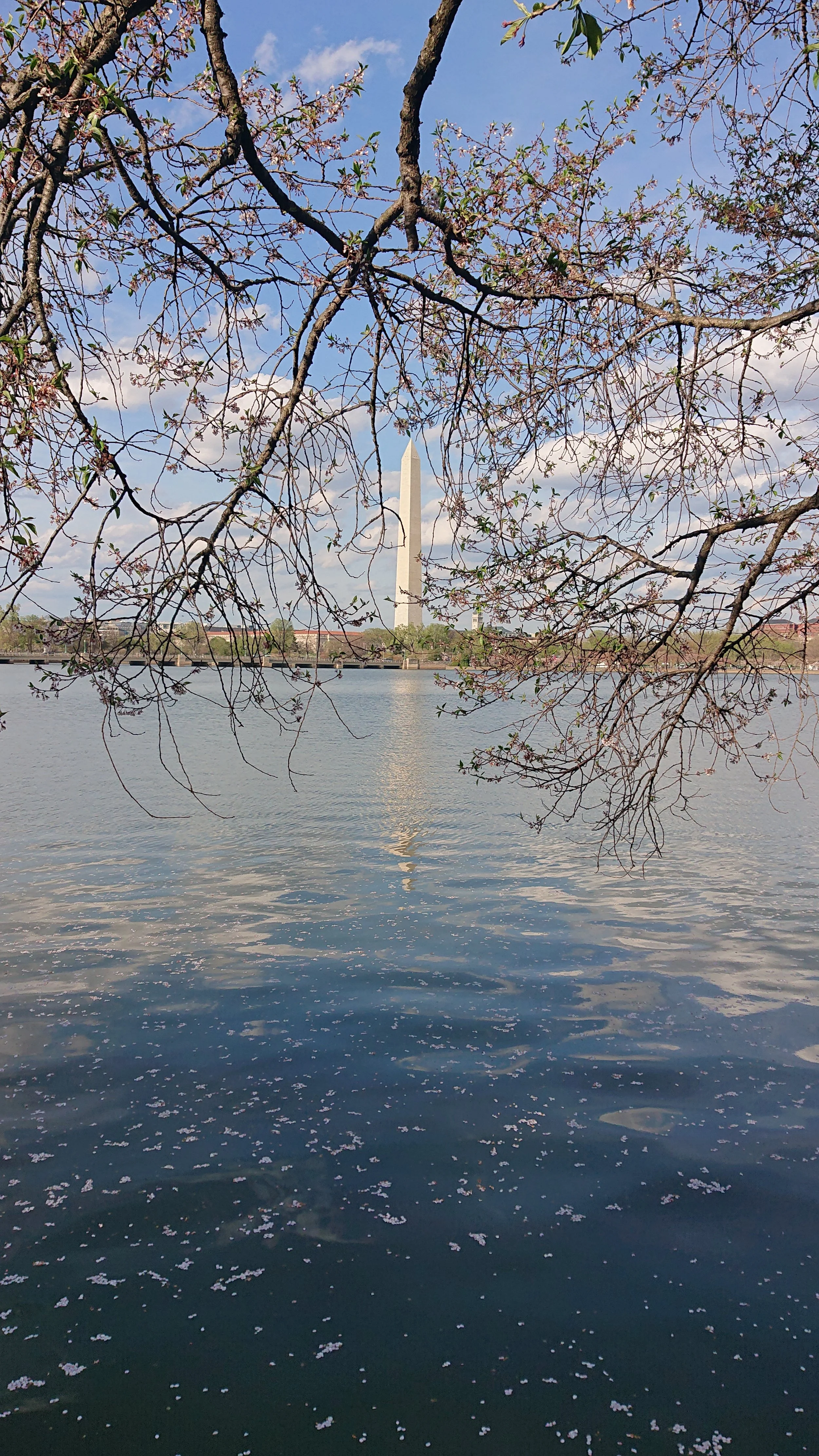
After Trump was elected, however, my experience of visiting D.C. on weekends changed noticeably. Government employees would frequently go on strike to express their dissatisfaction, and some streets became dirty and disorderly for lack of maintenance by cleaning crews, because they joined the strike. Every time I passed the White House, crowds of protesters seemed to fill the area. On several occasions, the barriers extended all the way to the intersections on either side of the White House, sealing off the surrounding streets.
I tried to make sense of the contrast. In terms of his overall public image, Obama seemed to have played a stabilizing role in American society. Owing in part to the historical legacy of racial inequality, a large proportion of the African American population in the United States had relatively limited economic resources. Seeing Obama elected president, however, could give people a sense that someone like them was represented—that they, too, were recognized as a crucial part of American society.
“Stanley! Barack is president!” : https://youtu.be/jXyC_6hHv60?si=Am8lQZVGAUk59hJ6
Being seen and acknowledged as a member of society is particularly significant in Western culture. And because Obama was a Harvard-educated member of the elite who generally presented himself in public as calm, restrained, articulate, and inclusive, which white middle-class Americans could find common traits or interests with him. With racial discrimination being such a sensitive and deeply taboo subject in the United States, Obama seemed, at the time, almost an ideal candidate for the presidency.
The differences in upbringing and social class revealed through word choice and mannerisms, even in accents: https://youtu.be/HkAK9QRe4ds?si=kb1YMWTjXWFJd8bc
Trump, by contrast, embodied the image of a wealthy, powerful, older white man, an image that was distinctly unpopular among many of the young people and minority groups around me. To some, he seemed to represent the very people who had exploited them. Even in college-town districts within states that leaned heavily Republican—what Americans call “red states”—the electoral map around universities could be a sea of blue, the color associated with the Democrats.
I remember an African American guy I met while socializing with people from the metal club at university posting a joke on social media after Trump's election: “Time to practice my cotton-picking skills.”
Diabolical🫣: https://youtu.be/90XLNQXN_74?si=oZtumxJ1aeirfuJ8
Of course, after the Industrial Revolution and the mechanization of American agriculture, anyone trying to make a living picking cotton by hand would have a rather difficult time of it. Trump, meanwhile, was quite popular among middle-aged, middle-class Americans who leaned Republican and wanted to protect their own interests and preserve the existing social order.
The morning after the election results came out, I was sitting in chemistry class when I heard a local student look around at the international students in the room and sigh, “Now everyone is going to laugh at America.”
Our professor even paused the lecture. Looking disappointedly at the students beneath the lectern who were discussing the election results, he said, “I don't want to comment too much on this, but numbers don't lie.”
In retrospect, though, it has become clear that even numbers can be manipulated and weaponized to distort reality and manufacture lies.
当时住在旧金山附近的亲戚还开了一个多小时的车来特地来宾馆看我,还送了我人生中第一件轻奢品墨绿色的Coach包作见面礼,对美国的第一印象公正来说总体是不错的,除了在悠仙美地自由活动时大概是因为自己没在意,在石头上爬上爬下的时候和她的小孩距离有些近,被当地人用不友善的眼神盯着看之外也没什么不愉快的回忆,到了瑞典以及在欧洲出行时反而经常被当地的小孩们用友善的眼神盯着看并微笑,还试图走近我的,他们的父母见了也是冲我友善地笑笑,从未用不友善的眼神盯过我。
My uncle’s family who lived near San Francisco even drove for over an hour to visit me at the hotel, bringing me my very first luxury-adjacent designer item as a welcome gift: a dark green Coach bag.
To be fair, my overall first impression of the United States was a good one. Apart from one uncomfortable incident during our free time in Yosemite, I had very few unpleasant memories of the trip. I suspect I simply hadn’t been paying much attention to my surroundings at the time. While scrambling up and down the rocks, I must have got a little too close to a local woman and her children, and I remember being stared by the woman with a distinctly unfriendly look.
By contrast, after moving to Sweden and travelling around Europe, I often found local children gazing at me with friendly curiosity, smiling at me, and even trying to approach me. Their parents would usually smile warmly at me, too. Not once did I feel that I was being stared with the kind of hostility I had encountered in Yosemite.
不过后来被父母安排送去美国念书后隐隐约约也能感觉到当时遇到的一些人和事为了能留我在美国做了不少努力,甚至用了一些相当邪门的办法,有一些因为当时年纪尚小,只是当时凭直觉就觉得不对劲,是后来回想时才意识到的,回国之后也有想尽办法再劝我或者想设计让我用政治避难的理由再回美国的,不过这时候已经基本上能见招拆招了。
Later, after my parents arranged for me to go to the United States to study, I began to get a vague sense that some of the people I encountered and things that happened around me involved considerable effort to persuade me to stay and resides in America. Some of the methods used were downright bizarre, even bordering on the sinister. At the time, I was still young, and there were things I couldn’t quite put my finger on. I simply had an instinctive feeling that something wasn’t right, only to understand why much later, when I looked back on those experiences.
Even after I returned to China, there were still people trying every possible way to persuade me to go back, or seemingly attempting to engineer a situation in which I would return to the United States on the grounds of seeking political asylum. By that point, however, I had more or less learned how to recognize their moves and counter them as they came.
就比如当时的捷克室友念书念了半年后她的妈妈要来美国看望她,结果在她来之前不久才支支吾吾地告诉我她妈可能不会招我喜欢,我追问下去她才说因为她妈支持藏独,几次前往西藏企图为了解救传闻中被迫害的藏民已经被中国政府禁止入境了,还说我如果不喜欢可以不用和她接触。
我:我只看到过藏民上山挖虫草月入十几万甚至几十万的新闻,这要算被迫害的话谁来迫害一下我?
但因为觉得对方是朝夕相平时一起上学的室友的家人,政见不合但又不能不尊重,觉得身为东亚人礼数要做到位,所以去当地的亚洲超市买了一套日式清酒酒具送她当见面礼,并和室友说就跟你妈讲我是日本人好了。自己并不算是那种喜欢和外国人合影的典型国人,也明白如果和她这样的人合影或者有其他互动照片发到社媒上再传到国内搞不好自己也会被限制回国,这辈子都难常见父母亲人。因为华语世界真的有当红小生被翻出在日本参加婚礼时和政治立场对中国持敌对态度的人物的合影,那之后就热度尽失,再也没人关注,也只能在中国被墙的网站上发发自己的动态了。
One example was my roommate from Czech Republic. About six months into her studies, her mother was planning to visit her in the United States. Shortly before her arrival, my roommate awkwardly admitted that I might not get along with her mother. When I pressed her for an explanation, she finally told me that her mother supports the independence of Tibet. She had travelled to Tibet several times, supposedly in an attempt to rescue Tibetans she believed were being persecuted and had consequently been barred by the Chinese government from entering the country. My roommate added that if I didn’t like her mother, I didn’t have to interact with her.
Me: “The only news I’ve ever seen about Tibetans is about people going into the mountains to dig for caterpillar fungus and earning hundreds of thousands of yuan a month, sometimes even more. If that counts as persecution, where do I sign up to be persecuted?”
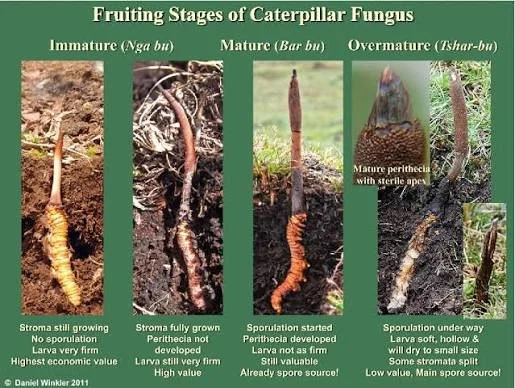
Source: Winkler, D. (2009) ‘Caterpillar Fungus (Ophiocordyceps sinensis) Production and Sustainability on the Tibetan Plateau and in the Himalayas’. Available at: https://www.semanticscholar.org/paper/Caterpillar-Fungus-(Ophiocordyceps-sinensis)-and-on-Winkler/12d1f14d7202c0caefed59c6f40aedfd446f1578 (Accessed: 17 October 2026).
Still, this was the mother of someone I lived with and went to school with every day. We might have disagreed politically, but I felt I should still need to show her respect because she was a guest. And I also want to show her the proper courtesies as an East Asian, so I went to a local Asian supermarket, bought a Japanese sake set as a welcoming gift, and reduce the tension and make the situation less awkward when she arrives, I told my roommate, “Just tell your mother I’m Japanese.”
I was never particularly the sort of stereotypical Chinese person who liked posing for photographs with every foreigner I met. I was also aware that if I had my picture taken with someone like her, or appeared in other photos interacting with her, there’s a chance that those images might end up circulating on Chinese social media. In the worst-case scenario, I could find myself facing restrictions on returning to China, potentially making it extremely difficult to see my parents and relatives for the rest of my life.
After all, there had been a prominent young male celebrity in the Chinese-speaking world whose photograph with a figure known for political positions hostile to China was unearthed after he attended a wedding in Japan. His popularity evaporated almost overnight. He was no longer in the public eye and could only post updates on websites that were blocked in China.
法国电影《岳父岳母真难当2》中也有类似的情节,做父母的为了留住四位女儿以及她们作为移民的女婿们在法国,给当时在金融行业工作准备回上海发展的中国女婿P了一张参加在欧洲支持藏独游行的照片递交给中国大使馆作举报材料,结果女婿去中国的签证当场被拒还被大使馆的工作人员当场怒斥“你是人民的敌人!” “滚出去!”最终也如岳父岳母的愿以偿地留在了法国。
A similar scenario appears in the French comedy Serial (Bad) Weddings 2 (Qu'est-ce qu'on a encore fait au Bon Dieu?2). In an attempt to keep their four daughters and their immigrant sons-in-law in France, the parents resort to a rather underhanded scheme. They photoshoped a photograph to make their Chinese son-in-law, who works in finance and is planning to return to Shanghai and working in the banking business, appear to be participating in a pro-Tibetan independence political demonstration in Europe. They then submit it to the Chinese embassy as evidence against him.
The result? His visa to China is refused on the spot, and an embassy staff member even berates him to his face: “You are an enemy of the people!” “Sortir!” In the end, he stays in France after all, much to the satisfaction of his parents-in-law.
不过后来和室友的母亲接触下来也没有发现什么特别反常的言行举止,对方也是能和我进行正常沟通的中年人,只不过当时年纪尚小,和对方有任何互动时都是小心翼翼的,生怕被对方拖下水再给我安一个“政治犯”的名声从此被中国政府禁止入境再也见不到父母家人。也了解到她平时在捷克是自由职业的艺术家,当时问了名字上网搜了一下也没找到什么代表作,给人感觉是平时光顾着搞政治活动了。后来和一些缺乏最基本批判性思维训练但共情心又极强的人接触多了就发现和这类人是完全讲不通任何逻辑的。就比如念大一的时候正好赶上美国大选,之前认识一个学人文学科的在她的理科选修微积分课上不听课和坐在她旁边的我说:“我觉得特朗普就是一个单纯可爱的小老头啊,总有人想要抹黑他的名声。”我当时听了顿时无语,顾着听课也没接话,倒是很想建议她把这句话中的“特朗普”换成其他任何一位政客的名字再听听看,比如普京,撒切尔,金正恩,默克尔等等之类,简直荒谬至极。
“我觉得普京就是一个单纯可爱的小老头啊,总有人想要抹黑他的名声。”
“我觉得撒切尔就是一个单纯可爱的小老太太啊,总有人想要抹黑她的名声。”
“我觉得金正恩就是一个单纯可爱的小老头啊,总有人想要抹黑他的名声。”
“我觉得默克尔就是一个单纯可爱的小老太太啊,总有人想要抹黑她的名声。”
但就个人而言觉得对政客最高级的评价就是“老狐狸”。
However, after getting to know my roommate’s mother, I didn’t notice anything particularly unusual about her words or behaviour. She was just a middle-aged woman who could communicate with me perfectly normally. Still, I was young at the time, and I approached every interaction with her cautiously, always afraid that I might somehow get dragged into her political activities, branded a “political prisoner,” and subsequently barred by the Chinese government from entering China, never to see my parents and family again.
I also learned that she worked as a freelance artist in the Czech Republic. When I asked for her name and searched for her online at the time, I couldn’t find any particularly notable works of hers. My impression was that she spent so much time on political activism that she had little left for her art.
Later, after encountering more and more people who seemed to lack even the most basic training in critical thinking yet possessed an overwhelming capacity for empathy, I began to realise that logical reasoning was often completely futile when dealing with people of this kind.
For example, during my first year of university, the US presidential election happened to be taking place. I once knew a student who studied liberal arts major, instead of paying attention during a calculus class she was taking as a science elective, turned to me, sitting beside her, and said:
“I think Trump is just a sweet, cute, innocent old man. People are always trying to smear his reputation.”
I was utterly speechless and I was also trying to concentrate on the lecture, so I didn’t respond, but I desperately wanted to suggest that she replace Trump’s name with that of any other politicians and listen to how the sentence sounded. Putin, Thatcher, Kim Jong-un, Merkel—any of them would do. The statement was simply absurd.
“I think Putin is just a sweet, cute, innocent old man. People are always trying to smear his reputation.”
“I think Thatcher is just a sweet, cute, innocent old lady. People are always trying to smear her reputation.”
“I think Kim Jong-un is just a sweet, cute, innocent old man. People are always trying to smear his reputation.”
“I think Merkel is just a sweet, cute, innocent old lady. People are always trying to smear her reputation.”
Personally, though, I think the highest compliment one can pay a politician is to call them a cunning fox.
My reaction when someone has the audacity ever dare to call me “cute” (2:55) : https://youtu.be/CvLihfoFtRo?si=8mQX17x3zq8Eqbpa
和人打交道总避免不了冲突或者情绪上的不满,这时候找到双方认知中的共同点就十分重要。就好比自己更喜欢与接受过理工科训练的人打交道,尤其是在讨论一些专业方面的问题,约定俗成的认知共同点便是“1+1=2”,而在学校或者职场受到的教育和训练都是以解决问题为导向的,遇到问题第一反应是寻找解决方案已经是约定俗成的规则,交流起来也十分顺畅。而和一些人文学科的打交道时,总要花些时间找双方认知上的共同点,不然总要收到对方对自己一些子虚乌有的苛责。不过一个人的沟通方式和风格大概也与个人经历有关,在和一些理工科的教授学者专家在做专业知识的交流时,多数时候因为对方深耕相关行业多年,实验成果颇丰,发表文章无数,在遇到自己专业知识不充分的领域时无法做到无障碍沟通向提出一些在对方眼里已经是常识的问题时,对方反而会感到不耐烦。而和一些人文社科的教授学者专家作交流时,大概是田野调查是专业研究工作的一部分,不用长时间地待在实验室里不与人接触,与不同阶层背景的人接触得多了反而擅长和几乎所有人打交道,涉及到他们专业领域的知识时我露出为难的神色还会主动给我解释。
在美国种族歧视是大忌,就像纳粹问题在欧洲一样,但自己又对历史和文化的方面的话题感兴趣,自小学起就读了不少犹太人在二战期间不幸遭遇的书籍以及看了不少相关电影,尤其是在犹太人口众多的美国,高中时文学课的必读书目里就有《鼠族》,但这些文艺作品主要侧重于战争中和战后的叙事了,印象当中是没看过战前发生了什么导致纳粹开始清洗犹太人的详细解释,所以便开始找一些相关资料开始看,了解整个事情的前因后果,还去了在上海的犹太难民博物馆参观,也开始咨询身边的一些人。结果就被误以为是有新纳粹倾向,在上海的时候无意识地举右手招出租车的时候都要被贴上反犹标签,搞得我后来但凡要和欧洲同学们讨论相关问题时总要在开场白里说:我不支持纳粹,他们在战争期间犯下的罪行是惨无人道的,我非常同情战时犹太人的遭遇。但后来也发现因为历史经济地理文化以及种族方面的原因牵扯太深太复杂,很少有人能解释得透彻全面。
When dealing with people, conflicts and emotional frustrations are almost inevitable. In such situations, finding common ground to work or even agree upon in how both parties understand the world becomes especially important.
For instance, I generally find it easier to get along with people who have a background in science or engineering, or in another word, STEM major students, particularly when discussing technical or professional matters. There is already a shared frame of reference: “one plus one equals two.” The education and training we receive at school and in the workplace are largely oriented towards problem-solving, and approaching a problem by looking for solutions has practically become an unwritten rule. Conversations tend to flow smoothly as a result.
With people from certain liberal arts or humanity disciplines, by contrast, I often find myself having to spend more time establishing common ground in how we perceive things. Otherwise, I seem to end up on the receiving end of criticism for things I never actually said or did.
A person's communication style and manner probably have a lot to do with their individual experiences. When discussing specialized subjects with professors, scholars, and experts in STEM fields, I've often found that because they've spent years immersed in their respective disciplines, produced substantial experimental results, and published countless papers, they can become impatient when someone with less technical knowledge struggles to communicate fluently in an unfamiliar area or asks questions that seem like basic common sense to them.
By contrast, when speaking with professors, scholars, and experts in the humanities and social sciences, I've found that they tend to be more accommodating. Perhaps it's because fieldwork is an integral part of their research, and they don't spend all their time isolated in laboratories without interacting with other people. Having more frequent contact with people from different social and economic backgrounds may make them better at communicating with just about anyone. When a conversation touches on their areas of expertise and I look visibly confused or uncertain, they often take the initiative to explain things to me.
In the United States, racial discrimination is a major taboo, much as the subject of Nazism is in Europe. Yet I have always been interested in history and culture. Since primary school, I had read quite a few books about the terrible suffering endured by Jewish people during World War II and watched numerous films on the subject. This was particularly relevant in the United States, where the Jewish population is substantial. Even in high school, Maus was on the required reading list for literature class.
However, these works of literature and film tended to focus primarily on events during and after the war. As far as I could remember, I had never come across a detailed explanation of what had happened before the war that led the Nazis to begin persecuting and systematically exterminating Jewish people. So I started looking for relevant materials, trying to understand the causes and consequences of the whole affair. I also visited the Jewish Refugees Museum in Shanghai and began asking people around me about the subject.
The result was that some people mistook my curiosity for an affinity with neo-Nazism. Even when I was in Shanghai, I could be labelled antisemitic simply for unconsciously raising my right arm to hail a taxi. The experience was so frustrating that, whenever I later wanted to discuss related issues with my European classmates, I felt compelled to begin with a disclaimer:
("¬_¬) : https://youtu.be/8Y8X8x81NZc?si=uHJ9acuRAIMsjYkV
“I do not support Nazism. The crimes committed by the Nazis during the war were utterly inhumane, and I have great sympathy for the suffering of Jewish people during that period.”
Over time, however, I also came to realize that the subject is so deeply entangled with history, economics, geography, culture, and ethnicity that very few people can explain it comprehensively and coherently.
《鼠族》这部漫画里运用的象征手法也是很有趣的,比如美国人被画成狗,象征忠诚与守护,犹太平民则是老鼠,代表了他们在战争中弱小,任人鱼肉,不得不东躲西藏的角色,而德国人却被画成了猫,象征着战时迫害抓捕犹太人的纳粹形象。一次在V-Dala Nation参加自己是会员的创业俱乐部的活动,在场就有三个德国人,结果第二天一早去一位对猫过敏的学生家上钢琴课时学生却起了轻微的过敏反应,课后我回到家想起文学课的必读书目中德国人的猫猫形象气得大叫“德国佬!”不过后来回想了一下大概是因为自己前一周穿了同一件外套在溜冰的湖边摸了猫的缘故,倒是和同专业的几位人畜无害的德国同学没什么关系…
The symbolism in Maus is fascinating, too. Americans are depicted as dogs, symbolising loyalty and protection, while Jewish civilians are portrayed as mice, representing their vulnerability during the war, their helplessness at the mercy of others, and their constant need to hide and flee. Germans, meanwhile, are drawn as cats, evoking the Nazi image of predators hunting down and persecuting Jews during the war.
Once, I attended an event organised by the entrepreneurship club I worked for at V-Dala Nation, where there happened to be three Germans classmates. The following morning, I went to a piano lesson at the home of a student who was allergic to cats, only for the student to develop a mild allergic reaction. After the lesson, I returned home and suddenly remembered the feline portrayal of Germans in Maus, one of our mandatory readings for literature class. I was so annoyed that I yelled, “GERMANS!”

高中英语文学课必读书目之一。/ One of the mandatory readings from my high school literature class.
On reflection, though, the more likely explanation was that I had worn the same jacket the previous week when I was petting a cat by the lake where people go ice-skating. It probably had nothing to do with the perfectly harmless German classmates from my programme...
但在不同的文化语境中同一种动物也代表了不同的文化意象,就比如最常见的猫狗,其中在东西方文化中狗都是忠诚的代表,猫却因为差异过大阴晴不定的性格,在各个文化中的意义也各不一致,就比如在古埃及文化中,猫是作为神圣的宗教象征存在的,而在中文中却有“狗君子,猫小人”的说法,而在中文语境中“舔狗”这一网络流行词汇却有一丝侮辱人的意味,用来形容在感情中过度讨好、无条件付出,却得不到对方回应的人。不过自己高中毕业后就很反感尤其是在自己母语中的具有短暂时效性的网络流行语词汇,再加上东亚人本就不擅长通过语言文字表达情感的性格以及全体人类作为复读机的本质,几次遇上生日或者特殊场合出于礼节给对方送周到的礼物非但一句“谢谢”都没有,给我感觉完全不看重现实生活中和认识人的相处和情感培养,而是把一些戏子的花边娱乐新闻看得比当时作为朋友的情谊还要重要,白目至极,有时甚至反而被对方用网络流行语调侃“舔狗”抑或是“被套路”的评价,好似我出于良好的家教而送她们的礼物是上什么讨好或者渣男行为,而反观她们偶尔回送我的也根本不是和我送给她们的礼物一个档次。自己后来也是毫不客气地立马把这类不知好歹与感恩的白眼狼干脆利落一脚踢出自己的社交圈子和人生,从此彻底断绝往来。
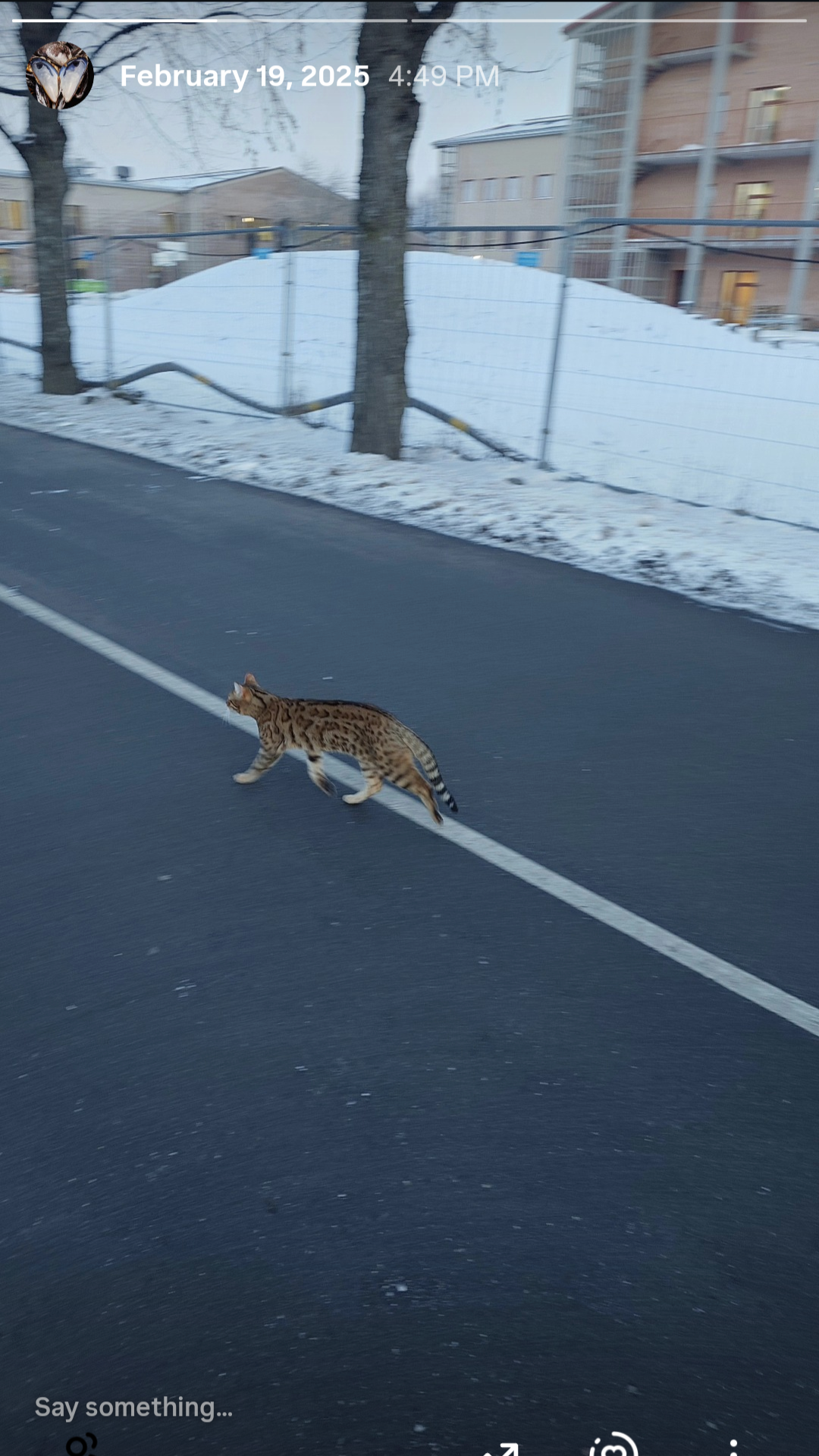
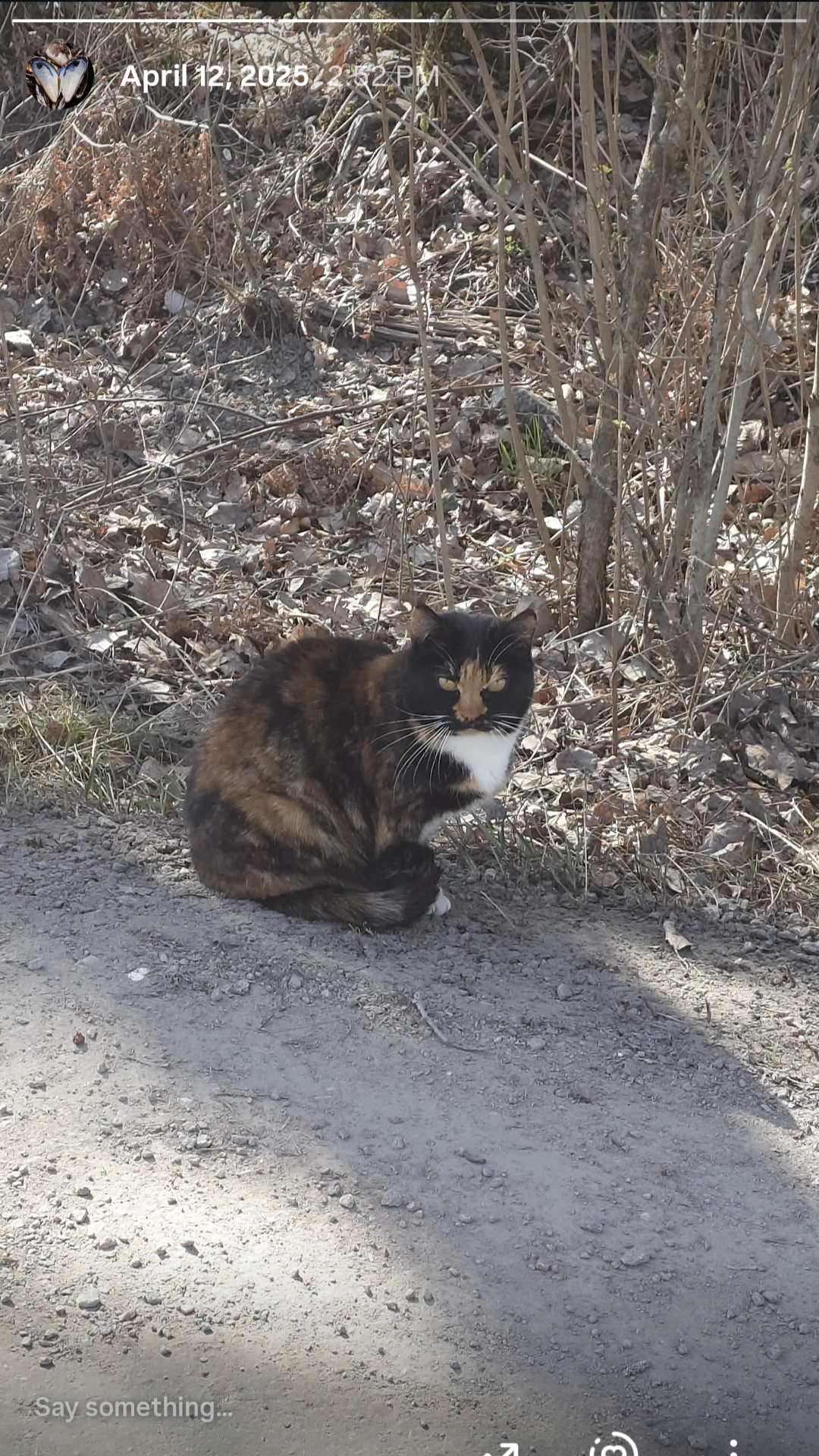
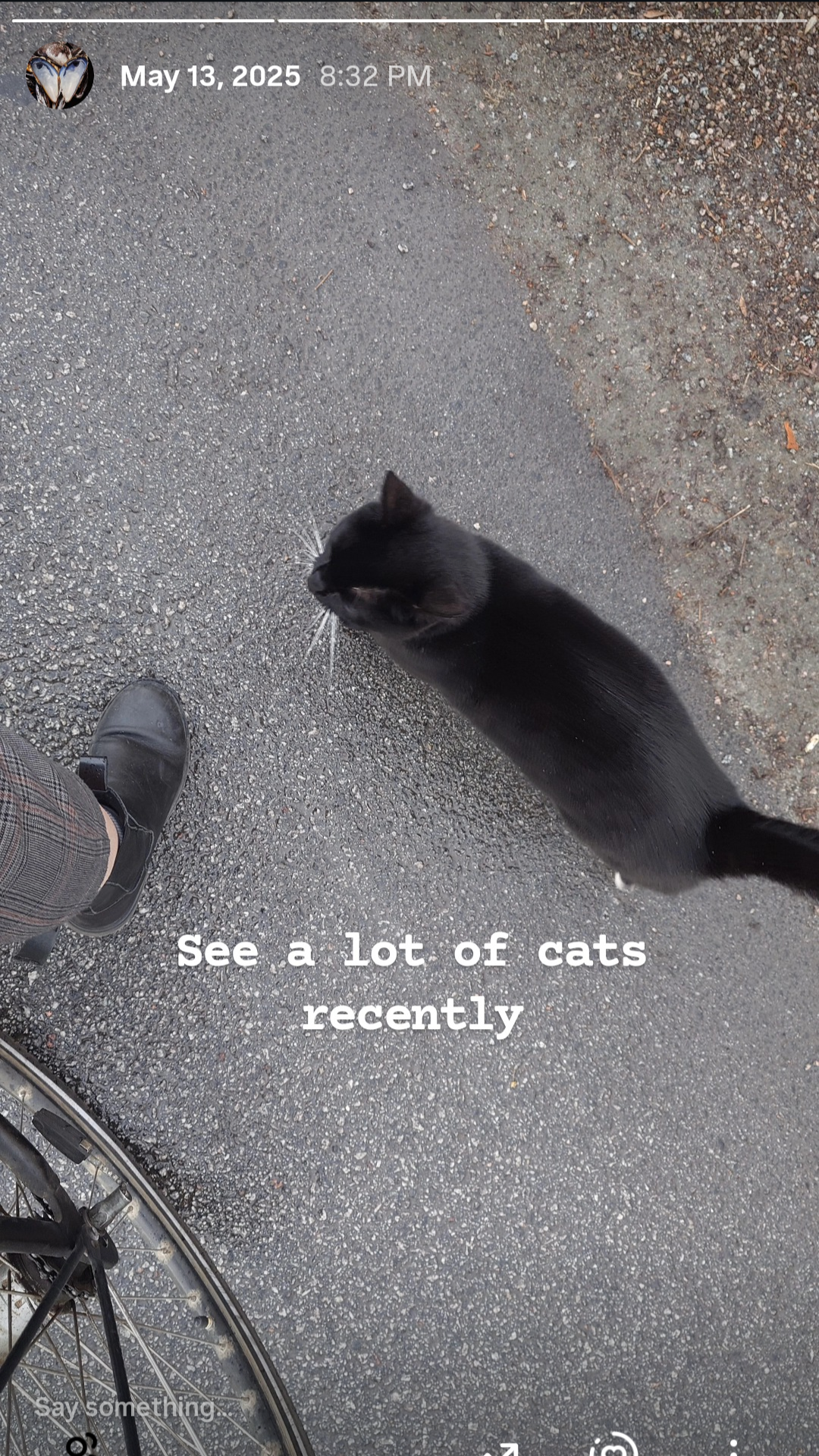
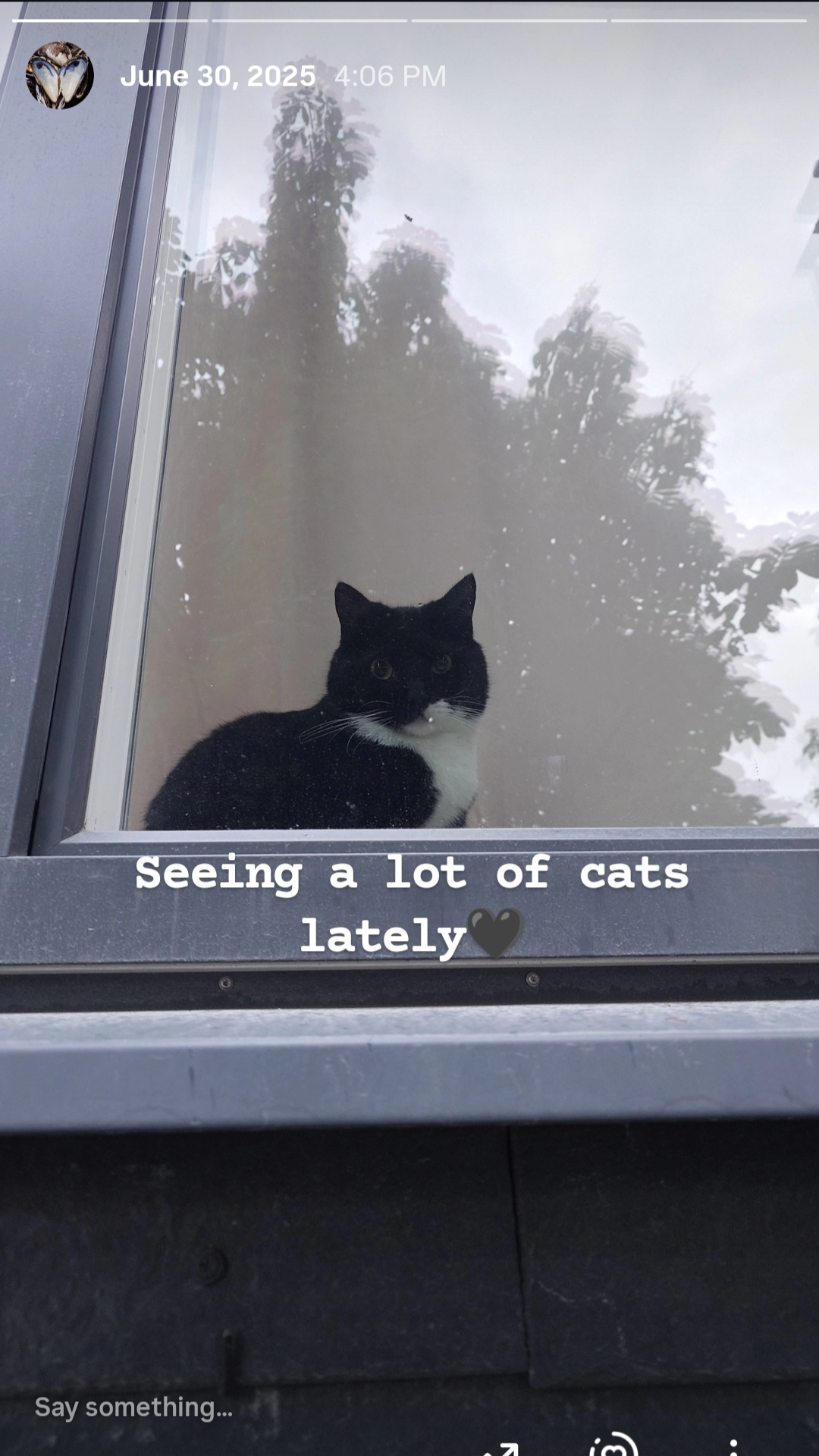
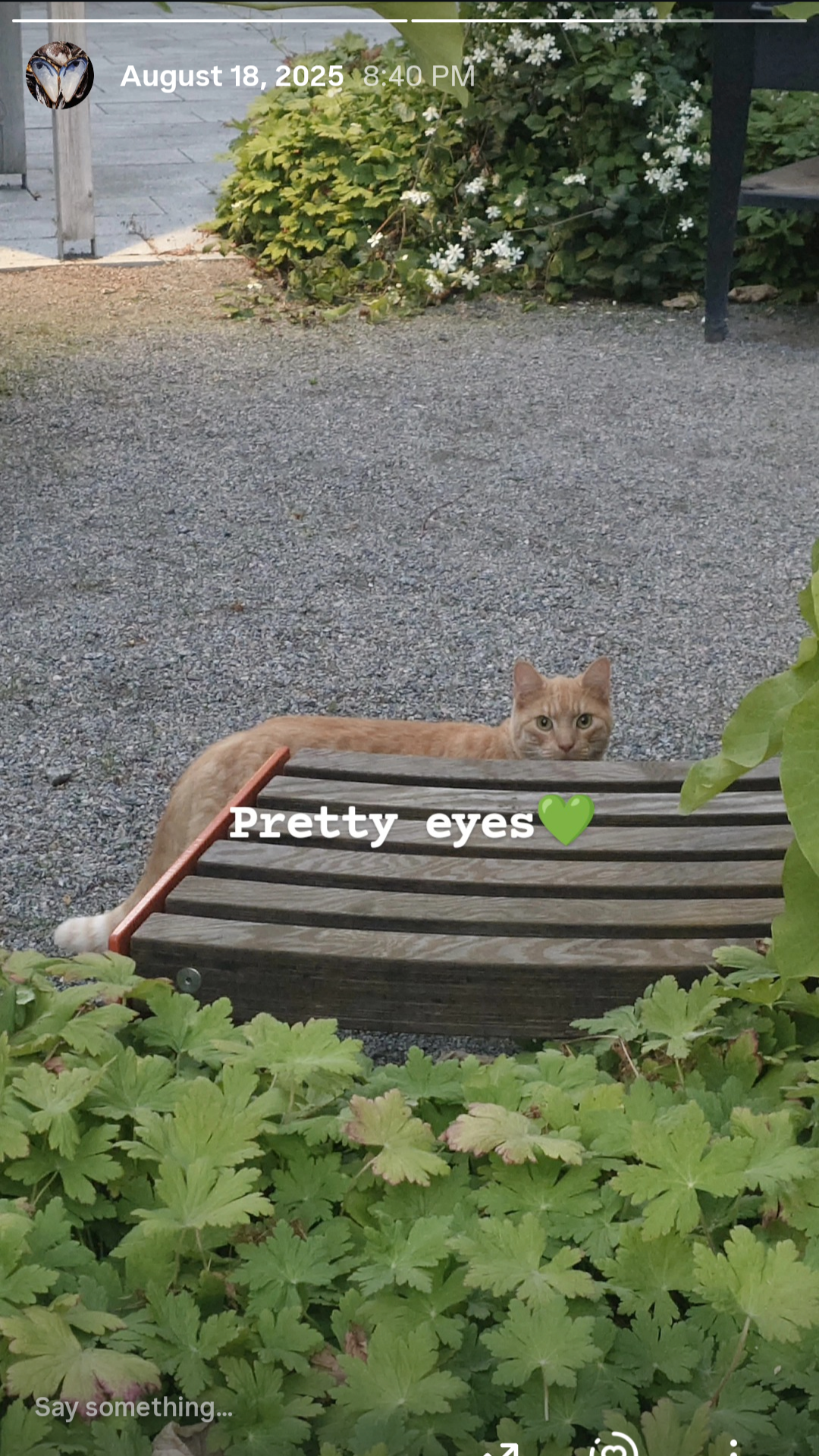
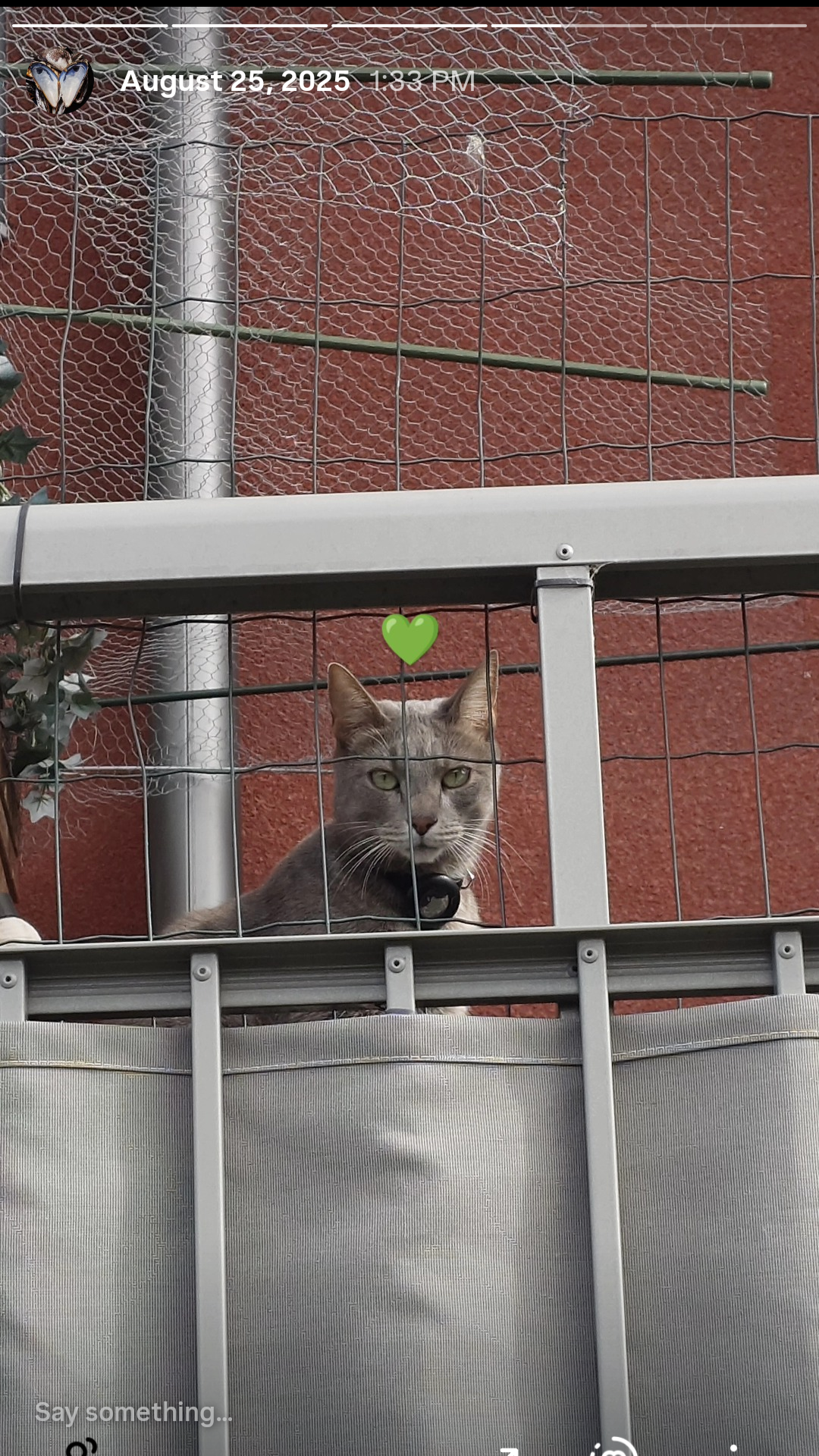
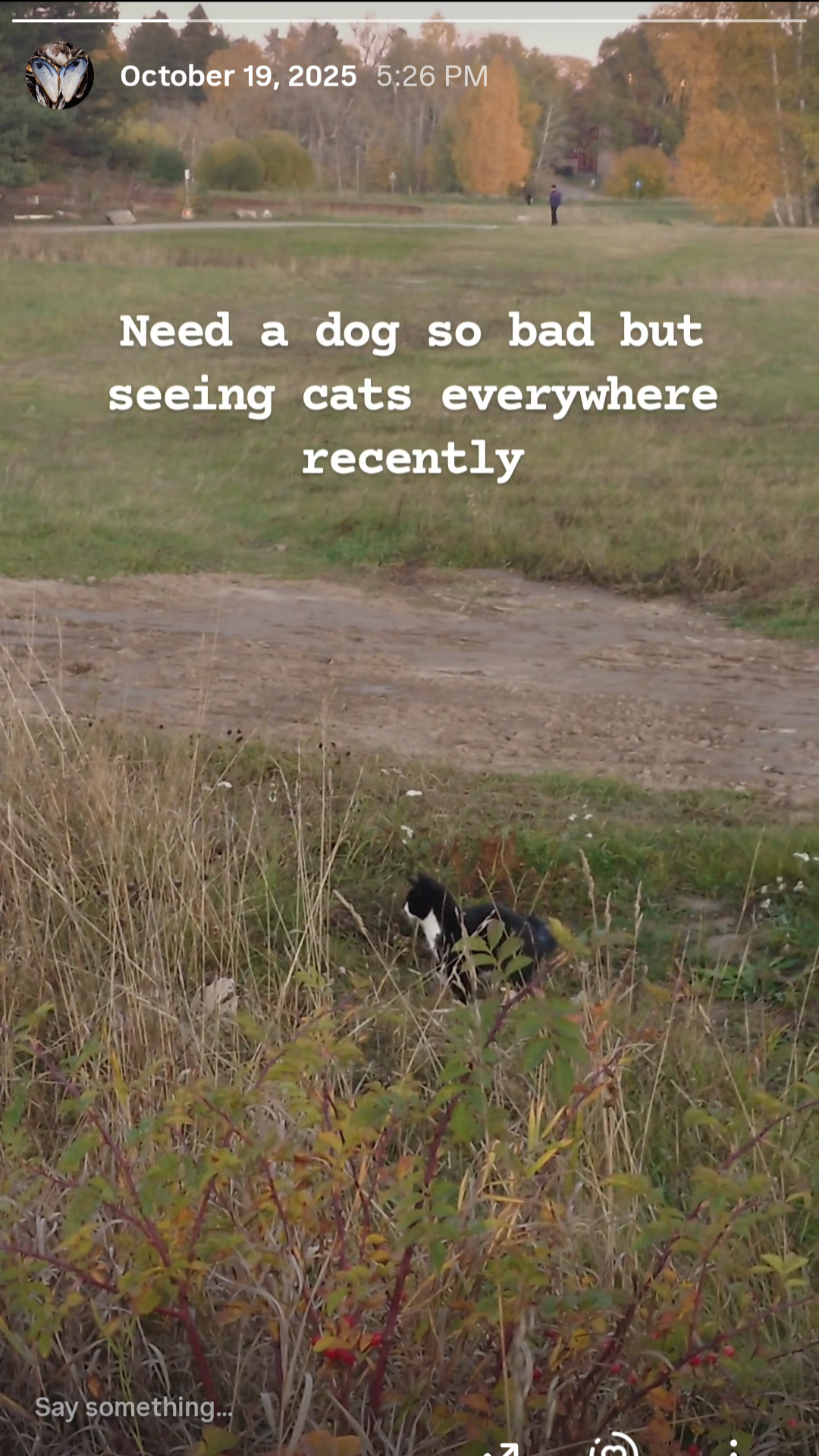
在乌普萨拉偶遇的猫猫们。/ Cats I encountered in Uppsala.
Yet the same animal can carry very different cultural associations depending on the context. Take the two most familiar examples, cats and dogs. In both Eastern and Western cultures, dogs are generally associated with loyalty. Cats, however, have a far more ambiguous reputation. Their mercurial, unpredictable temperament has given rise to a wide range of interpretations across different cultures.
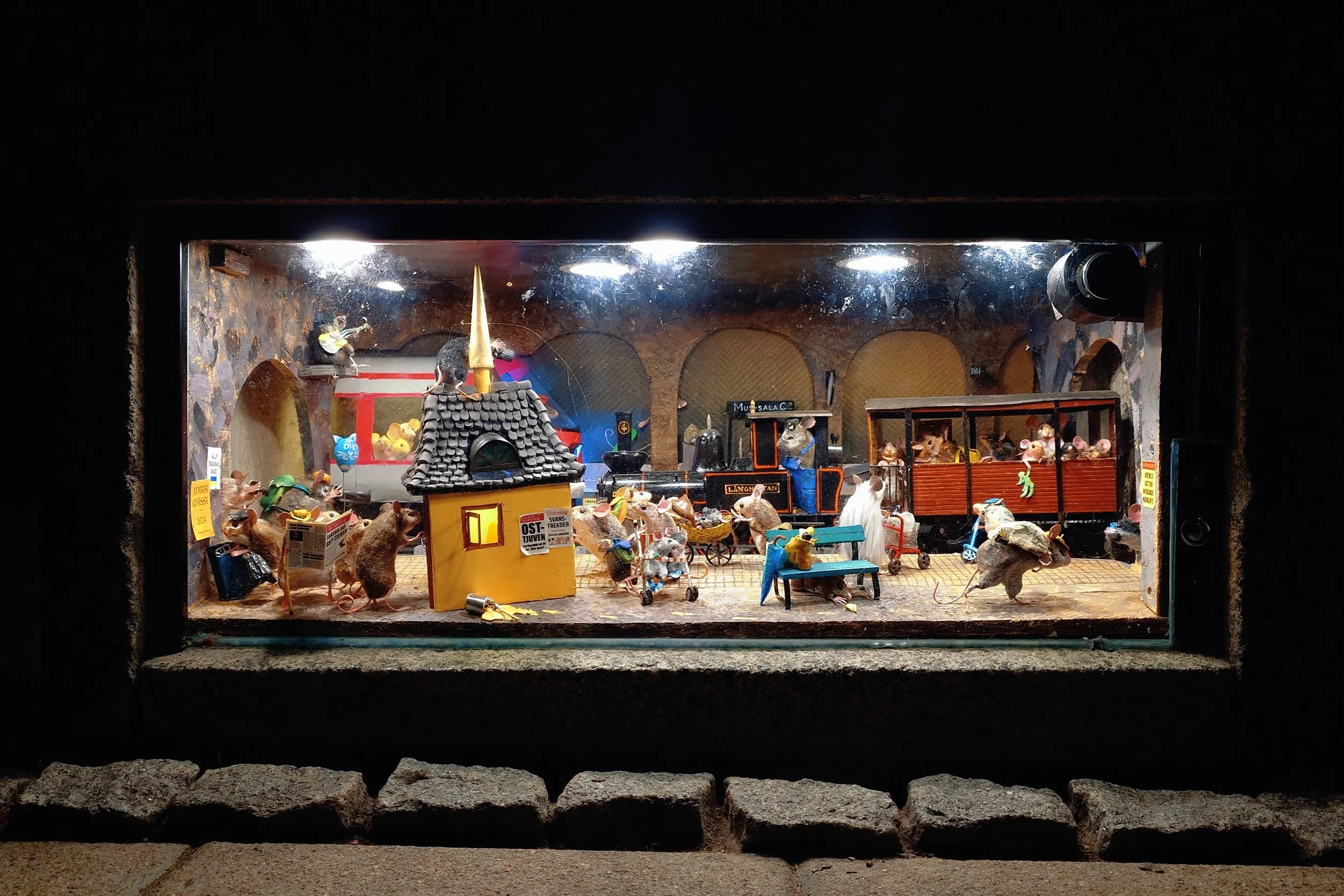
乌普萨拉街头的鼠鼠艺术装置。/ A little rat art installations on the streets of Uppsala.
Adorable: https://www.instagram.com/reel/DaxDi89CKgX/?utm_source=ig_web_copy_link&exln=NTc4MTIwNjQ2YQ==
In ancient Egyptian culture, for instance, cats were sacred religious symbols. In Chinese, by contrast, there is a saying that roughly translates as “A dog is a gentleman, while a cat is a petty person.” And in contemporary Chinese internet slang, the term tiǎn gǒu (舔狗), literally “licking dog,” carries a distinctly derogatory connotation. It describes someone who goes out of their way to please a romantic interest and gives unconditionally, only to receive little or nothing in return, very close to the word “simp”
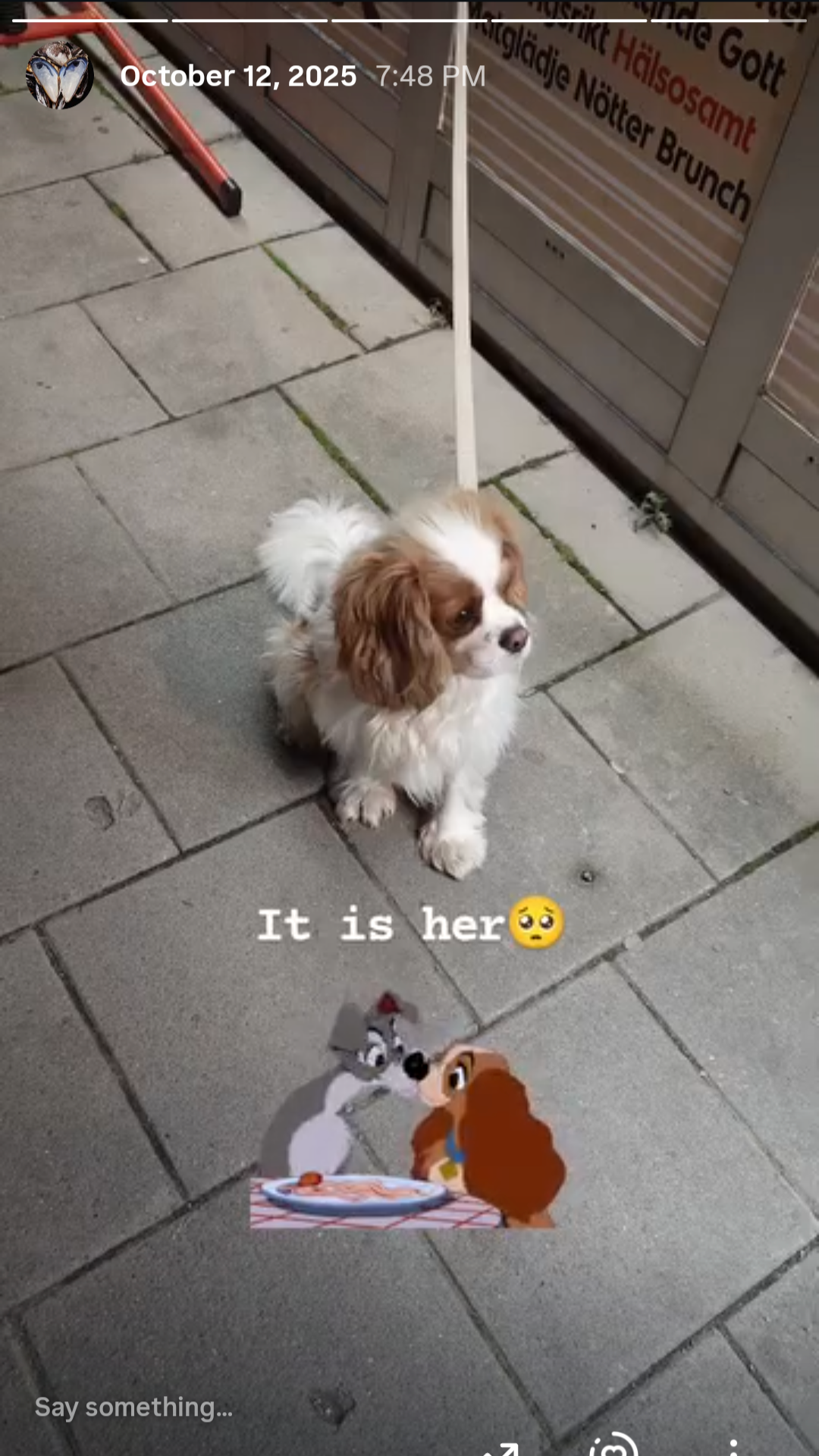
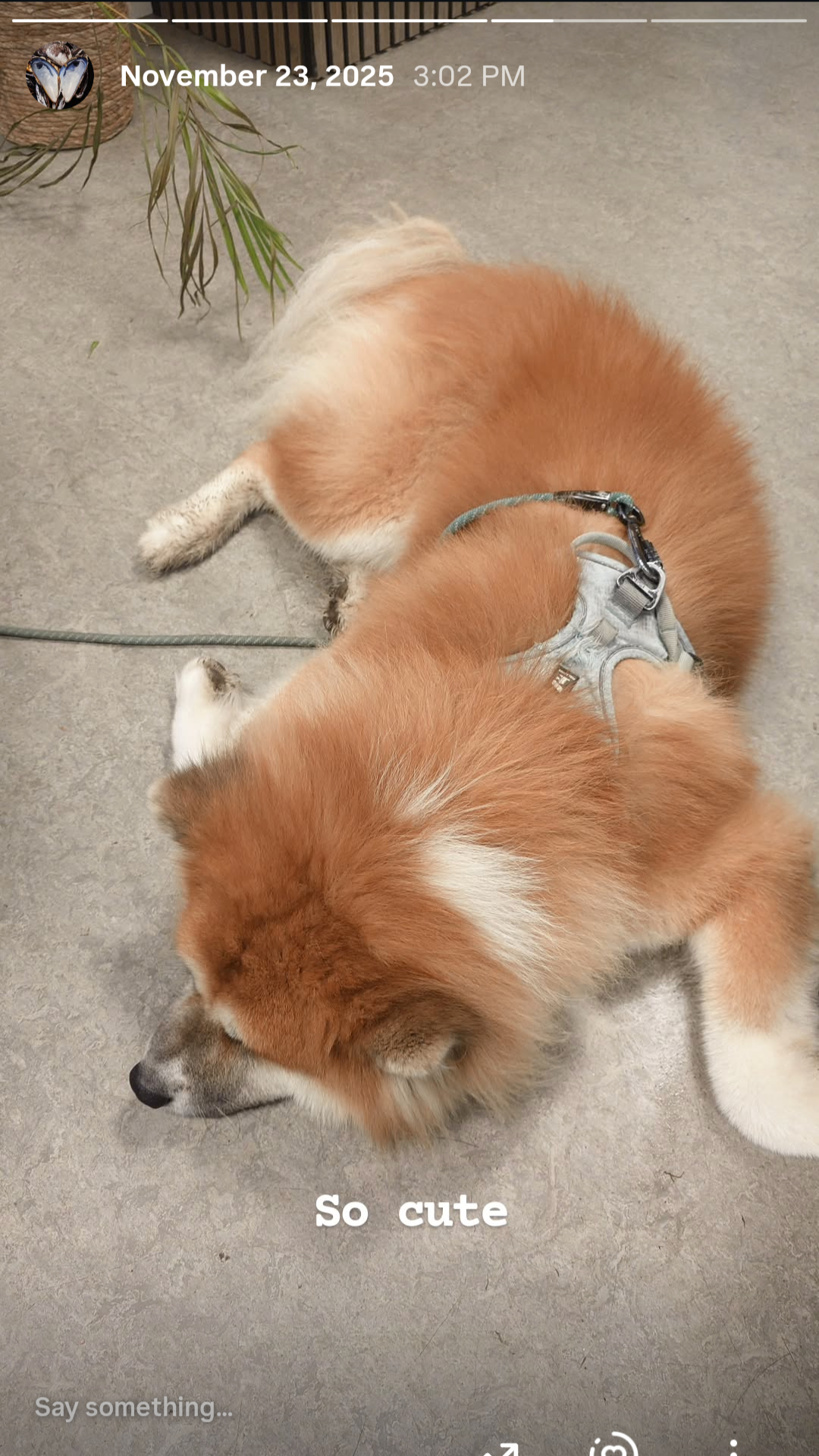
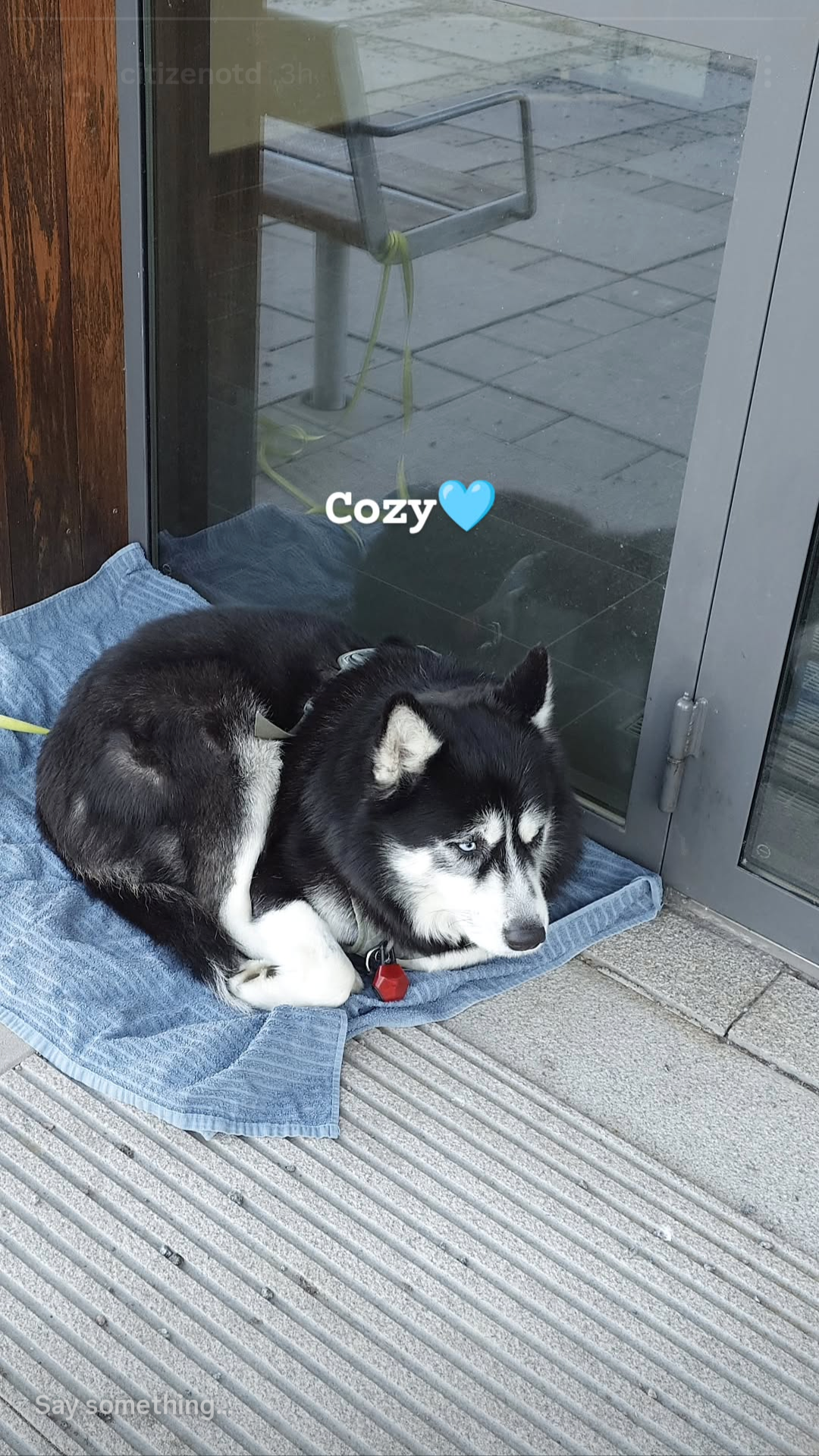
在乌普萨拉偶遇的部分狗狗。/ Some of the dogs I’ve ran into in Uppsala.
Since graduating from high school, however, I have developed a strong aversion to internet slang, particularly the fleeting expressions that come and go in my own native language. Add to that the fact that East Asians are often stereotyped as being less inclined to express their emotions openly through words, along with humanity’s collective tendency to behave like a broken record, and the result can be rather exasperating.
On several occasions, I went out of my way to choose thoughtful gifts for people on their birthdays or other special occasions, simply because I considered it good manners. Not only did I sometimes receive no “thank you” whatsoever, but I was left with the impression that these people placed little value on cultivating genuine relationships and emotional connections in real life. Instead, celebrity gossip and the trivial entertainment news surrounding showbiz personalities seemed to matter more to them than the friendship we supposedly shared at the time. The sheer obliviousness was astounding.
Sometimes, to make matters worse, they would turn around and tease me with internet slang, calling me a simp or saying I am “lovebombing” them. It was as though the thoughtful gifts I gave them, simply because I had been brought up to be a considerate and well-mannered friend, were somehow evidence of pathetic people-pleasing or the manipulative behavior of a womanizer.
Meanwhile, the occasional gifts they gave me in return were nowhere near the same level as the ones I had chosen for them.
Eventually, I stopped being so accommodating. I cut these ungrateful, unappreciative people out of my social circle and my life without a second thought, severing all contact with them for good.
后来再和一些没有批判性思维的人打交道时遇到冲突,或者在他们经历不顺感到焦虑时向我抱怨,总要在一开始就问清对方,你现在是想要寻求解决问题的方案还是单纯需要情绪上的宣泄?如果是想要解决问题的方案那还好办,因为自己的生活阅历客观来讲还是比大多数同龄人丰富的,提供的方案也多能帮助他们解决或者缓解问题。但很多时候对方就只顾着抱怨,给他们提供方案或者耐心解释时甚至还会干脆打断我说:“你说这个没用,我不想听。”搞得我十分无奈,又因为自己非常擅长自我调节情绪,觉得遇到问题不能只停留在情绪层面,还是需要找到解决方案并落实,很少向别人抱怨,聊天时分享也是以吐槽或者咨询建议以好自己应对为主。后来再遇到有人向我抱怨生活或学业上的不顺,自己又没时间和精力去应对时便会说:“现在专注学业和过好自己的生活,等你到了三十岁当前遇到的困扰就会消失了。”多数时候对方也会及时闭嘴不再浪费双方的时间而去忙自己的事了。自己这么说也不是天真地认为到了三十岁后生活就会进入轻松模式,人生的每个阶段都会遇到不同的问题和困扰,而是基于自己所在的社会阶层,观察到大部分人到了三十岁后生活中的经济问题也多得到了解决,不用再考虑温饱以及住宿问题,再回看当初二十多岁时经历的一些不顺也会觉得没什么大不了的,甚至还能比当时处理得更好,情绪上也会更放松,比自己年轻时也更成熟理智。
Later, whenever I found myself in conflict with people who lacked critical-thinking skills, or when they came to me feeling anxious and complaining about things going wrong in their lives, I learned to ask one question right at the outset: “Are you looking for solutions to your problem, or do you simply need to vent?”
If they genuinely wanted solutions, that was usually manageable. Objectively speaking, I had accumulated more life experience than most people my age because my educational background and experiences of living in two countries and different cultures, and the advice I offered could often help them resolve their problems or at least alleviate them. But quite often, the other person would simply keep complaining. Sometimes, when I tried to offer a practical solution or patiently explain my reasoning, they would interrupt me outright and say, “There's no point in saying that. I don't want to hear it.”
I found this incredibly frustrating.
Perhaps because I have always been rather good at regulating my own emotions, I tend to believe that when something goes wrong, we cannot afford to remain stuck at the level of our feelings; we eventually have to identify a solution and put it into practice. I rarely complain to others myself. When I share my experiences in conversation, it is usually to make a few wry observations about what happened or to seek advice that might help me handle the situation better.
Eventually, when people came to me complaining about setbacks in their personal lives or academic work, and I simply lacked the time or energy to deal with their problems, I started telling them:
“Just focus on your studies and living your own life for now. By the time you're thirty, the problems you're struggling with today will have disappeared.”
More often than not, they would promptly fall silent, stop wasting both our time, and get back to whatever they needed to do.
It wasn't that I naively believed life would suddenly become easy once we turned thirty. Every stage of life brings its own problems and frustrations. Rather, my observation, based on the social class I belong to, was that by their thirties, most people had resolved many of the financial difficulties that had weighed on them earlier in life. They no longer had to worry as much about basic necessities or finding somewhere to live. Looking back on the setbacks they had experienced in their twenties, they would often realise that those problems had not been quite as insurmountable as they once seemed. Some might even find that they could handle similar situations far better than before.
By then, they would also tend to be more emotionally at ease, more mature, and more rational than they had been in their younger years.
觉得没有办法再和觉得“特朗普单纯可爱”的这个女的再打交道的原因也是多元的。对方十分喜欢关注娱乐新闻以及八卦,投入非常多的情感和时间,有时候甚至把一些她关注的公众人物看得比现实中她认识的人还要重要,在他们身上产生了强烈的拟社会关系。遇到观点冲突时还要与我找茬甚至强迫我认同她的观点,而自己则是把这类内容当消遣看的,没怎么当真过,很多次都觉得对方不可理喻,完全没有办法进行有效沟通。
There were several reasons why I eventually decided I could no longer deal with the chick who thought Trump was “a sweet, cute, innocent old man.”
She was extremely invested in celebrity news and gossip, devoting a considerable amount of time and emotional energy to following it. At times, she seemed to regard certain public figures she followed as more important than the people she actually knew in real life, having developed intense parasocial relationships with them.
Whenever our opinions clashed, she would pick arguments with me and even try to force me to agree with her point of view. I, on the other hand, treated this kind of content as nothing more than entertainment and had never taken it particularly seriously. Time and again, I found her utterly unreasonable, and it became clear that meaningful communication between us was practically impossible.
注:拟社会关系(parasocial relationship)是一种单向的心理联系,指个体对明星、媒体人物或虚构角色产生情感上的亲近感或熟悉感,而这种联系并未得到对方的回应。通过在电视节目、采访或社交媒体等媒介中的反复接触,人们可能会产生一种仿佛真正认识对方的亲密感或友谊感。这种心理可能导致个体密切关注对方的生活、过度维护偶像,甚至在现实生活中以“好像认识”的心态去接近他们。
Note: A parasocial relationship is a one-sided psychological bond in which a person feels connected to a celebrity, media personality, or fictional character, even though the connection is not reciprocated. Through repeated exposure in media—such as TV shows, interviews, or social media—individuals may develop feelings of familiarity, intimacy, or friendship, as if they truly know the person. This can lead to behaviors like following their daily lives obsessively, defending them passionately, or even approaching them in real life as if the relationship were personal.
Kendall Jenner就经历过类似的情况还把对方关进了监狱告上了法庭,在真人秀里提及是也是委屈地解释说她过私人生活的时候经常被陌生人接近并且企图与她进行对话,因为对方经常在电视媒体上看到她以及她的生活片段,产生了误以为自己在现实生活中真的认识她的情绪,而现实生活中Kendall却对对方一无所知,甚至感觉个人空间被侵犯到。
Kendall Jenner has experienced something similar. In her case, she took the person involved to court and had them sent to prison. When she discussed the experience on her reality show, she explained, visibly upset, that strangers would often approach her while she was simply trying to go about her private life and attempt to strike up conversations with her.
Because they had seen her so frequently on television and in the media, including glimpses of her everyday life, they developed the mistaken impression that they genuinely knew her in real life. But in reality, Kendall knew absolutely nothing about these people, and their behavior left her feeling that her personal space was being invaded.
Horrifying: https://youtu.be/NJi1MVukBR8?si=BhgUTAfnKpDcWCor
打个比方(因为实例涉及的亚洲偶像名气太小,所以用侃爷和卡戴珊代替),就比如我平时偶尔会听侃爷的音乐(举例而已,没怎么听过),会被她认定为侃爷的粉丝,而且她平时痴迷与卡戴珊一家的各种绯闻,甚至时不时表现出对因为性爱录像带出名的金卡戴珊的赞赏,就仅仅因为她经常在公众面前出现以及看上去财务自由的样子。在巴黎那篇博客里提到因为语言和信息甚至文化壁垒,一些华语明星,比如成龙因为私生女以及一些生活作风问题在华语世界早已没了在欧美电影业的正面形象,反之亦然。在第一次去阿姆斯特丹时参观的妓女博物馆拿到的信息宣传册上是把金作为高级应召女而不是什么名人来举例说明的,一次被欧洲的富商出钱请去维也纳的晚宴作女伴时的修养也极差,该富商也被在场的人感到不耻。欧美的大部分人看到卡戴珊一家的新闻也是持负面评价,认为他们成名无因,是不把他们当什么名流看的,认识一些喜欢看NBA 的男生也在他们喜欢的球星和卡戴珊传绯闻的时候感到困扰,说但凡到了赛季打比赛的时候之前刷到的新闻都是他们爱看的篮球相关内容,现在却每次都要看这几个不知道哪里来的女的,觉得十分莫名其妙甚至困扰。而到了一些语言文化不同以及经济水平较为悬殊的中国人眼里,他们反倒成为了白手起家的励志成功典范。就好比到了侃爷和金离婚的时候她还会真情实感地来找我挑事,质问我:“凭什么你的侃爷要和我的金离婚?”
我:?
第一次遇到这种情况还花费了时间精力和她解释请她不要把社媒上一些白痴名人的绯闻当真看并且把情绪投射到现实生活中认识的毫不相干的无辜的人身上,她花了半小时调节好自己的情绪并意识到她的错误还来找我道歉。
结果后来遇到类似的情况还是会一而再再而三地来质问我:“凭什么你的侃爷要和我的金离婚?”
几次下来只是觉得自己精神和情绪上相当疲劳,而自己一开始认识她遇到情绪或者生活上的问题企图与她沟通她却多次回复:“你自己的问题自己解决”,也更不要指望她基础微积分都学得勉强及格的脑子能对我在学业上有任何帮助了。后来和欧洲的同学聊天吐槽时提起他们也觉得这种人相当不可理喻。
To give an example—and since the Asian idol involved in the original incident was too obscure to be widely recognized, I’ll use Kanye West and Kim Kardashian here instead.
Suppose I occasionally listened to Kanye’s music (purely hypothetical; I’ve barely listened to any of it). She would automatically assume I was a fan of Kanye. Meanwhile, she was obsessed with all the gossip surrounding the Kardashian family and would even express admiration for Kim Kardashian, who first became famous through a leaked sex tape, simply because Kim was constantly in the public eye and appeared to be financially independent.
In my blog post about Paris, I mentioned how language, information, and cultural barriers can lead to very different public images of the same celebrity. Some Chinese-speaking celebrities, such as Jackie Chan, have long since lost much of the positive image they once enjoyed in the Chinese-speaking world because of controversies surrounding his illegitimate daughter and his personal conduct, even though he continues to have a presence in the Western film industry. The reverse can also happen: a celebrity's reputation in one cultural sphere may differ substantially from their reputation in another.
When I first visited Amsterdam, I went to the Museum of Prostitution and picked up an informational brochure. Kim Kardashian was mentioned in the context of high-end escorts rather than as a celebrity in her own right. On another occasion, an European businessman paid for her to attend a high class dinner in Vienna as his female companion, and her conduct and manners at the event were reportedly so poor that even the businessman himself who brought her there was looked down upon by the other guests.
In general, much of the Western public seems to view the Kardashian family rather negatively, questioning why they are famous in the first place and refusing to regard them as particularly prestigious public figures. I have also met several guys who enjoy watching the NBA and have found the Kardashian-related rumours surrounding their favourite basketball players genuinely frustrating. They told me that during the season, their social media feeds used to be full of basketball content they actually wanted to see. Now, they kept getting news about these women they had never heard of before, which they found baffling and even irritating.
Yet among some Chinese people, who come from a different linguistic and cultural environment and may have substantially less economic privilege, and most people being unaware of how they get famous from the beginning, Kardashians can instead be regarded as inspirational examples of people who built their own fortunes from scratch.
Imagine, then, that when Kanye and Kim were getting divorced, she would come to me in a state of genuine emotional distress and demand an explanation:
“Why is your Kanye divorcing my Kim?”
Me: ?

The first time this happened, I actually spent time and energy explaining to her that she shouldn't take the gossip surrounding random celebrities on social media so seriously, let alone project those emotions onto innocent people she knew in real life who had absolutely nothing to do with the situation. After about half an hour, she managed to regulate her emotions, recognized that she had been in the wrong, and came back to apologize to me.
But when similar situations arose later, she kept coming back to challenge me with the very same question, time and time again:
“Why is your Kanye divorcing my Kim?”
After several rounds of this, I was simply exhausted, both mentally and emotionally. What made the situation even more frustrating was that, when I first got to know her and tried to talk to her about my own emotional or personal difficulties, she had repeatedly responded with, “Your problems are yours to solve.”
I certainly wasn't going to expect any academic help from someone who had struggled to scrape a pass in even basic calculus class.
Later, when I vented about the whole situation to some of my European classmates, they agreed that this kind of behavior was utterly unreasonable.
当时还时不时的截图给我看她之前的初高中同学在社媒上发的她觉得cringe的内容,还要指出别人无心犯的语法或者拼写错误并嘲笑。记得当时她的一个同学爱好摄影,还开了自己的摄影以及留学生活为主要内容的公众号,发给我看了我也只是觉得别人在作简单的分享,她却一直发表:“她觉得自己有什么了不起的,这值得发吗?”的言论,搞得我当时爱写博客文章的我也就此封笔,觉得自己认识的人大概也会这么在背后评价我。当时还评论说她的高中同学买价格昂贵的镜头装备也是为了摆阔炫耀,根本不懂摄影,我:“他家有钱你就让他花好了”。我后来有什么兴趣爱好但凡与她有重叠就藏着掖着,绝不告诉她。大一才开学的时候与她住同一栋宿舍一位没有恶意的美国同学把整层楼的人的门敲了个遍作自我介绍表示很高兴认识大家,她后来和我提起也评价对方“有病”。一次发社媒提到了“朋友们”这个词,被她看到了阴阳怪气:“还‘们’?你朋友很多是吗?”从追星的选择上其实也能看出个人心理投射,她觉得一个爱豆招她喜欢就是因为他朋友数量众多,与她本人成为鲜明对比。平时随口说的一句“那我现在要回家了”也会被她揪住抠字眼说:“你拿宿舍还是美国当家?”
我:那你是无家可归的流浪汉?
Every now and then, she would send me screenshots of things her former middle- and high-school classmates had posted on social media, declaring them and their posts as “cringe.” She would also point out and mock innocent grammatical or spelling mistakes that people had made without thinking.
I remember one of her classmates was interested in photography and had even started her own photography account, mainly sharing her work and experiences of studying abroad. When she showed me the posts, I simply thought the girl was sharing snippets of her life, nothing more. But my roommate kept making remarks like, “Who does she think she is? Is any of this even worth posting?”
As someone who enjoyed writing blog posts myself at the time, I found this particularly discouraging. I eventually stopped writing altogether, worrying that people I knew might be saying the same things about me behind my back.
She also once criticized a high-school classmate for buying expensive camera lenses, claiming he was merely showing off, wasted their parents’ money, and knew nothing about photography.
Me: “It’s his family’s money, he is supposed to do whatever he wants with it.”
After that, whenever I developed a hobby or interest that happened to overlap with hers, I kept it to myself and made absolutely sure not to tell her about it.
At the beginning of our first year at university, an American local student who lived in the same dormitory building went around knocking on every door on our floor to introduce himself and say how happy he was to meet everyone. He meant absolutely no harm, but when my roommate brought him up later, she simply dismissed the boy as “mentally ill.”
On another occasion, I used the word “friends” in a social media post. She saw it and made a sarcastic remark: “Friends? With an s? So you just want to show off that you have lots of friends, do you?”
Even her choice of idols seemed to reveal something about her own psychological projections. She admired a particular celebrity partly because he had so many friends, which stood in stark contrast to her own social life.
Even a casual remark like “Well, I’m going home now” could become an opportunity for her to pick apart my wording.
“Do you consider your dormitory or America your home?”
Me: “So, are you homeless then?”
到了大四快毕业的时候看到她在社媒上发的一张我几年前就刷到过的海马钩着塑料棉签的照片,还感慨说我的天哪污染已经这么严重了吗?对她日渐不满的情绪已经逐渐演变成了愤怒。因为自己对一些中国中产小孩十分了解,知道有时候他们做一些事情并不是真的为了关心环境以及保护动物,而是为了随大流让自己看上去时尚潮流,以及让别人觉得他们是“真的关心”,但本质上还是为了最低成本地体现以及巩固自己至少中产的身份,他们的兴趣爱好也主要以消费为主,完全不作内容的产出以及注重个人发展,也完全没有在行为上落实过自己“真的关心”这一点,问就是“那我不买这个买别的了”,所以呢?你没有让情况恶化,但也没有通过自己的行动去改善它,能做到的也就仅仅是在社媒上发一条帖子。真正的中上层阶级是不需要通过这种廉价且博关注的方式反复自证其身份的,看他们自身或在给小孩身上投资发展的兴趣爱好上这一点就能看得出来,比如有没有学习了十几年并达到专业级别的乐器,有没有一直在练习并擅长并频频获奖的体育项目,这些东西不仅考验中上层阶级家长的人脉以及资源,对他们小孩性格体格的塑造以及社交生活都是有极大的帮助的。当时自己在高中时就看到塑料污染对海洋生物生存环境的影响,决定读理工科也是为了更好地帮助别人以及动物,尽自己个人能做到最大的努力优化工业社会结构和生产模式,做一个对社会有用的人,大学时的毕业论文也是对塑料吸管的材料替换选择,因为几年前刷到过专业人员给海龟移除卡在鼻孔里塑料吸管的视频。还是那句话,遇到问题不能只停留在情绪层面,是需要找到解决方案并落实的。
By the time we were approaching graduation in our fourth year of university, I saw her post a photograph of a seahorse clutching a plastic cotton Q-tip. I had come across the same image years earlier. She captioned it with something along the lines of, “Oh my God, has pollution really got this bad?”

By then, my growing dissatisfaction with her had gradually turned into outright anger.
Having spent a fair amount of time around children from Chinese upper-middle class families, I had come to understand that sometimes, when they engaged in certain activities, it was not necessarily because they genuinely cared about the environment or wanted to protect animals. Rather, they were following trends to make themselves appear fashionable and progressive, and to convince others that they “really cared.” At its core, though, the aim was often to signal and reinforce their middle-class status at the lowest possible cost.
Their hobbies, too, tended to revolve around consumption rather than creating anything of their own or investing in personal development. And they rarely translated their professed concern into concrete action. If challenged, their response would be something like, “Well, if I don't buy this, I'll just buy something else.”
And then what? You might not be making the situation worse, but you aren't doing anything to improve it through your own actions, either. All you have managed to do is post something about it on social media.
People who genuinely belong to the upper-middle or upper classes rarely need to keep proving their social standing through such cheap, attention-seeking gestures. You can often see the difference in the interests they cultivate for themselves and the activities they invest in for their children. Have they spent ten or more years learning a musical instrument and reached a professional standard? Do they practice a sport consistently, excel at it, and regularly win competitions?
These pursuits require considerable resources and connections on the part of upper-middle class parents. They can also play a significant role in shaping their children's personalities and physical development, while providing valuable opportunities for social interaction and building relationships.
As for me, I had already seen how plastic pollution threatened marine life when I was in high school. One of the reasons I chose to study science and engineering was that I wanted to help people and animals more effectively, doing as much as I personally could to improve the structures and production systems of industrial society and become someone who could make a meaningful contribution to the world.
Even my undergraduate thesis focused on evaluating alternative materials for plastic drinking straws, inspired by a video I had come across years earlier showing professionals removing a plastic straw lodged in a sea turtle's nostril.
So painful: https://youtu.be/4wH878t78bw?si=G4gdIvSz_lw3dm3T
As I keep saying, when we encounter a problem, we cannot afford to stop at the level of emotional reactions. We need to find solutions and put them into practice.
离开美国之前“黑命贵”的相关话题不论是在线上还是线下都闹得沸沸扬扬的,几乎身边认识的所有人和社媒上关注的一些名人都在自己的社交媒体尤其是Instagram上发了全黑图片的帖子。当时的一些少数名人没发还被他们的年轻粉丝群体质问为什么,是不是根本就不关心非裔美国人?还准备取消他们。自己也是没发,也受到过质疑,当时觉得社交媒体而已,又不能代表自己的真实生活,偶尔发发也是自己的日常相关,自拍照片都很少发。也觉得在网路上做样子不如在现实中好好和非裔相处互帮互助,再受到质疑就回复说你这种说法就好比我请你到我家来做客,你看到我客厅里挂的艺术品不是非裔画家画的就骂我种族歧视,逻辑上根本说不通,再说了,大部分人都发了我就也要发吗?少给我发这种神经。
Before I left the United States, the Black Lives Matter movement was dominating public discourse, both online and offline. Almost everyone I knew, along with many of the public figures I followed on social media, had posted a solid black image on their accounts, especially on Instagram.
At the time, a few celebrities who chose not to post anything were challenged by their younger fans, who demanded to know why they had remained silent and whether they simply did not care about African Americans. Some even threatened to cancel them.
I hadn't posted anything either, and I was getting people to question me about it, too. My view was that social media was just social media; it didn't necessarily reflect my real life or what I genuinely believed. When I did post something, it was usually related to my everyday life, and I rarely even posted selfies.
I also felt that putting on a show online was far less meaningful than treating Black people well and helping one another in real life. When someone questioned me about it again, I replied:
“What you're saying is like inviting you into my home, only for you to look at the artwork hanging in my living room, notice that none of it was painted by African American artists, and then accuse me of being racist. The logic simply doesn't hold up. Besides, just because most people have posted something, does that mean I have to post it too? Spare me this kind of nonsense.”
印象当中无论是与人打交道还是网上刷到的人际交往的帖子,都是以劝说大家维系现有的关系或者怎样与人更有效地沟通的,主要导向还是以和为贵,似乎从来没有人,甚至包括自己的父母亲人在内,指导或者教育我们怎样去即时辨认并终止一段对我们早就毫无意义甚至充满消耗的关系, 多数人总是告诉我们要记住美好的时刻,却要求我们完全忘记那些糟糕的经历,以及做到要完全忽视曾经受到的不尊重,可有些伤害一旦造成,就永远无法再修复弥补回来了。其实在大学里认识这个女的第一个月时就想要脱身,但无奈有课在一起上,课业繁忙没有时间认识新的同学与其他人社交,有事也只能顺口和同住一处公寓的她说了,没有别人可以分享或者咨询建议。至今还记得和她认识的第一个月末,去了大学附近后来才了解到治安并不太好的居民区吃饭看电影,美国除了一些大城市外基建都不太好,和中国的小县城规划和设置差不多。我后来临近考试周一个人去那的超市买菜,顶着几天没洗的油头和没换的衣服和一张几近素颜的脸在车站等公交车的时候还被当地的混混一直跟着走并用言语骚扰过,记得当时一直大步走离了车站一个街区打了出租车才将对方甩掉,也不太敢和家人说怕他们担心我。而她来自北京这种国际化大都市,去马里兰之前大概看了好莱坞出品的电影电视剧给美国加了不少滤镜,一个月下来后也大概也发现此地不如她想象的那样,欧美日常的生活是远不如中国热闹的,如果没有兴趣爱好不爱健身运动的话,大多数每逢周末就爱抱团吃火锅唱k的中国人的感受也只会是“好山好水好无聊”。虽然有宿舍待食堂有热饭吃但还是开始每天闹脾气想家给家人朋友打电话哭诉抱怨,整个人情绪也不太好的样子,到美国不到一年就让她的父母来看她并表示想回去。对比自己十六岁刚到美国,学业生活以及文化差异上遇到的压力困难重重也是从未有过像她那样,身边也完全没有像我这样可以交流的中国人,在国内的朋友同学当时也都忙于学业,很少向他们抱怨,聊天也都是同他们分享生活为主,也从没有产生过让父母千里迢迢专程来看我的想法。而她开学的时候就让父母一路从国内把她送到马里兰的宿舍,而我高中十六岁时就一个人扛着几个大箱子用当时并不流利的英文在洛杉矶机场和海关人员周旋。看完电影和我在当地商场一家快餐店吃饭的时候也是在频繁找茬,当时又正好月末赶上我几门专业课考试,之前她说什么我还有情感容量以及看在她情绪不好的面子上顺着她的意思说,而当时的从西岸的高中去东岸念大学的我也因非常明显的地域差异在努力适应当地生活,自己的情绪也到了临界点,还要持续性地承接她的一些无理取闹。在她表达对电影的观感时因为我是发自内心地不赞同,便直接表达了自己的看法,结果就跟点燃了炸药一般,那顿晚饭剩下的时间就一直听她言辞情绪激烈地反复强迫我认同她的观点。当然她这种倾向于强加自己的喜好和观点到别人头上也不局限于我,比如在约了一桌朋友吃午饭的时候往往就听到她一个人在对着饭桌上只有她感兴趣的足球夸夸其谈,然后在别人明确表示不感兴趣,以及我一脸疑惑地把球队名字说错后她当场就气得发疯继续高声反复质问所有人:“你们怎么可以不看足球?!” 在场的所有人都只是觉得更莫名其妙。那时候偶尔还在社媒上发过和她出行时的合照,而人在镜头前总是会伪装的,社媒上发出来的内容也多是当时觉得开心值得记录的正面内容,没有人会把自己受精神折磨或者感到不愉快的经历展现在社媒上,这种经历也很难用影像记录下来,毕竟我觉得大多数人不会在和别人发生冲突的正当中突然掏出手机拍张拍照或者录像记录下来。自己又不喜欢说别人的坏话,这就导致了觉得和她相处实在备受精神折磨的同时与当时其他人社交时想要吐槽也觉得无从提起,毕竟他们之中有的还给我和这个女的的合影点过赞,而且自己也很难在短时间内把前因后果全摊开讲清楚。不过也是因为怕受她类似“凭什么你的侃爷要和我的金离婚?”的反复精神折磨,但凡是她有过负面评价的人我都不太敢接触,有时候还要在她毫无根据地讲别人坏话甚至辱骂别人的时候附和两句,主要还是求得自己清静,其实大多数时候是完全不认同自己都说出口的话的,只是顺着她的意思说以早早结束这种无意义的对别人的议论以好让自己去做其他事情。但让我觉得她有些精神分裂的是她前一秒刚讲完别人坏话后一秒却给别人发在社媒上的内容点赞,后来也和其中一些人短暂接触过,不过因为自己迫于社交压力附和过对别人的负面评价也不想和对方有多亲近,有些愧疚的同时也觉得会显得自己虚伪,想要做到至少言行一致。结果发现大多数人并不像她和我抱怨时的那样,而且很多人和她也只是点头之交,也不知道她到底对别人哪里来的这么大的意见,后来再和她接触有意无意地被她带着附和讲一些其他人的负面评价后自己总要一个人花很多时间调节消化自己因为参与议论别人而产生的负面情绪,因为觉得自己没有做到公正客观地看待一些自己并不怎么了解的人,对方那一边的故事版本也是无从了解,而自己仅凭这个女的几句评价就对不太熟的人妄下论断,实在是有失理性,草率且不负责任。其实作为和她普通认识的人自己对她是毫无任何责任而言的,与她打交道有往没什么来的那几年也纯粹靠自己的良心以及看在都是在海外的国人觉得要互帮互助的面子上,而对方在作为“朋友”这一点上经济条件和道德标准对我而言也是远不达标。也从共同认识的人那了解到她一开学时上课就刻意选择和课上的所有中国人都保持距离,有意只和当地美国人坐在一起只说英文。我一开始还以为她在国内念书的时候也被学校里的人霸凌过怕再受伤害还是怎样,后来才了解到纯粹是她崇洋媚外在作怪罢了。
As far as I can remember, almost everything I encountered about interpersonal relationships, whether through my own experiences or posts I came across online, mainly focused on how to maintain existing relationships or communicate more effectively with others. The underlying message was almost always that harmony should be prioritized above all else. It seemed that no one—not even our own parents and family members—ever taught us how to recognize, in real time, when a relationship had long since ceased to serve any purpose in our lives, or had become actively draining, and how to end it without hesitation.
Most people tell us to remember the good times while expecting us to forget the bad experiences entirely and simply overlook the disrespect we have endured. But some damage, once done, can never truly be repaired or undone.
In fact, I had wanted to distance myself from this woman within the first month of meeting her at university. Unfortunately, we shared classes, my coursework was demanding, and I had little time to meet new classmates or socialize with other people. When something happened, I often ended up mentioning it casually to her simply because we lived in the same apartment and there was no one else I could turn to for a conversation or advice.
I still remember the end of that first month. We went out for dinner and a movie in a residential area near the university, which I only later learned had a somewhat poor reputation for safety. Outside a few major cities, American infrastructure often felt underdeveloped, with urban planning and public amenities not unlike those of a small county town in low GDP regions in China.
Later, shortly before exam week, I went to a supermarket in that area alone to buy groceries. My hair was greasy from several days without washing, I was wearing the same clothes I had worn before, and my face was practically bare of makeup. While waiting for the bus, I was followed by an African American local hooligans who verbally harassed me. I remember walking briskly for an entire block away from the bus stop before getting into a taxi and finally get rid of him. I was also reluctant to tell my family because I didn't want them to worry.
My roommate, by contrast, came from Beijing, a city rat. Before moving to Maryland, she had probably absorbed a heavily romanticised image of America from Hollywood films and television dramas. After a month, she seemed to have realised that the place was not quite what she had imagined. Everyday life in Europe and America could be far less lively than life in China. For many Chinese people who enjoy gathering with friends for hotpot and karaoke every weekend, but have no particular hobbies or interest in exercise, the experience might be summed up as: “Beautiful scenery, fresh air, and absolutely nothing to do.”
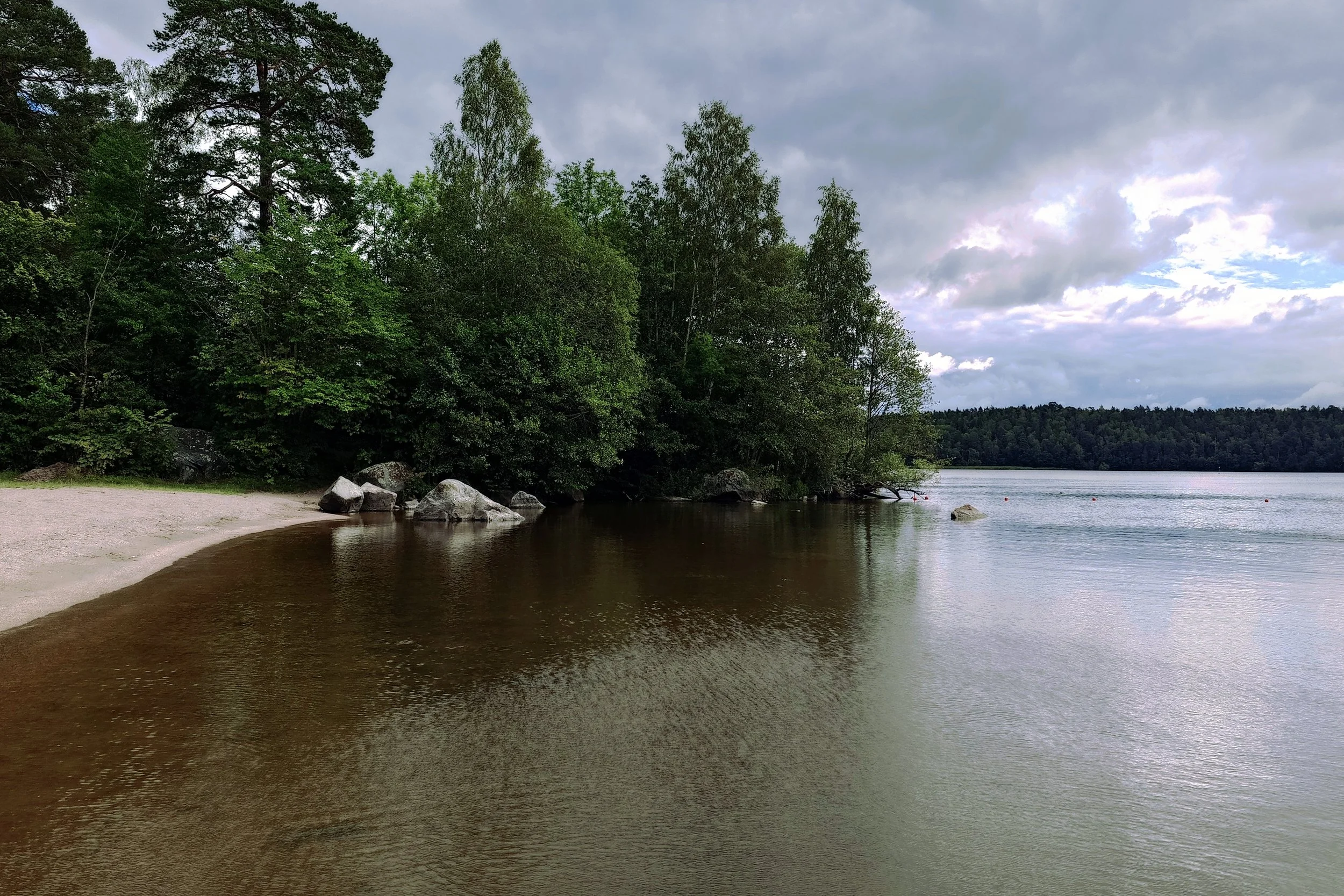


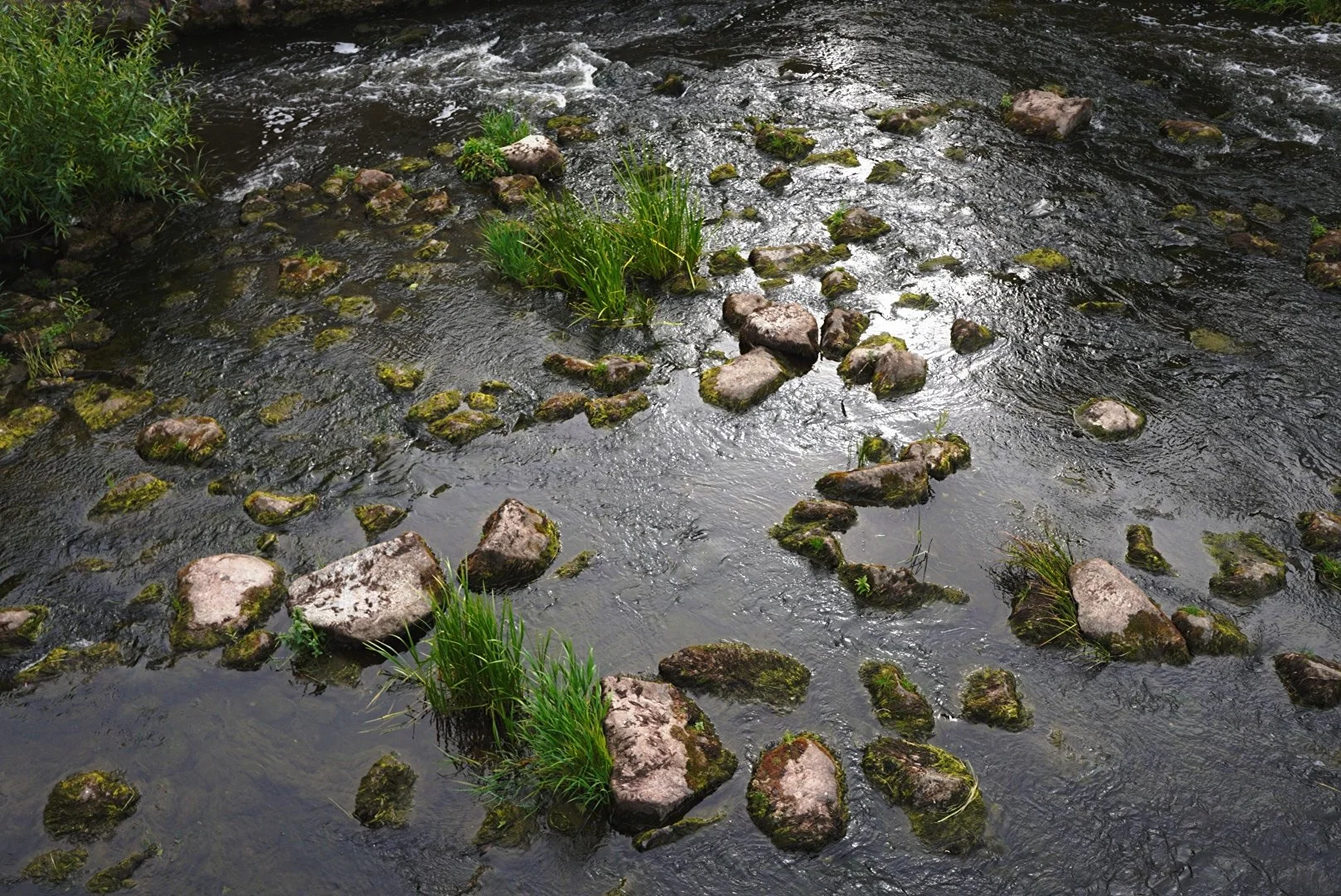

远离人群和烦恼。/ It’s never boring to stay away from people.
Although she had a dormitory to return to and hot meals waiting for her in the dining hall, she began throwing tantrums almost daily, missing home and calling her family and friends to cry and complain. She seemed to be in a persistently poor emotional state. Before she had even been in the United States for a year, she had her parents come over to visit and frequently announced that she wanted to go home.
By comparison, when I arrived in America at sixteen, I had to cope with enormous pressures and difficulties involving academics, everyday life, and cultural differences. Yet I never behaved the way she did. I had no Chinese people around me with whom I could share my experiences in the way she had me. My friends and classmates back home were busy with their own studies, so I rarely complained to them. Our conversations were mostly about sharing what was happening in our lives. It never even occurred to me to ask my parents to travel halfway around the world just to visit me.
She, on the other hand, had her parents accompany her all the way from China to her dormitory in Maryland when the semester began. At sixteen, I had managed the Los Angeles airport and dealt with immigration officers on my own, dragging several enormous suitcases behind me while speaking English that was far from fluent.
Even after the film, when we sat down to eat at a fast-food restaurant in a local shopping mall, she kept finding things to pick at. It was the end of the month, and I had exams in several major courses coming up. Until then, I had often gone along with what she said, partly because I still had the emotional capacity to accommodate her and partly because I could see that she was in a bad mood.
Meanwhile, I was adjusting to life on the East Coast after attending high school on the West Coast, and the regional differences were quite pronounced. I was already reaching my emotional limit, yet I still had to absorb her repeated bouts of unreasonable behaviour.
When she shared her opinions about the film, I genuinely disagreed with her and said so. It was as if I had lit a fuse. For the rest of dinner, I had to listen to her speak with increasing emotional intensity, repeatedly trying to force me to agree with her point of view.
Of course, her tendency to impose her interests and opinions on others was not limited to me. Whenever we arranged to have lunch with a group of friends, she would often monopolise the conversation by enthusiastically talking about football, the one subject at the table that interested her. Even when other people explicitly said they weren't interested, she would carry on. Once, when I looked confused and got the name of a team wrong, she became furious and continued loudly demanding of everyone at the table, over and over again, “How can you not watch football?!”
Everyone else was simply baffled.
Back then, I occasionally posted group photos of the two of us when we went out together. People tend to present a carefully curated version of themselves in front of a camera, and what appears on social media is usually the positive side of life—the moments that felt happy or worth remembering. No one posts about being emotionally tormented or having an awful time with someone. Those experiences are also difficult to capture in photographs or videos. After all, I doubt most people would suddenly pull out their phones and start filming in the middle of an argument or conflict.
I also dislike speaking badly of other people. As a result, even though spending time with her had become emotionally exhausting, I found it difficult to bring up my frustrations when socializing with other people. Some of them had even liked the photos of the two of us together. Besides, it was difficult to explain the entire history of what had happened in a short conversation.
At the same time, I was afraid of being subjected again to the kind of relentless emotional harassment she had inflicted on me over questions like, “Why is your Kanye divorcing my Kim?” Consequently, I became reluctant to interact with anyone she had ever spoken negatively about. Sometimes, when she made baseless accusations or insulted other people, I even found myself agreeing with her for a moment or two. Mostly, I just wanted some peace and quiet. In reality, I often disagree entirely with the words coming out of my own mouth. I was simply going along with her to bring those pointless discussions about other people to an end as quickly as possible, so I could get on with my own life.
What I found particularly baffling, though, was how she could finish badmouthing someone one moment and then like that very person's social media post the next. I later had brief interactions with some of the people she had criticized. However, because I had already echoed her negative opinions about them under social pressure, I felt reluctant to get too close to them. I felt guilty, but I was also afraid that doing so would make me look hypocritical. At the very least, I wanted my words and actions to remain consistent.
When I eventually got to know these people a little better, I discovered that most of them were nothing like the way she had described them when complaining to me. Many barely knew her beyond exchanging occasional greetings, and I couldn't understand where she had found so much to resent about them in the first place.
Later, whenever I interacted with her and found myself being drawn, intentionally or otherwise, into agreeing with her negative assessments of yet another person, I would have to spend a great deal of time afterwards processing the unpleasant emotions that came from having participated in gossip.
I felt that I had failed to assess people fairly and objectively when I barely knew them. I had no way of hearing the other side of the story, and it was hardly rational, let alone fair or responsible, to pass judgement on people I scarcely knew based on a few remarks from this woman.
The truth was that, as someone who merely knew her socially, I had no real obligation to her whatsoever. The years I spent dealing with her, which ultimately gave me very little in return, were sustained purely by my own conscience and by the feeling that, as fellow Chinese people living abroad, we ought to help one another.
As a “friend,” however, she fell far short of what I considered acceptable, both in terms of financial circumstances and moral standards.
I also learned from people we both knew that, from the very beginning of the semester, she had deliberately kept her distance from all the Chinese students in our classes, choosing instead to sit exclusively with local American students and speak only English.
At first, I wondered whether she had been bullied at school back in China and was afraid of being hurt again, or whether there was some other reason for her behaviour. Only later did I realise that it was simply her tendency to worship anything Western that has a white enough appearance.
后来也用AI模拟过她和我的对话,除了每次到了使用次数的限度以及技术故障AI会停止工作外,那也是唯一的一次AI没有顺着我所模仿的她的胡搅蛮缠而是直接终止了对话。
Later, I even used AI to simulate conversations between her and me. Aside from occasions when the AI stopped working because I had reached the usage limit or encountered a technical glitch, this was the only time it refused to play along with the unreasonable, nonsensical arguments of the version of her I was imitating and simply terminated the conversation outright.
不过后来发现有合照也说明不了什么,虽然自己也变得有些抗拒合影这件事。在乌普萨拉出门散心时偶遇熟人寒暄时提到共同认识的人,随口问对方知不知道他的近况,对方也是摇摇头说,不清楚诶,我和他又不是很熟,我惊讶地追问:但是你和他有很多合影诶?后来和土耳其朋友聊天时对方也说其实在和一些真正要好的朋友打交道共度时间时是根本不会想到拍合照这件事的,我同意说对哦,就算偶尔想起来会拍数量也不会太多。但回忆起来和他们在一起时的每一秒都觉得非常开心,时间也过得飞快。就像爱因斯坦解释相对论时举的“美女与火炉”的例子。坐在美女旁边一个小时,会感觉光阴似箭;坐在火炉上一小时,只会觉得度秒如年,备受折磨。再比如平时在乌普萨拉出行,有时候遇到漂亮的狗会拍照记录留念,偶尔遇到自己最喜欢的萨摩耶被人牵出来遛的时候总会毫不犹豫地抛下自己矜持害羞的性格,主动上前问她的主人自己能不能摸摸她,但每次总是因为过于欣喜的情绪而完全忘记要拍照的。有一次和朋友出门吃饭,偶遇萨摩耶被主人牵出来遛,得到允许摸摸后还和主人朋友感慨:“这可是我的梦中情狗诶!”,末了还看着萨摩耶远去的背影向朋友提议说:“你去转移开主人的注意力,我去把狗拐回家。”朋友听了也是连连发笑。
Later, though, I realized that having photos together didn't really prove anything, even if the experience had made me somewhat reluctant to pose for photos with people.
Once, while I was out for a walk in Uppsala to clear my head, I ran into an acquaintance. As we exchanged pleasantries, we got to talk about someone we both knew, and I casually asked whether they knew how he was doing. The person shook their head and replied, “No idea, really. We’re not that close.”
I was astonished. “But you have so many photos together!”
Later, while chatting with a Turkish friend, she told me that when you spend time with people you are genuinely close to, taking group photos doesn't even cross your mind. I agreed. Even when you do happen to think of it occasionally, you rarely end up taking that many.
Yet when I looked back on the time I had spent with those people, every second felt genuinely joyful, and the hours seemed to fly by in seconds.
It reminded me of the example Einstein supposedly used to explain relativity: sitting beside a pretty girl for an hour feels like a minute, whereas sitting on a hot stove for a minute feels like an hour. One experience makes time fly; the other makes every second feel like an eternity of suffering.
For another example, when I’m out and about in Uppsala, I sometimes take photos of dogs or puppies I happen to come across, just to preserve the memory. But whenever I see my absolute favorite breed, the Samoyed, being walked by its owner, I invariably abandon all my usual reserve and shyness without a second thought. I march straight up to the owner and ask whether I can pet their dog. The trouble is that I get so excited every time that I completely forget to take even one photo.
Once, while I was out for a meal with a friend, we happened to come across a Samoyed being walked by its owner. After getting permission to pet the dog, I turned to my friend and exclaimed, “This is my dream dog!”
Then, as we watched the Samoyed walking away, I suggested, “You distract the owner, and I’ll steal the dog and take it home.”
My friend burst out laughing.
才入大学不久因为当时的短发造型留得有些长了去学校附近的理发店理发,因为马里兰作为美国最后四个取消蓄奴制度的州之一,有大量的非裔群体,而自己从人口为90%白人的南加沙漠小镇以及种族结构较为单一但民族多元的中国长大,不怎么常见除亚洲人以外的有色人种,而之前种族特征非常明显的非裔也多以在新闻中的社会版面以偏负面的形象出现,所以才到马里兰时有些不习惯。结果就因为开学选宿舍时在社媒发表的一些言论贴上了种族歧视的标签,因为当时年纪尚小,回想一下也才成年不久,对美国的一些种族问题也不算太了解,表达问题时措辞做不到清晰准确,直接说自己分宿舍的时候不想和黑人分到同一间,因为晚上起夜喝水看到宿舍有人会害怕,自己的侧重点在于不想和别人同住,因为在国内时从记事起不论是公寓还是别墅,父母总是给我住宽敞的单间的,高中最后一年的时候住家也是让我住设施齐全的单间。而自己又非常容易焦虑紧张,有时候需要大量的时间和个人空间处理自己的情绪和思绪。结果说者无心听者有意,我的言论直接被扭曲为:我不想和黑人住因为我是种族歧视。
我:?
Not long after starting university, I went to a barbershop near campus to get my hair cut, as my short hairstyle at that time had grown a bit lengthy. Maryland was one of the states that had been among the last four in the United States to abolish slavery, and it had a substantial African American population. I had grown up in a small desert town in Southern California where around 90% of the population was white, as well as in China, where the ethnic composition was relatively homogeneous despite its cultural diversity. I hadn't had much exposure to people of color other than Asians. Moreover, the African American people I had encountered in the news before then were often portrayed in a rather negative light in crime and social affairs coverage, partly because their racial features were so distinct from what I was used to. So, when I first arrived in Maryland, I needed some time to adjust.
As it happened, some comments I had posted on social media during the university housing allocation process earned me the label of racist. I was still young at the time—looking back, I had only just reached adulthood—and I didn't know that much about America's racial issues. I also wasn't particularly skilled at expressing myself with clarity and precision.
What I said, quite bluntly, was that I didn't want to be assigned to share a room with a African American person. I explained that I would feel scared if I got up for a drink of water in the middle of the night and saw someone else in the room.
What I was actually trying to express was that I didn't want to share a room with anyone. Ever since I could remember, whether we lived in an apartment or a villa in China, my parents had always made sure I had a spacious room of my own. During the final year of high school, my host family had also given me a private room with all the amenities. On top of that, I was someone who got anxious and nervous very easily, and I sometimes needed a great deal of time and personal space to process my emotions and sort through my thoughts.
But what the speaker meant and what the listener heard turned out to be two entirely different things. My words were twisted into a much simpler accusation: I don't want to live with a African American person because I'm racist.
Me: ?
Well have fun experiencing this with your absolute political correctness then: https://youtu.be/70pogRhgcpY?si=pIqfGNOOfsBAjXBs
在乌普萨拉搬进新公寓和房东阿姨对接的时候对方问我家里的摆设装饰有什么我觉得需要改动的地方,我也表示说可不可以把卧室里她身为贵族的先祖画像收起来,因为觉得就算只是画像上的人,感觉在卧室这种比较私密的空间一直被画像中的人盯着也是极不舒服的。除了移走卧室里的人物画像外,还和房东阿姨说能不能把客厅里挂着的艺伎裸体画像也给收起来,理由是“在许多亚洲文化中,大多数人对裸体还是持保守态度。”在当地的寿司店和朋友们吃饭时也看到画风类似的作品,想来大概是同一个画家作的,不过在东亚的寿司店是不太可能看到此类作品,推测可能是早期日本和西方做文化交流时艺术家为了融合双方的艺术上的审美而作的。在上海看浮世绘画展的时候就在少数几幅画上看到了画家很少见地在画作上标了自己的英文名注音而不是用汉字标注的日语名字,觉得奇怪就问了馆内的工作人员,对方回答是说为了上世纪出借到西方国家做展览交流时方便特意作的标注。房东阿姨当时也是表示尊重我的文化背景,很爽快地把画摘下来收走了。后来在相同的地方挂上了用自己教钢琴和数学课攒下的钱在Etsy上搜寻来的一幅海报,是两三年前的时候在参观阿姆斯特丹的FOAM摄影博物馆的纪念品区时的一次一见钟情,当时无意间看到的第一眼就被整幅海报的偏冷色调却鲜艳亮丽色彩的人像内容迷人心魄到,当即就想掏钱买下,无奈馆内不收现金的同时还不接受当时只带在身上的银联卡,只好悻悻然地对着那幅海报一步三回头地走出馆外去了行程的下一站。
When I moved into a new apartment in Uppsala, the landlady asked me whether there was anything about the furnishings or decorations that I would like to change. I asked if she could put away the portrait of one of her aristocratic ancestors that hung in my bedroom. Even though it was only a painting, I found the thought of being watched by someone in a portrait while sleeping in such a private space deeply unsettling.
Besides asking her to remove the portrait from my bedroom, I also asked whether she could take down the painting of a group of nude geishas hanging in the living room. My reasoning was simple: “In many Asian cultures, most people still have rather conservative attitudes towards nudity.”
I had also seen similar paintings at a local sushi restaurant where I sometimes ate with friends. I suspected they might have been done by the same artist. It seemed unlikely that you would find this kind of artwork in a sushi restaurant in East Asia, though. I wondered whether the painting might have been created during the early period of cultural exchange between Japan and the West, when artists were experimenting with ways to bring the artistic sensibilities of both cultures together.
When I visited an exhibition of ukiyo-e prints in Shanghai, I noticed that, on a handful of prints, the artist had unusually included the phonetic spelling of their name in English rather than writing their Japanese name in kanji. Curious, I asked a member of the exhibition staff about it. She explained that the annotations had been added specifically to make the prints easier to identify during exhibitions and cultural exchanges in Western countries in the previous century, when the works were lent out for exhibition.
My landlady, for her part, was very respectful of my cultural background and readily agreed to take the painting down.
In its place, I later hung a poster that I had found on Etsy using money I had saved from teaching piano and mathematics lessons. It was a souvenir I had fallen in love with at first sight two or three years earlier, while browsing the gift shop at FOAM, Amsterdam's photography museum.
The moment I caught sight of it, I was captivated by the portrait on the poster: its cool-toned palette was somehow both vivid and luminous, with a striking beauty that was almost spellbinding. I immediately wanted to pull out my wallet and buy it. Unfortunately, the museum did not accept cash, and it would not take the UnionPay card I happened to have with me either. Left with no choice, I walked away empty-handed, looking back at the poster again and again as I reluctantly made my way out of the museum and on to the next stop on my itinerary.
被自己喜欢的艺术品里的人像盯着看倒是不反感的,早上坐在餐桌旁吃早饭的时候还会偶尔和客厅墙上的艺术品里的人对视几眼,欣赏片刻,有一次喜欢到甚至用纸巾把表面擦干净除菌并涂上口红在人像脸上亲了一口,后来还告诉别人说那是自己第一次亲一个男生的脸。只不过每次和来家里吃饭的客人聊天时提到这幅画总要争论上两句,因为我坚持自己是直女的同时认定这副艺术品里是面容清秀的男模特,而对方却坚持他是直男的同时认定这副艺术品里展现的是个女生。
Being watched by the people depicted in artworks I genuinely liked was another matter entirely; I didn't mind that at all. Sometimes, while sitting at the dining table having breakfast, I would exchange a few glances with the figure in the artwork hanging on the living room wall, taking a moment to admire it.
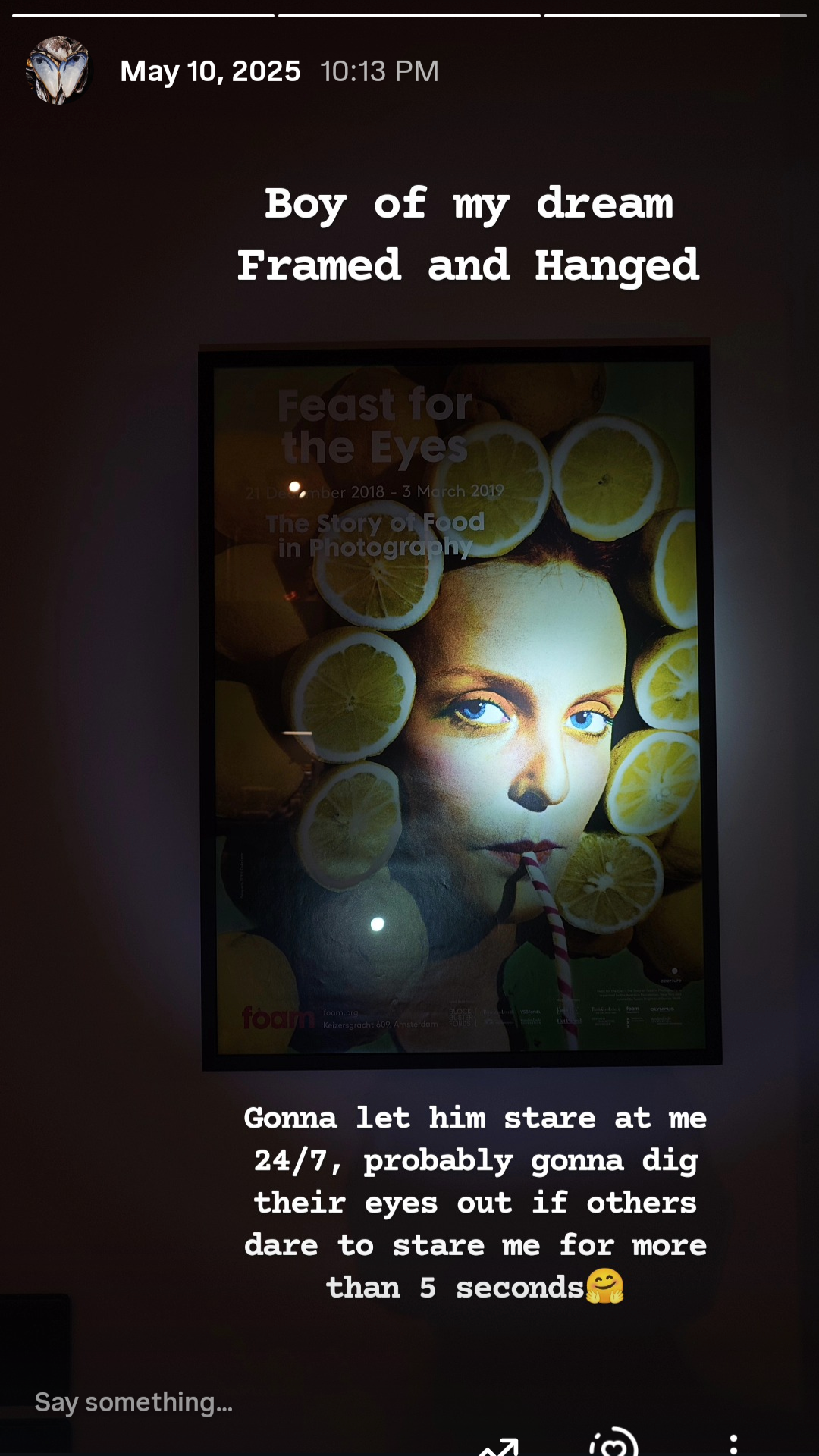
I once liked the portrait so much that I even wiped its surface with a tissue to clean and disinfect it, put on some lipstick, and planted a kiss on the figure's face. Later, I told someone that it was the first time I had ever kissed a boy on the cheek.
The funny thing was that whenever I brought up the painting while chatting with guests who came over for dinner, we always ended up arguing about it. I insisted that I was straight and that the person depicted in the artwork was a pretty, delicate-featured male model. My guest, meanwhile, insisted that he’s straight too, but maintained that the figure in the painting was a girl.
当时馆内展出的主题是南非的种族隔离,整个展览的水准极高内容也很丰富,印象最深刻的是其中两幅作品,其中一幅是南非清晨火车站等车的人群,白人车厢的一边都是拎着公文包西装革履的至少白领阶级,他们所在的车站站台也显得空空荡荡的,而有色人种搭乘的车厢那边却满满当当地挤满了穿着朴素甚至有些落魄的蓝领及以下的人群,和在美国念书时读到过的美国公交种族隔离制度有些类似。另一幅则是当地的黑人女佣抱着雇主家小孩的照片,内容介绍里的采访文字至今让我记忆犹新,大概内容是说她很喜欢雇主家的小孩,小孩也很亲她,但是她心里也明白等他长大成人后他就会逐渐变得和他的父母一样从种族角度将她分类并区别对待,态度也会变得冷漠了。在种族单一的国家工作生活的人们大概是不会有这种顾虑的,自己和小时候的保姆阿姨也一直很亲,每次放假回去有机会还要去拜访她。当时看了这位女佣的话,觉得人与人之间最单纯的人际关系和质朴的感情会因为一些人为问题而彻底消逝瓦解,令人心碎。
The exhibition I visited at the time focused on apartheid in South Africa. It was exceptionally well curated, with a wealth of thought-provoking material. Two works in particular have stayed with me.
The first was a photograph of people waiting for trains at a railway station in South Africa early in the morning. On the side serving white passengers, the platform was relatively empty, and the people waiting there were dressed in suits, carrying briefcases, and appeared to belong at least to the white-collar professional class. On the other side, where passengers of color boarded their trains, the carriages were packed with people dressed in plain, sometimes rather shabby clothing, many of whom appeared to be blue-collar workers or people in even more precarious circumstances. The contrast reminded me of the racial segregation on American public buses that I had read about while studying in the United States.
The other photograph showed a Black domestic worker holding the child of her white employers. The interview accompanying the photograph has stayed with me to this day. As I recall, she said that she loved the child and that the child was very attached to her, too. Yet she understood that once he grew up, he would gradually come to see her through the same racial lens as his parents, categorizing her and treating her differently because of her race. The warmth between them would eventually give way to indifference.
Perhaps people who live and work in countries with relatively homogeneous populations are less likely to have such concerns. I had always been very close to the nanny who cared for me when I was little, and whenever I returned home for the holidays, I would still try to visit her with gifts and respect if I had the chance.
Reading that woman's words made me realize how heartbreaking it was that the simplest human connections and most genuine forms of affection could be gradually eroded, or even destroyed altogether, by divisions imposed by society.
大一的时候化学实验课因为自己所在的小组人数是单数,不像其他人都有实验搭档,我是一个人一组,不过因为在高中的时候的化学实验课要么是听同组的女生们在聊她们的感情史,要么就是因为同组的中国男的英文水平太差根本读不懂实验流程,每次包括我在内的其他同学都早早做完实验去吃午饭了,但他却还留在实验室只做了个开头,偶尔合作也是因为我不想听同组女生的感情史细节而跑去他那组求个清静,但是要完全靠我来完成实验内容的,不过这样搞得我后来也乐于一个人做实验,这也就导致了当时但凡大一的实验课上有中途从其他小组转过来的学生或者是临时加入的学生都会被和我分到一组,其中一次和一个不知道哪里来的非裔男生分到一组,在机房里做干实验课堂作业的时候他就坐到我旁边开始和我讲中文,我出于礼貌也和他聊了两句。但后来合作的湿实验也进行得不是很顺利,于是他和课上的助教说好周六再来实验室同我一起重做实验。因为当时自己习惯工作日的时候把学业上的任务通通解决掉,周末手机都很少看,要么去DC逛街要么把自己关在宿舍里做手工编珠子,结果到了周六已经完全把重做实验的事情给忘了,但也没有收到对方任何消息或者电话提醒,到了下周实验课的时候看到那位非裔男生才想起来,却听助教说对方好像是因为觉得自己平时缺课太多无法通过课程而退课了,在教学楼外再看到他也是嘴里骂骂咧咧地不知道用中文在咕囔着什么,也只听懂他谴责我是“种族歧视者”的莫须有言论,自己当时和同学走在一起也只是觉得无语,又无从解释,就只好作罢。
During my first year of university, my chemistry lab group had an odd number of students, so unlike everyone else, who had lab partners, I ended up working alone.
I had actually grown rather fond of working independently, thanks to my experiences in high school. Back then, chemistry lab sessions usually meant either listening to the girls in my group discussing the details of their romantic histories or struggling to work with a Chinese male classmate whose English was so poor that he could barely understand the experimental procedures. By the time I and the other students had finished our experiments and headed off to lunch, he would often still be in the lab, having barely made it past the first step. On the rare occasions when I did work with him, it was usually because I couldn't bear to listen to the girls' relationship gossip any longer and would escape to his group for some peace and quiet. Even then, I was the one who had to carry out virtually the entire experiment myself.
In the end, I came to prefer doing lab work alone. As a result, whenever a student transferred from another group halfway through a first-year lab session or joined the class at short notice, they would invariably be assigned to work with me.
On one such occasion, I was paired with a African American male student whose background I knew nothing about. During a dry lab experiment in the computer room, he sat down next to me and started speaking to me in Chinese. Out of politeness, I exchanged a few words with him for a little while in English.
However, our subsequent wet-lab experiment didn't go particularly smoothly either. He therefore arranged with the teaching assistant to return to the lab on Saturday to repeat the experiment with me.
At the time, I had a habit of getting all my academic work out of the way during the week. I barely looked at my phone on weekends. I would either go shopping or see art exhibitions in Washington, D.C., or shut myself away in my dorm room to make handicrafts, usually beading jewellery. By the time Saturday came around, I had completely forgotten that we were supposed to redo the experiment. I hadn't received any messages or phone calls from him to remind me, either.
It wasn't until the following week's lab session, when I saw him again, that I remembered what had happened. But the teaching assistant told me that he had apparently dropped the course because he believed he had missed too many classes to pass.
Later, when I saw him again outside the academic building, he was muttering angrily under his breath in Chinese. I couldn't make out most of what he was saying, but I did catch him accusing me of being a “racist”—an accusation that, as far as I could tell, had absolutely no basis.
At the time, I was walking with some classmates. All I could do was feel utterly bewildered and speechless. I had no idea how to explain myself in that situation, so I decided to let it slip out of my mind.
不过也能理解对方为什么指控我是“种族歧视者”的言论,因为听闻别人以及自己在美国的一些遭遇,也明白种族问题在美国社会依旧根深蒂固,不是能用一两句话就能解释清楚的,也更不是一天两天就能解决的。比如大一时一位非裔老师就提到说她的表亲因为是混血,肤色比自己浅很多,外表也和白人相差不大,结果一次和她一起去超市时有问题问店员,店员也是对她不理不睬,全程选择只和她浅肤色的表亲交流,令她觉得无奈又委屈。
That said, I can also understand why he accused me of being a “racist.” From hearing about other people's experiences, as well as reflecting on some of my own encounters in the United States, I came to realize that racial issues remain deeply entrenched in American society. They cannot be adequately explained in a sentence or two, let alone resolved overnight.
For instance, during my first year of university, one of my African American teachers told us about an experience she had had with her cousin, who was mixed-race and had a much lighter skin tone than she did, with features that made her look not very different from a white person. Once, when they went to a supermarket together, she had a question for a store employee. The employee, however, largely ignored my teacher and directed all their attention towards her lighter-skinned cousin, choosing to communicate exclusively with her throughout the interaction. My teacher was left feeling both helpless and deeply hurt by the experience.
但个人觉得这位非裔老师在该课程上组织的一些活动也存在一些问题,很容易对一些家庭条件不是很好的学生们产生心理上的伤害。这门课主要是向新入学的大一新生介绍大学生活为主的,课上学生的背景家境也是五花八门,参差不齐,有母亲在当地政府当公务员,高中在私立学校念的美国男生,DC在我大一时刚开馆不久属于史密森学会旗下的美国国家非裔美国人历史与文化博物馆,我在东岸念书的四年多内偶尔想起来去排号都没有一次抢到票的,结果开学没多久在课上老师让同学们互相分享周末去干嘛了的时候,他一脸轻松地说他母亲搞到了门票他去馆内看展了。也有家里经商的亚裔女生,听她说因为从小就随父亲出差,频繁到护照上盖满了出入境的章印,已经到了要申请给护照加厚页数的程度。不过课上的同学也不全是如此家境优厚,记得一次按照MBTI测试结果的内向型外向型人格分组,和我分到一组的非裔穆斯林女生,听后来她在课上的分享还是二代移民,还说一次她像往常一样戴头巾在学校搭公车,结果被一个中年白人男性叫住搞辩论。对方的意思是这位女生既然已经移民到美国这种自由民主思想开放的国家念书生活了,为什么还要戴头巾,还将穆斯林与他所信的基督教相比较。这位女生在课上讲到这段经历的时候语气已经戴着哭腔,说“我并没有和他比较谁的宗教更好更有优越性的意思,只是想表达我也有戴着头巾作为美国社会一份子存在的权力,只是他一直在反驳我。”
That said, I personally felt that some of the activities organized by this African American teacher for the course were a bit problematic by nature, as they could easily cause emotional distress to students from less privileged backgrounds.
The course was primarily designed to introduce first-year students to university life. Naturally, the students came from a wide range of family backgrounds and socioeconomic circumstances.
One American male student, for instance, had a mother who worked as a civil servant in the local government, and he also had attended a private high school before come to University. At the time, the National Museum of African American History and Culture, part of the Smithsonian Institution in Washington, D.C., had only recently opened. During my more than four years studying on the East Coast, I occasionally tried to get tickets whenever I remembered to check, but never once managed to secure any. Yet, barely a few weeks into the semester, when our professor asked everyone to share what they had done over the weekend, this student casually mentioned that his mother had managed to get tickets and that he had visited the museum to see the exhibitions.
There was also an Asian female student whose family was in business. She once mentioned that she had accompanied her father on business trips from a very young age and had travelled so frequently that her passport was practically filled with entry and exit stamps. She had even reached the point where she needed to apply for a passport with additional pages.
Of course, not everyone in the class came from such privileged backgrounds.
I remember one activity in which we were divided into groups according to whether our MBTI results classified us as introverts or extroverts. I was paired with a African American Muslim girl. From what she later shared in class, she was a second-generation immigrant. She recounted how, one day, she had been taking the bus to university as usual, wearing her hijab, when a middle-aged white man stopped her and started an argument.
His point, as she described it, was that since she had immigrated to the United States—a country he regarded as free, democratic, and open-minded—to study and live, why did she still wear a headscarf? He also began comparing Islam with Christianity, the religion he practiced.
By the time she recounted this experience in class, her voice was already breaking with emotion and eyes filled up with tears. “I wasn't trying to compare religions or suggest that one was better or superior to another,” she explained. “I was simply trying to express that I have the right to wear my hijab and still exist as a member of American society. But he just kept arguing against me and prove that his religion is better than mine.”
在美国生活久了其实也能感觉到一些主流群体的傲慢,尤其中年白人男性,毕竟白人男大学生以实在不理解女性困境为由退女性研究的选修课都是要被妈妈理解功课好难我的白男宝宝可以不上的,给人感觉他们也无法接受除了自己身处的宗教文化之外的其他事物存在。女性,尤其是少数族裔的女性,因为社会分工问题也好,职场性别歧视问题也好,一旦选择完全脱离了从小生活成长的社区或者宗教文化环境,是完全没有办法依靠自己独立生存的,如果完全像那位中年白男所期待的那样,非裔穆斯林女同学摘掉头巾过他眼里所谓的“自由”生活,周末放假回家恐怕是要被同社区内或者家庭内的亲朋好友指责评判的,就个人经历而言,被家人或者本来自同一文化或社区中本应属于“同类”的群体嫌弃责备,心理上是要比被陌生人指责难以承受得多的。人到中年,却还不能切换到他人的角度看美国社会中本就因为多元的文化种族所产生的问题和现象,其一叶障目式的自私实在是令人咋舌。
After living in the United States for a while, I began to notice a certain arrogance among some members of the dominant social groups, particularly middle-aged white men. After all, when a white male university student drops a Women's Studies elective course simply because that he claims that he cannot understand women's struggles, his mother is apparently there to reassure him that the coursework is just too difficult and that her precious white boy baby doesn't have to take the class. There is something rather telling about that dynamic. Some people also seem genuinely unable to accept that ways of life, beliefs, and cultural practices other than those of their own religious and cultural background can exist on equal terms.
For women, particularly women from ethnic minorities, the situation is often far more complicated than outsiders might imagine. Whether because of the way labor and domestic responsibilities are divided or because of gender discrimination in the workplace, women who choose to leave the communities or religious and cultural environments in which they grew up can find it extremely difficult to support themselves independently. If my African American Muslim classmate had done exactly what that middle-aged white man expected of her—taken off her hijab and embraced what he considered “freedom” —she might well have returned home for the weekend only to face criticism and judgement from relatives, friends, and other members of her own community. From my own experience, being rejected or reprimanded by one's family, or by people who come from the same cultural background or community and whom one would ordinarily regard as one's own, can be far more emotionally painful than being criticized by strangers.
To reach middle age and still be unable to see American society's cultural and racial complexities from another person's perspective is astonishing. His self-centeredness, and his apparent inability to see beyond the narrow confines of his own experience, were truly baffling.
后来一次下午上课的时候,因为天气很好,被非裔老师带到马里兰校园里小教堂坡下的草坪上上课,她突然让课上的学生一字排开,然后根据她向学生们提出的问题内容让我们向前走或者向后退,比如父母双方都有工作的同学,往前走两步,一方有工作的,往前走一步,高中是在私立学校念书的,往前走一步,在公立学校念书的,往后退一步,是一代移民的,往后退一步,之类等等。
Later, during an afternoon class, the weather was so lovely that our African American teacher took us outside to the lawn at the foot of Chapel Hill on the University of Maryland campus. Without much warning, she asked us to line up side by side. She then began asking a series of questions, instructing us to take steps forward or backward depending on our answers.
For example, students whose parents both worked were told to take two steps forward, while those with only one working parent took one step forward. Those who had attended private high schools were asked to move one step forward, while those who had attended public schools had to take one step back. First-generation immigrants were also told to step back, and so on.
结果大概十个问题问完,大家互相转头看了看各自站的位置,站在最前面的是那位母亲在当地政府当公务员念私立高中的白人男同学,站在队尾的则是那位穆斯林非裔二代移民女同学,当时看她的表情就有些不好,而且自己觉得老师组织这样的课程活动是不是残忍了些。再回望自己当时站在近二十人的队列里排前三四位的位置,站在我前面的也是家境优渥的白人男生女生。而当时自己刚成年没多久,父母在物质条件上从未亏欠过我,尤其母亲自小一直教育我用平等亲和的态度去对待几乎所有人,而当时只是因为自己终于念了名校的化学系而感到兴奋,根本没意识到这类课程活动背后所隐藏的关于阶级出身之类的差异,后来将课上发生的事因为出于对穆斯林非裔二代移民女同学的同情讲给认识的人听了,对方反倒没有询问我的意见而将这段见闻直接发到了她的社媒上,后来回想才意识到对方其实一直是势利的,对我偶尔提及自己上私立学校这点一直颇有微词,平日也很喜欢议论社媒上她加了的人的财富和家产。不过后来出了社会才发现自己平等地对待所有人这一套根本行不通,有些出身不是很好的人甚至还痴心妄想到以为我对他们的客气是对他们有什么特别的想法,更有甚至发现我在和他们接触打交道初期时,完全没有其他富家女或者中上层阶级女生中常见的盛气凌人或者颐指气使的态度,不会一上来就拿自己的家境以及阶级身份在他们面前立威让他们老实客气地对待我,还会胆大包天地直接开始霸凌或者欺负我。
By the time she had finished asking around ten questions, we all turned to look at where everyone else was standing. At the very front of the line was the white male student whose mother worked as a civil servant in the local government and who had attended a private high school. At the very back stood the African American Muslim girl who was a second-generation immigrant. Her expression already seemed rather troubled, and I couldn't help wondering whether it was a little cruel of our teacher to organize an activity like this.
Looking back, I had been standing near the front myself, in third or fourth place in a line of nearly twenty students. The people ahead of me were also affluent white students, both male and female.
I had only recently reached adulthood at the time. My parents had never deprived me of material comforts, and my mother, in particular, had taught me from childhood to treat almost everyone with an attitude of equality and warmth. I was simply excited to have finally made it into the chemistry department of a high ranking and prestigious university. I had barely given any thought to the class differences and disparities in family background that an exercise like this was meant to expose.
Later, out of sympathy for my African American Muslim classmate, I told someone I knew about what had happened in class. Instead of asking how I felt about the experience, this person simply posted my personal experience on her social media without consulting me. Looking back, I eventually realized that she had always been rather status-conscious. She had repeatedly expressed reservations about the fact that I had occasionally mentioned attending private school, and she also seemed to enjoy gossiping about the wealth and family assets of people she had added on social media.
It was only after entering the working world that I began to realize that treating everyone equally, regardless of their background, did not always work out the way I had imagined. Some people from less privileged backgrounds were so presumptuous that they even interpreted my ordinary politeness as a sign that I had some special interest in them. Worse still, some people seemed to notice that, when I first met and interacted with them, I did not display the condescending or imperious attitude they had come to expect from affluent girls or girls from upper-middle-class families. I didn't immediately flaunt my family's financial circumstances or use my social standing to establish dominance and make them behave with the deference and courtesy they might otherwise have shown me. Instead, they felt emboldened enough to start bullying or mistreating me outright.
不过在课上偶尔几次和那位非裔穆斯林二代移民女同学的相处还算融洽,对方情商谈吐也是蛮不错的,记得一次课上老师按MBTI测试结果分组和她分到一组小组讨论,话题时如果去户外露营的话自己会在清单上列需要带什么,分享结果的时候她情商很高地提到说“Lettie考虑很周到哦,她怕鞋会被水打湿还会想到要带两双”。有一次大概是感恩节假期前夕,我在学校宿舍附近的食堂吃完晚饭准备出门去图书馆赶课题写作业,临出门的时候发现那节课上的白人女同学被来看望她的家人朋友以及同学围绕着,大家都热热闹闹地坐在食堂的圆桌上吃饭,氛围也很愉快融洽,而不远处那位非裔穆斯林女同学却一个人坐在一张圆桌上吃饭,气氛很是冷清。后来和家人分享这段经历的时候也说,要是在刚到食堂吃饭的时候看到此景,自己大概是会选择同非裔穆斯林女生坐一桌吃饭聊天的,但当时实在是要赶着去图书馆做课业,所以就匆匆忙忙地出门走了。但和家人讨论的时候也意识到,就算当时在吃饭前遇到她又能怎样呢?就算因为课上她的遭遇而强迫自己屈从于自己的同情心而和她多接触交流,我最多能做的也就是陪她吃几顿饭罢了,偶尔几次聊天互动也是仅限在课上交流时老师给的特定话题下展开的,再多接触也只会发现和对方根本不是同一路的人,共同话题几乎都不会有。因为自己的母亲在国内做有教职的工作,在家乡时有什么新俏时髦的景点或者展览开张她也总是会被发免费门票的,自己明明是新移民国际生却能在老师按阶级身份划分课上的同学时能站到队前的位置,比较下来和队首那位白人男同学的唯一差别也就是国籍和性别罢了,所以说连自己的存在在对方的世界里给她的感受都可能是残忍的。毕竟在和说同一语言,成长环境近似的中国同龄人相处时,自己就意识到,有时哪怕自己只是在简单分享自己的日常生活,甚至只是在同她们吃晚饭的时候自己吃饱就不再吃了,而同行出游的时候零食点心都陪她们点了的时候,却都要被认为是在炫耀,或者在变相地暗示嫌弃她们的身材等等。和自己不属于同温层的人相处是实在非常痛苦的,在自己认为是日常常见的东西,对他们而言可能是稀有的奢侈体验,而和她们相处时为了照顾她们的自尊心还要时刻委屈自己,压低自己的存在感,有时甚至还要刻意贬低自己,时间久了一些对自己的负面评价被自己重复多了自己也会逐渐信以为真,对自己的精神损伤和消耗都极大。而且按世俗价值观来看,同她交朋友远不及同课上站前排的同学交们朋友给双方互相带来的利益或者价值大,而且因为家境社会阶级的不同,平日出门娱乐休闲都不可能玩到一起去,强迫自己放下身段同她社交只可能引发后续无尽的矛盾与冲突,而更有可能的是她平日会忙于给自己攒生活费周末空闲要打零工,放假回家可能还要帮忙解决一些家庭纠纷,而其他家庭富裕的同学们周末则会从家里人拿了博物馆的免费门票去看展接受文化教育,虽然都是在同一间学校念书,同一间食堂吃饭,同一间图书馆学习,但个人的求学体验却会因为家庭背景和社会阶级而天差地别。
Still, the few interactions I had with the African American Muslim girl in class were generally pleasant. She was socially perceptive and articulate, and I remember one group discussion in particular. Our teacher had divided us into groups based on our MBTI results, and she and I ended up in the same group. The topic was what we would put on a packing list if we were going outdoor camping. When we shared our answers with the class, she made a particularly thoughtful observation about me: “Lettie really thinks of everything. She even thought to bring two pairs of shoes in case one pair got wet.”
On another occasion, sometime shortly before Thanksgiving break, I had finished dinner at the dining hall near my university dormitory and was about to head out to the library to work on an assignment. Just as I was leaving, I noticed that the white female student from our class was surrounded by family, friends, and fellow students who had come to visit her. They were all gathered around a large round table, eating and chatting in a lively, cheerful atmosphere. Not far away, however, the African American Muslim girl was sitting alone at another round table, eating by herself in an atmosphere that felt decidedly lonely and subdued.
When I later shared this experience with my family, I said that if I had seen the scene when I first arrived at the dining hall, I probably would have chosen to sit with the African American Muslim student, share a meal, and talk with her. But I had been in a genuine rush to get to the library and finish my coursework, so I hurried out without stopping.
Discussing it with my family also made me realize something else: even if I had encountered her before dinner, what would I really have been able to do? Suppose I had forced myself to spend more time with her out of sympathy for what she had experienced in class. At most, I could have kept her company over a few meals. The few conversations we had shared had taken place during class discussions, and even then, we had mostly been talking about topics assigned by the teacher. If we had spent more time together, we might simply have discovered that we were fundamentally different people with almost nothing in common.
My mother works in an academic position in China, and whenever a popular new attraction or exhibition opened in our hometown, she would often receive complimentary tickets. Although I was an international student who had only recently immigrated back then, I had still ended up near the front of the line when our teacher divided the class according to socioeconomic privilege. Compared with the white male student at the very front, the only meaningful differences between us were our nationality and gender. From that perspective, I began to wonder whether my very presence in the other student's world might have been painful for her—a reminder of the disparities she had been asked to confront.
After all, even when spending time with Chinese peers who spoke the same language and had grown up in broadly similar environments, I had already learned how easily ordinary interactions could be misinterpreted. Sometimes, simply sharing something about my everyday life could be taken as showing off. Even something as trivial as stopping eating once I felt full at dinner, despite having happily ordered snacks and desserts with everyone during an outing earlier in the day, could be interpreted as an indirect criticism of their bodies or a way of implying that I looked down on them.
Trying to maintain relationships with people who do not share your social world can be genuinely exhausting. Things that seem entirely ordinary to me might represent rare luxuries or extraordinary experiences to them. To protect their self-esteem, I might then feel compelled to suppress parts of myself, downplay my circumstances, and make myself seem less privileged than I actually am. Sometimes, I might even deliberately put myself down. After repeating enough negative things about myself, I could gradually begin to believe them. Over time, the psychological toll and emotional exhaustion could become considerable.
And according to conventional measures of social and economic advantage, befriending her would probably offer neither of us the same mutual benefits or opportunities that might come from building friendships with the classmates who had stood near the front of the line. Our different family circumstances and social backgrounds would also make it difficult to enjoy the same leisure activities. Forcing myself to socialize with her while constantly trying to bridge that divide could easily lead to an endless series of misunderstandings, disagreements, and conflicts.
It was equally possible that she would spend her weekends working part-time to save enough money to cover her living expenses, or return home during the holidays to help resolve family problems. Meanwhile, her more-privileged classmates might use complimentary museum tickets obtained through their families to visit exhibitions and enjoy cultural experiences.
We might all attend the same university, eat in the same dining hall, and study in the same library, yet our experiences of university life could be worlds apart simply because of our family backgrounds and socioeconomic positions.
就像间接引发了法国大革命的断头皇后玛丽·安托瓦内特的“那句那就让他们吃蛋糕好了”,中国历史中也有皇权贵族骄奢淫逸不知人间疾苦荒谬发言,比如天下荒乱,百姓连米粥都吃不起而接连饿死的时候,西晋惠帝司马衷听闻后发表的那句“何不食肉糜”就是典型的类似例子。不过圈层相差过大双方对各自的生活都不甚了解的反面例子也存在,明朝时期就有种地务农为业的平民揣测皇族生活状况的时候发表“皇上平时肯定都是拿金锄头锄地”的言论,日出而作日落而息的他们不知道皇上平时的工作内容是不包含锄地的,而关心江山社稷的贤明君主是每天早上天还没亮的五点就要起床上早朝,顺便批奏折批到凌晨的,最多休息个两三个时辰罢了。明朝言官盛行时期皇帝还要挨他们全方位无死角从政治方针到私人生活的评判甚至辱骂的,被骂得再狠也不能杀他们的头,不然就要被扣“暴君”的帽子。
Much like the infamous remark attributed to Marie Antoinette, the queen whose reign became entangled in the events leading up to the French Revolution, “Let them eat cake,” Chinese history is also full of absurd statements made by extravagantly privileged rulers who seemed utterly oblivious to the suffering of ordinary people.
One classic example comes from Emperor Hui of the Western Jin dynasty, Sima Zhong. During a famine, when the country was in turmoil and ordinary people were dying in droves because they could not even afford rice gruel, he reportedly asked, “Why don't they eat meat porridge instead?” The remark has since become a textbook example of how completely disconnected someone can be from the realities of life beyond their own privileged world.
Yet the opposite problem also exists: when the gap between two social groups is so vast that neither has any real understanding of the other's way of life. During the Ming dynasty, for instance, ordinary peasants who made their living farming reportedly imagined that the emperor must spend his days ploughing the fields with a golden hoe. Accustomed to working from sunrise to sunset themselves, they apparently had little idea that the emperor's daily duties did not involve agricultural labour at all.
In reality, an conscientious ruler concerned with governing the empire might have to rise at 5am in the morning, before daybreak, to attend the early imperial court, then spend hours reviewing memorials and official documents, sometimes working until the early hours of the following morning. At best, he might get only two or three traditional Chinese shichen of rest—a period equivalent to roughly four to six hours.
During periods of the Ming dynasty when the tradition of outspoken remonstrance by censorial officials was particularly prominent, emperors also had to endure relentless scrutiny of virtually every aspect of their lives, from political decisions to personal conduct. These officials could criticize them harshly, even insult them outright, and the emperor was not supposed to have them executed simply for speaking out. Otherwise, he risked being branded a tyrant.
“Dad🥺bless🥺you🥺!”: https://youtu.be/4RjWTEqJiMI?si=MOOpnM5n6BpfsL0R
高中十二年级的时候临近毕业,因为当时大家基本都拿到了录取通知书,负责大学申请的老师给每个十二年级生都发了一件被录取大学的T恤周边。因为马里兰大学的吉祥物是菱背龟,自己相当不喜欢T恤上的设计画风,觉得不好看,就带了一只在马里兰大学参观时买的穿带有“Maryland”字样的黑T小白熊挡着,拍照前被学校请来的白人摄影师看见了,可能觉得我是在扮可爱或是怎样,捏着嗓子用对婴幼儿讲话的声音和语调问我“它叫什么名字呀?” 我清楚对方这样做是没有把我当作有独立人格的青少年看待,因为对方和我的白人同学们是能用正常的腔调交流的,就斜眼看了对方一眼压低嗓音说:“它没有名字,我只是觉得学校T上的吉祥物画风难看带来挡一下而已。”对方见亚裔长相的我能听懂并用流利的英文和他进行正常对话,有些惊讶也有些尴尬地换回他平时作为成年人说话的语言语调回复说:“哦这样啊···”
During my senior year of high school, as graduation approached, most of us had already received our university acceptance letters. The teacher in charge of university applications gave every senior a T-shirt featuring the university they had been admitted to.
The University of Maryland's mascot was the Diamondback Terrapin, and I really disliked the design on the T-shirt. I thought it looked awful, so I brought along a little white teddy bear I had bought during a visit to the university. The bear was wearing a black T-shirt with the word “Maryland” printed on it, and I used it to cover up the mascot design.

报看。/ Bit ugly.
Before the photos were taken, a white photographer hired by the school noticed what I was doing. Perhaps he thought I was trying to act cute or something, because he suddenly raised his voice into an exaggeratedly high pitch and addressed me in the sing-song tone adults often use when talking to babies and toddlers.
“What's~its~name~?”
I could tell that he wasn't treating me as a teenager with an independent personality. After all, he spoke to my white classmates in a perfectly normal, adult manner.
I shot him a sidelong glance and replied in a deliberately low voice, “It doesn't have a name. I just think the mascot design on the school T-shirt is ugly, so I'm using the bear to cover it up.”
When he realised that the Asian-looking girl in front of him could understand him perfectly well and speak fluent English in a perfectly ordinary conversation, he seemed somewhat surprised and embarrassed. He quickly switched back to the tone and manner of speech he would normally use when talking to another adult.
“Oh, I see...”
在加州念高中的三年也只有其中两年参加了学校的网球校队也是因为两位白人教练见最后一年报名的学生全都是国际生且以中国学生为主直接辞了工作不干了,当时听了也是觉得无语,但也算是在意料之中,因为之前和自己英文名身型外貌甚至发型都完全没有相似点的另一个中国女生参加双打比赛自己扣球得分的时候就被分不清亚洲人长相的教练喊了她的名字说打得漂亮。
During my three years of high school in California, I only played on the school's varsity tennis team for two of them. The reason was that, in my final year, the two white coaches quit outright when they realized that every student who had signed up for the team was an international student, most of them Chinese.
When I heard about it, I could only shake my head in disbelief. Still, it wasn't entirely unexpected. On an earlier occasion, during a doubles match, I had smashed the ball for a winning point, only for the coach to call out another Chinese girl's name and praise her for the shot. The other girl and I had absolutely nothing in common in terms of our English names, builds, physical appearances, or even hairstyles. Apparently, the coach simply couldn't tell us apart because we were both Asian.
大学的时候被认识的同学介绍去参加姐妹会的迎新活动,自己本对美国大学里的兄弟会和姐妹会文化比较无感,因为参加这类组织的学生都趋向于脸谱化,也以白人学生居多,站在一起的合照在脸盲的我眼里根本分不清,而且每年美国各地的兄弟姐妹会的迎新活动都有霸凌新人的消息传出来,不过听已经加入的同学说可以拓展人脉,增加自己以后找到工作的机遇,就应邀前去参加活动,结果可能是因为我当天打扮属于比较少见的东亚朋克女形象,坐在我旁边是一个在姐妹会很常见的白人女生,皮肤上还有明显廉价的人工美黑痕迹,很有可能还是虔诚的宗教信徒,从我在她身边坐下起就一直用惊恐的眼神打量我,给人感觉平时没怎么见过更没接触过白人以外的人种,在我吃饼干不小心被呛到的时候干脆不装了,脸色更加惊恐地把椅子朝我的反方向挪开,好像生怕我身上有什么传染病似的。在乌普萨拉冬日的一个周末去学校附近被冻得严严实实的湖上溜冰,傍晚在车站等车吃随身带的三明治的时候又被不小心呛到,正在咳嗽的时候坐在旁边的两个欧洲女生立马向我的方向我怎么了还好吗,眼神里也全是关切,和在美国时的经历截然相反。
When I was in college, a classmate I knew introduced me to a sorority recruitment event. I had never been particularly interested in fraternity and sorority culture at American universities. The students who joined these organizations often seemed to fit a very particular mold, and most of them were white. When they stood together for group photos, I could barely tell them apart, partly because I'm terrible at recognizing faces. On top of that, every year, stories would emerge from different parts of the United States about hazing and bullying during fraternity and sorority recruitment.
Still, a classmate who had already joined one told me that these organizations could help me expand my social network and improve my chances of finding a job after graduation. So I accepted the invitation and went along.
Perhaps it was because I had dressed that day in a relatively uncommon style among the people there—a punk-inspired East Asian girl look—that the white girl sitting next to me, who seemed to fit the typical sorority mold, reacted to me the way she did. Her skin still had obvious streaks of cheap-looking artificial tan, and she might well have been a devout religious believer, too. From the moment I sat down beside her, she kept looking at me with an almost frightened expression. She gave me the impression of someone who had rarely, if ever, encountered people of races other than her own.
When I accidentally choked on a cookie, she finally dropped any pretense of politeness. Her expression turned even more alarmed, and she moved her chair away from me, as though she were afraid I might be carrying some contagious disease.
One winter weekend in Uppsala, I went ice skating on a lake near the university that had frozen over solid. That evening, while waiting for the bus at the station and eating a sandwich I'd brought with me, I accidentally choked again. As I sat there coughing, the two European women beside me immediately turned toward me and asked if I was okay and what had happened. Their eyes were full of genuine concern.
It was the complete opposite of what I had experienced in the United States.
但公平来说,在种族问题上美国人因为受教育程度以及个人背景不同,处理事情的方式也会不一样,有些时候甚至还有矫枉过正的嫌疑。比如在受教育程度较高的中产阶级及以上为主的环境里,大家都心照不宣约定俗成的一点是,就算是因为一些其他原因觉得对方不好相处或者难以沟通,但仅仅因为对方是非裔,也是万不能指出来,更不能公开表示排斥对方的,只能选择忍受,不然一定是会被扣上“种族歧视”的帽子。之前看到有新闻说一位印度裔用自己的真实身份以不错的简历和在亚裔中算中等的成绩申请名校的医学院遭拒,结果他剃了个光头,给自己改了一个听上去就是非裔美国人的名字,再用相同的成绩和资质去申请同一学校却收到了录取通知。自己在报考大学的时候就发现登记个人信息的选项里就被要求选择自己的人种,当然也有“不愿透露”的选项,但这在没有种族问题的中国是闻所未闻的。其实也能理解一些大学这样做的原因,在美国的少数群体中,亚裔因为自身文化背景特色,就算出身再贫寒,父母也会砸锅卖铁举全家之力就是为了让子女接受更好的教育,拥有光明的前途,往往不出两三代就能靠自身的努力和家庭的支持成为中产阶级,拥有一份受人尊敬的工作和社会地位。而非裔因为一些历史遗留问题,又缺乏亚裔的从小就开始培养的集体荣誉感的文化规训,美国大部分贫困群体都是由他们组成,因为身处社区治安不稳定以及环境不好,能正常上学对他们已经是非常少见的情况,能把成绩保持在平均偏上更是少见了,很能证明个人能力以及学业水平,所以名校愿意降低标准接收他们也能理解。不过后来遇到这种情况多了自己也觉得不耐烦,心想说自己在美国也算少数群体,没有什么权利和人脉,靠自身的资源维持自己的生活水平也够困难了,再说亚裔内部也问题不断,再要求我去关心别人甚至群体也是分身乏术,精力憔悴,去参加游行就我一个亚裔站在一群非裔中间也很突兀,有关亚裔自身的游行也看不到其他族裔参加,而且所要解决的问题根本天差地别,这本来就不是我该插手的事。就比如非裔有时候组织活动是为了解决基本人权和生存问题,而亚裔组织游行抗议是因为自己成绩优异履历完美的子女被常春藤院校以不算出彩亚裔学生的理由被拒而觉得不公平。自己能做到的也是先选择过好自己生活的同时不歧视别人,不刻意区别对待,不像自己遇到的大部分美国人一样,他们自证自己不是种族歧视者的证据也就是他们有少数族裔的所谓“朋友”,以及在和你接触前或者初期会把你的种族出身明显地指出来再刻意语气热情地对你客气一番,令人反感,不像我在欧洲时的经历,遇到的大部分人不会刻意将我的种族身份作为标签,而是一开始接触时就用当地的语言,表情和语气正常地同我交流。而自己因为有一些少数群体的朋友,平时也从不会拿他们来当作自己有政治正确觉悟的证据,而是遇上一些涉及到人权或者平权活动的时候因为身为他们的朋友而表示支持,反而因此被一些人认为我也是性少数群体的一员。
To be fair, though, Americans approach racial issues differently depending on their education and personal backgrounds. Sometimes, their attempts to avoid discrimination can even seem to veer into overcorrection.
In environments dominated by highly educated, middle-class and upper-middle-class people, there is often an unspoken social rule: even if you find someone difficult to get along with or communicate with for other reasons, you must never openly associate their African American identity to it, let alone express any exclusion based on it. You are expected to tolerate the situation in silence. Otherwise, you risk being labelled a “racist.”
I once came across a news story about an Indian American who applied to a prestigious medical school under his real identity, with an impressive résumé and average academic results in Asian communities, but was rejected. He then shaved his head, adopted a name that sounded unmistakably African American, and applied to the same institution again with the same grades and qualifications. This time, he received an acceptance letter.
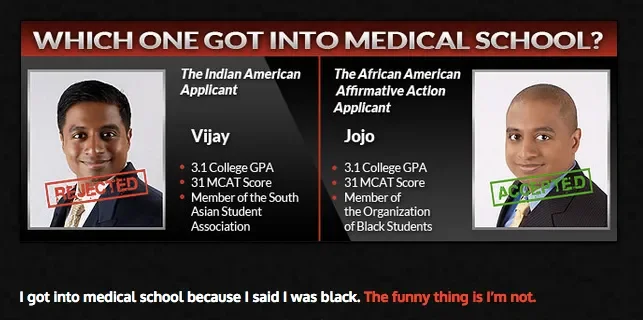
When I applied to universities myself, I noticed that the application forms required me to identify my race. There was, of course, an option to decline to disclose it, but the very fact that such a question was part of the application process was something I had never encountered in China, where racial categorization is not a comparable feature of everyday university admissions.
I can understand some of the reason behind such policies, though. Among minority groups in the United States, Asian families often place enormous emphasis on education, partly because of their cultural backgrounds. Even when they come from extremely poor circumstances, parents may sacrifice almost everything they have to give their children access to better schools and brighter futures. Within two or three generations, many families can improve their socioeconomic position through a combination of hard work and family support, eventually attaining middle-class status, respectable professions, and a degree of social standing.
African Americans, meanwhile, continue to contend with the consequences of historical injustices. In some communities, a combination of entrenched poverty, underfunded schools, and unsafe neighbourhoods creates substantial barriers to educational achievement. The cultural emphasis on collective achievement that is often cultivated in Asian families from an early age may also be less prevalent in some of these environments. For young people growing up under such conditions, simply having consistent access to education can be a significant achievement, and maintaining above-average grades may require overcoming considerable obstacles. In that context, I can understand why some prestigious universities might be willing to admit students whose academic records are less outstanding by conventional measures.
After encountering these issues repeatedly, however, I began to feel increasingly weary of being expected to engage with them. I was a minority in the United States myself, with neither extensive connections nor much institutional influence, and maintaining my own standard of living through my own limited resources was already difficult enough. Asian communities also have plenty of problems of their own. Expecting me to devote even more time and emotional energy to advocating for other people, or for entire demographic groups, began to feel overwhelming.
Attending a protest alongside a predominantly African American crowd, with me as the only Asian person there, would also have felt somewhat conspicuous. Conversely, at demonstrations organised around issues affecting Asian communities, I rarely saw people from other ethnic backgrounds participating. The problems being addressed could be vastly different in nature, too. In some cases, African Americans organize demonstrations to demand basic human rights and address issues affecting their very ability to live safely and with dignity. Asian Americans, on the other hand, may organize protests because they feel it is unfair that their academically outstanding children, despite having exceptional grades and résumés, are rejected by Ivy League universities in favour of a more holistic assessment of applicants that they perceive as disadvantaging Asian students.
I eventually came to feel that these were not necessarily issues I was personally equipped to resolve, nor was it my responsibility to take on every cause simply because I belonged to a minority group myself.
What I could do was focus on living my own life while treating others without prejudice or deliberate discrimination. This was quite different from what I had experienced with many Americans I encountered. When some people tried to demonstrate that they were not racist, their evidence often consisted of having supposedly close friends from minority backgrounds. Others would explicitly point out my ethnicity at the beginning of an interaction, or even before we had properly got to know each other, and then make a conspicuous effort to treat me with exaggerated warmth and politeness. I found this rather off-putting.
My experiences in Europe had generally been different. Most people I encountered did not make a point of labelling me by my ethnicity. Instead, they simply spoke to me naturally from the outset, using the local language and an ordinary tone of voice, with the same facial expressions and manners they would use when talking to anyone else.
I also have friends who belong to minority groups, but I have never treated their existence in my life as evidence of my own political awareness or moral credentials. When human rights or equality issues arise, I support relevant causes because these are issues that affect people I know of or care about. Ironically, this has sometimes led others to assume that I, myself belong to a sexual minority.
在美国生活了一段时间后,我有时会觉得,在种族问题上,社会对歧视的警惕一旦走向矫枉过正,反而容易让人与人之间原本自然的交流变得小心翼翼,甚至催生出一种近乎令人窒息的政治正确。再加上近年来愈演愈烈的 cancel culture(取消文化),有时候,一句未经深思熟虑的话、一个被断章取义的表达,就可能让人陷入漫长的解释与自证之中。美国的法律体系又有着重视判例和司法先例的传统,普通法中的判例确实会影响后续案件的裁决,不过这并不意味着任何荒诞的规定都会因为某个案例而成为法律。网上流传的那些奇奇怪怪的美国法律,比如所谓“在加州的浴缸里吃橘子违法”相比之下,更让我感到微妙的是日常生活中那些难以拿捏的文化禁忌。比如,炸鸡和西瓜在美国历史上曾被种族主义者用来塑造和传播针对非裔美国人的刻板印象,因此,如果在邀请一位非裔朋友来家里吃饭时拿这两样食物来招待对方,很可能也会被当做种族歧视者。至于为什么这两种食物会与非裔群体产生联系,也有一段复杂的历史,简单来讲因为它们热量高、适合从事体力劳动的人吃。语言上的讲究也让我有些困惑。在美国时,大多数情况下称呼一个人时必须使用 African American,而不能说 Black,否则就有种族歧视的嫌疑,就像不能管Asian American 为Yellow一样。之前我还看过一段短视频,一位非裔游客吐槽说,自己去美国观光时,几乎所有人都称他为 African American,可他明明是英国人。那种试图通过标签表达尊重、却反而忽略了对方真实身份的做法,多少显得有些滑稽。种族歧视当然值得认真对待,历史遗留下来的偏见也不可能因为一句“大家都应该平等”就凭空消失;但如果对歧视的防范最终演变成对每一个词、每一个举动的过度审查,再配合 cancel culture 带来的舆论压力,普通人就很容易陷入一种持续的自我审查:不知道什么话会触碰禁忌,也不知道一次无心的失言会不会被无限放大。对当时还不太了解美国社会文化的我来说,这种不确定感尤其明显。与其说我有意疏远谁,不如说我逐渐变得不敢轻易开口,甚至会下意识地减少与某些当地人的接触。原本跨文化交流应该是一件让人拓宽视野的事,可当每一次交流都像是在小心翼翼地排雷时,人反而会失去主动了解彼此的兴趣。
After living in the United States for a while, I sometimes felt that when society's vigilance against racial discrimination veered into overcorrection, it could make ordinary human interactions unnecessarily cautious and strained, even fostering an almost suffocating form of political correctness. Combined with the increasingly prominent cancel culture of recent years, a thoughtless remark or a statement taken out of context could leave someone trapped in a prolonged process of explaining and defending themselves.
The American legal system also has a long tradition of relying on case law and judicial precedent. Decisions in common-law cases can indeed influence how subsequent cases are decided, although that does not mean every absurd rule circulating online becomes law simply because someone claims it appeared in a legal case. The internet is full of bizarre stories about supposedly strange American laws, such as the claim that eating oranges in a bathtub is illegal in California.
What I found more unsettling, however, were the cultural taboos in everyday life, where the boundaries could be difficult to navigate. For instance, fried chicken and watermelon have historically been used by racists in the United States to create and perpetuate stereotypes about African Americans. As a result, even serving these foods to an African American friend you have invited over for dinner could potentially be interpreted as a racist gesture, depending on the context and how you went about it. The association between these foods and African Americans has a complicated history, although, put simply, both are calorie-dense foods and massive locally produced that could provide energy for physically demanding labour meanwhile easy to access.

种族歧套餐。/ The racism special.
The conventions surrounding language also left me somewhat perplexed. During my time in the United States, I often got the impression that people were expected to use the term African American rather than Black when referring to someone, lest they risk being suspected of racism—much as calling Asian Americans “Yellow” would be considered offensive. I once watched a short video in which a tourist complained that almost everyone he encountered while sightseeing in the United States referred to him as African American, even though he was British.
There was something rather comical about the attempt to demonstrate respect through a particular label while overlooking the person's actual identity.
Racial discrimination certainly deserves to be taken seriously, and historical prejudices do not simply disappear because someone declares that everyone should be treated equally. But when vigilance against discrimination turns into excessive scrutiny of every word and gesture, compounded by the public pressure associated with cancel culture, ordinary people can easily fall into a state of constant self-censorship. They no longer know which words might cross an invisible line, or whether an innocent slip of the tongue might be blown out of proportion.
For someone like me, who was still unfamiliar with many aspects of American society and culture at the time, this uncertainty was particularly pronounced. Rather than deliberately distancing myself from anyone, I gradually became more hesitant to speak freely and even found myself instinctively limiting my interactions with certain groups of local people.
Cross-cultural exchange should, in principle, be an opportunity to broaden one's horizons. But when every conversation feels like carefully navigating a minefield, people may eventually lose the desire to reach out and understand one another in the first place.
记得大学里一次去Echostage蹦Diplo的场子,演出前未公开的开场嘉宾名单里有Desiigner,当时还现场表演了他那首著名的Panda,在他半裸上身出场的时候身边的女性以及少数男性观众们就激动地往舞台的方向涌,兴奋地尖叫同时还伸手企图去摸他,自己倒是在人群中露出惊恐的神色并连连后退,不喜欢看人裸体还一度在现场闭上了眼睛。后来和认识的人讨论东西方审美发表自己的观察看法也说,感觉美国的女生大多数都非常喜欢在东亚人眼中雄性荷尔蒙过于旺盛的形象,在这一审美上却能做到不分种族。就比如由漫画改编的青少年美剧《河谷镇》,很多西方女生都非常喜欢并且迷恋剧中阿奇一角,这个角色也时常有在工地工作露出一身腱子肉的镜头出现,而自己当时就偏好贾格黑德,这个角色在东亚女生中也比较受欢迎,毕竟该角色高高瘦瘦书卷气很重,说话文邹邹的,讲的台词都用复杂的句式和高深的词汇,偶尔穿着简单的背心出镜身上也看不出什么明显的大块肌肉,演员笑起来甜甜的还有可爱的虎牙。
I remember going to Echostage during university to see Diplo perform. Desiigner was on the lineup of opening acts that hadn't been announced beforehand, and he even performed his famous song “Panda” live. When he came onstage with his upper body completely bare, the girls around me, along with a few of the male audience members, became visibly excited. They surged towards the stage, screaming enthusiastically and reaching out in an attempt to touch him.
My own reaction couldn't have been more different. I stood in the middle of the crowd looking horrified, edging backwards repeatedly. I really don't enjoy looking at naked bodies, and at one point I even closed my eyes to avoid seeing what was happening on stage.
Later, when discussing Eastern and Western beauty standards with people I knew, I shared an observation: American women, for the most part, seemed particularly attracted to men whose appearance conveyed an almost overwhelming degree of conventional masculinity—precisely the kind of hypermasculine look that many East Asian people might find excessive. And apparently, this preference could transcend racial boundaries.
Take Riverdale, the American teen drama adapted from the comic book series, for example. Many Western women seemed particularly fond of Archie, one of the show's main characters. He was frequently shown working on construction sites, with his shirt off and his muscular physique on full display.

体育生 vs. 书呆子? / Jock or Nerd? (Nerd!!!!!!!!!!!!!❤️🔥)
Personally, though, I preferred Jughead, who also seemed to be more popular among East Asian girls as well. He was tall and slender, with a distinctly bookish demeanor. He spoke in an almost literary manner, delivering his lines with complex sentence structures and sophisticated vocabulary. Even when he occasionally appeared in a simple tank top, there was little sign of conspicuously bulky musculature. And the actor had a sweet smile, complete with adorable little tiger teeth.

多秀气的一张脸啊!/ Such a delicate face!
Don’t think he’s a werido, but he’s totally my type: https://youtu.be/wnMEp02P-_k?si=Zvo32JA8cIWTNZ2H
戴上眼镜就更绝了。/ Even better with glasses.
到了乌普萨拉念书和同学朋友聊天的时候提起相关话题他们也是不相信中国没有种族问题这件事,我表示非裔人口在中国除了外贸业发达的广东省之外的地方都很少见,有的还在坚持认为中国人就是在种族歧视。我也只好向对方表示说有空你自己去中国除了北上广深以外不是那么国际化的城市观光看看好了,因为普通中国人平时在日常生活中根本没有接触到外国人的机会,多是从影视剧中看到的白人形象,所以你们走在中国的一些小城只会因为长相与当地居民过于不同被盯着看,甚至有的还会把你们当成名人要求合影。每次在遇到非亚裔的同学问我想去亚洲玩有什么推荐的地方我都会和对方确认之前有没有去过亚洲,以及去过哪里,完全没去过的建议先去日本晃一圈,因为相比其他亚洲国家而言日本对外开放做贸易较早,西化程度比较深,比如东京街头以及公共交通的标识就有四国语言作标注,出行压力对于非当地人而言较小,等被当地亚洲人盯习惯了而且觉得自己也喜欢亚洲文化再去其他地方游览,这样也不容易造成文化差异上的误会,如果尤其喜欢亚洲的艺术文化甚至是饮食个人是强烈推荐中国的一些城市的。在学校认识的同一个系的一位挪威男生对这一点倒是很有个人经验,说他小时候去北京爬长城的时候被人拦下来要求合影,给他名人一般的待遇,语气里似乎还有一丝得意。我听了叹了一口气,心想说我在DC樱花节期间穿浴衣出门赏花也受到过这种待遇,只是觉得你长相穿着不一样在人群里显得扎眼他们又好奇罢了。后来还给认识的一些朋友取了绰号以备他们之后去中国时被人拦下来要合影时方便胡说八道然后脱身的,比如我在乌普萨拉念书时就认识了土耳其凯蒂·派瑞,法国布兰登·费舍,尼日利亚杰米·福克斯,瑞典基莲·墨菲。(其实他们也就和本尊的某一个造型比较相像,但没见过什么外国人的中国人大概是分辨不出来的。)
When I started studying in Uppsala, I occasionally brought up these topics in conversations with classmates and friends. They were often surprised, even skeptical, when I told them that China did not have the same kind of everyday racial issues they were familiar with in the West. I explained that seeing African people were relatively uncommon in most parts of China, apart from Guangdong, where international trade was particularly well developed. Some people nevertheless insisted that Chinese people were simply racist.
At that point, all I could do was suggest that they visit China for themselves sometime, preferably somewhere outside Beijing, Shanghai, Guangzhou, and Shenzhen, where international exposure tends to be not much. In many smaller Chinese cities, ordinary people rarely have opportunities to interact with foreigners in their daily lives. Their main exposure to foreigners often comes from films and television, where the faces they see are predominantly white. So, if you walk through a smaller Chinese city, you might find people staring simply because your appearance is so different from that of the local population. Some might even mistake you for a celebrity and ask to take a photo with you.
Whenever a non-Asian classmate asked me for recommendations on places to visit in Asia, I would first check whether they had travelled to Asia before and, if so, where they had been. For someone who had never visited the continent, I usually suggested starting with Japan. Compared with many other Asian countries, Japan opened up to international trade relatively early and has undergone substantial Westernisation. In Tokyo, for instance, signs throughout the streets and public transport system are often displayed in four languages, making it easier for foreign visitors to find their way around without feeling overwhelmed.
I would suggest getting accustomed to the experience of occasionally being stared at by local people, and seeing whether they genuinely enjoyed Asian culture, before travelling further afield in the region. That way, they would be less likely to misunderstand cultural differences or take unfamiliar social behaviour personally. If they were particularly interested in Asian art, culture, or cuisine, I would wholeheartedly recommend visiting some cities in China as well.
One Norwegian dude I knew from my department at university actually had a story of his own that illustrated this point. He told me that, as a child, he had visited Beijing and climbed the Great Wall, where people had stopped him to ask for photographs, treating him almost like a celebrity. There seemed to be a hint of pride in his voice as he recounted the experience.
I could only sigh when I heard that. I had received much the same treatment myself when I went out to admire the cherry blossoms in Washington, D.C., during the Cherry Blossom Festival while wearing a yukata. People were simply curious because my appearance and clothing made me stand out from the crowd.
Later, I even came up with nicknames for some of the friends I had made, so that if they ever visited China and were stopped by strangers asking for photographs, they could make up a convincing excuse and get themselves out of the situation. Among the people I met while studying in Uppsala there were Turkish Katy Perry, French Brendan Fraser, Nigerian Jamie Foxx, and Swedish Cillian Murphy.

坊间传闻我已重返加州好莱坞。/ Words on the street is that I'm back to Hollywood, California. 😎
To be fair, each of them only vaguely resembled their celebrity counterpart in a particular look or hairstyle. But for people in China who had rarely encountered foreigners in person, the resemblance might well have been convincing enough.
大学的时候为了扮哈尔的移动城堡里的苏菲漂了头发,用紫色洗发水保持银色洗了几次后因为课业生活繁忙便也没有再打理,就任由漂染过的头发褪成浅金色,再加上自己略微蓬松的发质,觉得当时自己的造型看上去就像上世纪80年代摇滚乐队里的成员,还蛮喜欢,在种族多样性较多的美国自己的发色还算常见,但到了中国就彻底成了异类。那年圣诞节假期回国在学校门口接妹妹回家时被在一旁的一位爷爷辈人物用嫌弃的眼神盯着头发看,还要带着些愤怒的情绪发表他的看法:有些年轻人晓得不晓得圣诞节是日本人为了庆祝屠杀中国人设立的!
我:?
During university, I bleached my hair to cosplay Sophie from Howl's Moving Castle. After using purple shampoo a few times to maintain the silvery color, I got too busy with coursework and everyday life to keep up the maintenance. I eventually just let the bleached hair fade to a pale blonde. Combined with my naturally slightly voluminous hair, I thought I looked rather like a member from an 1980s rock band. I actually quite liked the look.
大概就是这么个造型。/ You get the idea.
In the racially diverse United States, my hair color was nothing particularly unusual. But once I returned to China, I suddenly felt like a complete oddity.
During the Christmas holidays that year, I went to pick up my younger sister from school. As I stood outside the school gates, an elderly man who looked old enough to be a grandfather stared at my hair with an expression of obvious disapproval. Then, with a hint of anger in his voice, he launched into his unsolicited opinion:
“Do young people these days even know that Christmas was created by the Japanese to celebrate the massacre of Chinese people?!”
Me: ?

在当场也没说什么,只是尴尬地笑笑,也意识到大概是因为自己的发色被对方当成了崇洋媚外的代表。后来和家人朋友提及也是说只是很好奇他平时关注阅览的都是什么营销号刷的都是什么短视频内容导致他产生了这种想法,世界观又受到了怎样的影响。后来因为工作压力在家修养的时候也长时间密集地刷过一些视频号,内容之反智哗众取宠,看得只想把脑子直接当场掏出来扔掉,也算是理解了为什么当初那位爷爷会发表类似的言论。
每个人建立社交账号和在上面发表的内容目的都是不同的,自己刷社媒的目的也是解压,排解负面情绪,以及短暂地逃离现实世界一阵子,研究生第二年开学后还被学校的同学问最近感情上有什么动态和进展,因为假期时刷到我点赞过相关内容的短视频内容。
我:寡人是在写博客找灵感啦!
I didn't say anything at the time, merely forcing an awkward smile. I realized that my hair color had probably led him to see me as a symbol of worshipping all things Western and abandoning my own culture.
Later, when I mentioned the incident to family and friends, I said that I was genuinely curious about what kind of clickbait accounts he usually followed, and what sort of short videos he watched, that had led him to develop such an idea. I wondered how his worldview had been shaped by the content he consumed.
Later on, when I was recovering at home because of work-related stress, I spent a considerable amount of time binge-watching videos on social media myself. The content was so anti-intellectual and outrageously attention-seeking that I sometimes felt like reaching into my own head, pulling my brain out, and throwing it away on the spot. After that experience, I could at least begin to understand how the old man had come to make such a bizarre statement.
Everyone has different reasons for creating social media accounts and posting content. As for me, I mainly use social media to unwind, release negative emotions, and briefly escape from the real world.
When the second year of my master's programme began, one of my classmates even asked whether anything new had happened in my love life over the summer. Apparently, they had come across short videos related to relationships that I had liked during the holidays.
Me: Guǎrén(Your Majesty) has merely been gathering inspiration for the royal blog!
Note:寡人 (guǎrén) is a classical Chinese first-person pronoun used by kings or rulers to refer to themselves with humility. Literally meaning “the lonely one” or “the one with few (people around),” it conveys a modest, self-deprecating tone while still asserting royal authority. In historical texts, it appears in statements to subjects or officials, often translated as “I, your humble servant” or simply “I” in a formal context. Its usage emphasizes the ruler’s awareness of their responsibilities and the weight of leadership, blending authority with courtesy.
不过大学才开学时和两个没怎么和国际生打过交道的白人女生分到同住一间单间,而且发现实在是没什么隐私,她们平时在学校交的朋友也是清一色的白人女生,开学时在宿舍学习时其中一位室友遇到感情或者课业上的问题会在宿舍给自己亲朋好友打电话抱怨了个遍,至今记得一次自己就盯着放在面前的微积分作业听她把同一件事和四五个不同的人在电话里讲了一遍又一遍的焦躁情绪,后来自己就去图书馆学习了,只不过自己在宿舍给朋友打电话遇到她在宿舍时她反而会觉得烦,然后把课本扔在地上发出声响,还打电话给朋友阴阳怪气地抱怨说她没法专心学习。另一位女生在和宿舍的其他人抱怨课上分到和她同一组做课题的中国男生不和她沟通交流的时候眼神也是一直盯着我在看,至今还记得她站在宿舍门口对着我的方向频频回头的样子,好像默认世界上的中国人全都互相认得一样。说好放在宿舍共用的冰箱我每次放了什么饭菜总要嫌弃味道大让我及时取出来处理掉,后来回想也只是蒜香口味的韩国炸鸡而已,大蒜在美国的西餐甚至全世界范围内里都算常见菜和调味品,当时也意识到她是在纯粹找茬罢了。按照美国人自己的那套标准,他们的行为举止也算是种族歧视。
When I first started university, I was assigned to share a dorm room with two white female students who had had very little interaction with international students. I soon realized just how little privacy there was. The friends they made at university were also exclusively white girls.
During the first few weeks of the semester, whenever one of my roommates ran into problems with her love life or coursework, she would call practically every friend and family member she knew from our dorm room and complain about it. I can still remember the mounting frustration I felt as I sat staring at the calculus assignment in front of me, listening to her recount the exact same story to four or five different people over the phone, one after another. Eventually, I gave up trying to study and went to the library instead.
Yet when I was the one calling a friend from our dorm room while she happened to be there, she would become irritated. She would deliberately throw her textbook onto the floor to make a noise, then call a friend of her own and complain in a passive-aggressive tone about how I made her couldn't concentrate on her studies.
The other roommate was no better. Once, while complaining to the other people in our dorm about being assigned to work on a class project with a Chinese male student who barely communicated with her, she kept looking directly at me. I can still picture her standing by the dorm-room door, repeatedly turning her head to glance in my direction, as though she assumed that all Chinese people in the world must somehow know one another.

每天和习近平视频通话罢了。/ I facetime with Xijinping everyday!
We had agreed to share the refrigerator in our room, but whenever I put leftover food in it, she would complain that it smelled too strong and insist that I remove it and dispose of it promptly. Looking back, the food in question was simply Korean fried chicken flavoured with garlic. Garlic is hardly an unusual ingredient in American or Western cuisine, let alone in food around the world. Even then, I realized that she was simply looking for something to pick a fight about.
By the standards Americans themselves often apply when discussing racial discrimination, their behavior could arguably have been considered racist, too.
后来到了乌普萨拉辅导当地的初中生数学,课后闲聊时她提到她母亲的一位同事是中国人,刚问出一句“那你认识他吗?”的时候就被她的父亲制止说:“不能问这种问题,不是所有中国人都互相认识的。” 学生也是当场道歉说不是有意的,我知道她年纪小没有恶意就也没放在心上。
Later, when I was tutoring a local middle school student in mathematics in Uppsala, we were chatting after a lesson when she mentioned that one of her mother's colleagues was Chinese. She had barely finished asking, “Do you know him?” when her father immediately stopped her and said, “You can't ask questions like that. Not all Chinese people know one another.”
The student apologized on the spot, explaining that she hadn't meant any harm. I knew she was young and hadn't intended to offend me, so I didn't take it to heart.
第一次在马里兰出门找理发店时走进了一家开在还算热闹的街区上的理发店准备预约剪发,结果刚进店面就被店员拦下来说不好意思我们就要关门了。我疑惑地看了看当时窗外下午三四点还挂在半空中的太阳,以及店内候客区坐着等待理发的一排客人,觉得十分不解 。后来又选了一个早上再去,同一个店员见了是我又和我说他们今天不开门,我看了看等候区坐着半满等待着理发的客人,只是觉得郁闷无奈,后来和认识的人提起也是猜测说这家理发店是不是歧视东亚人。
The first time I went out looking for a barbershop in Maryland, I walked into one located on a reasonably busy street, intending to book an appointment for a haircut. As soon as I entered, however, a staff member stopped me and said, “Sorry, we're just about to close.”
I looked out the window in confusion. It was only three or four in the afternoon, and the sun was still hanging high in the sky. Inside, a row of customers sat waiting in the seating area to get their hair cut. I couldn't make sense of it.
I tried again one morning, only to be greeted by the same staff member, who told me that they weren't open that day. I glanced at the waiting area, which was about half full of customers waiting for their haircuts, and could only feel frustrated and helpless.
Later, when I mentioned the experience to people I knew, I could only speculate: was this barbershop discriminating against East Asians?
过了一阵子才意识到那家店是专门服务非裔美国人的,因为自己平时不以种族来区分人,只看对方谈吐和待人态度给我的感受,后来回想起来才突然意识到两天候客区里坐着的全都是非裔,但自己到了其他理发店里看到零星几个身材魁梧肢体语言明显偏男性化的男大学生的时候却有一丝莫名的恐慌和焦虑感,因为住在大学城附近的女学生很少有去理发店打理头发的,所以很难在理发店看到同性,再加上自己一次一个人从食堂回宿舍的路上时,走在一起的几个身材魁梧壮硕的白人男生的其中一个见我落单,突然冲我大吼,我被吓得惊叫的时候一群人还集体发出嗤笑声并起哄着继续往前走了,从此在美国见到这种反戴棒球帽白袜子大短裤的典型有毒男子气概的白男就绕路走。大二春假期间去哥本哈根观光前因为要做攻略,还在网上找到了《IT狂人》的卡司去哥本哈根过周末的行程特别篇来看,直到其中出演莫斯一角的演员不知出于什么原因提到自己的种族出身的时候才意识到他外形上非裔血统的特征,因为演员本人是剑桥大学毕业的高材生,在剧中说台词和哥本哈根旅行特别篇中出境时也用的是措辞文邹邹的伦敦腔口语,出演的角色也是戴眼镜穿商务休闲装的书卷气模样,自己在几年前看剧的时候根本就没在意角色的种族与肤色,反而觉得编剧和演员在角色的塑造上相当出彩,角色本身也是鲜活可爱的。因为各人种的发质不一样,处理方式也会不同,非裔人的头发材质像钢丝,亚洲人的头发材质像丝绸,而白人的头发材质像羊毛。课上认识的一位瑞典男生一次晚饭后闲聊时反复告诉我之前别人经常说他长得像中国人,还说别人说他的眼睛形状像中国人,理发师给他理发时也说他的发质像中国人。
我反复看了看对方那副标准白人的长相一脸疑惑心想:他到底在讲什么疯话?
还问对方能不能让我摸一下头发感受一下发质,得到允许后伸手去摸,结果手指一碰到他头发的瞬间我就脱口而出:“羊毛嘛!”
还因为自己之前一些不愉快的经历被对方一直说自己像中国人这一点情绪上被触发到,直接进入到平时对待普通中国男生的模式,给对方感受了一下平时我都是怎么对待中国男的的,也算是给一直在说自己像中国人的他沉浸式感受了一下最完整的中国体验。
It took me a while to realise that the barbershop was specifically catering to African American customers. I had never really categorized people by race in my everyday life; I tended to judge them by the way they spoke and treated others, and by how I felt interacting with them. Looking back, it suddenly occurred to me that every single customer sitting in the waiting area on both occasions had been African Americans.
At the same time, I noticed that whenever I went into other barbershops and saw the occasional male university student with a bulky build and distinctly masculine body language, I felt a strange, inexplicable sense of anxiety. Female students living near a university campus rarely went to barbershops to have their hair done, so it was unusual to see other girls there.
There was also an incident that had made me wary of certain men in the United States. Once, when I was walking alone from the dining hall back to my dorm, a group of burly white male students were walking together. One of them noticed that I was by myself and suddenly shouted at me. I was so startled that I screamed, which prompted the entire group to laugh and jeer as they continued walking away. From then on, whenever I saw the stereotypical white guy wearing a backwards baseball cap, white socks, and oversized shorts, projecting that particular brand of toxic masculinity, I would go out of my way to avoid him.
During spring break in my sophomore year, I was planning a sightseeing trip to Copenhagen and looking online for travel tips. I came across the special episode of The IT Crowd in which the cast spends a weekend in Copenhagen, so I watched it as part of my research. It wasn't until the actor who played Moss mentioned his ethnic background for some reason that I became aware of the features associated with his African ancestry.
A very well-written character: https://youtu.be/uro1Wr30om0?si=SM1TPyD7xzoiQHRa
The actor himself was a Cambridge graduate, and both his dialogue in the series and his appearance in the Copenhagen special were delivered in a rather bookish, meticulously articulated London accent. His character wore glasses and business-casual clothes, with a distinctly intellectual, slightly nerdy appearance. When I watched the series years earlier, I had never paid any attention to the character's race or skin color. I was far more impressed by how brilliantly the writers and the actor had brought him to life. Moss was such a vivid, endearing character.
Different ethnic groups also tend to have different hair textures, which means their hair often requires different approaches to styling and care. To put it rather simplistically, African hair can resemble wire in texture, Asian hair can feel like silk, and white hair can be more like wool.
One evening after dinner, I was chatting with a Swedish boy I knew from class when he repeatedly told me that people often said he looked Chinese. They had even commented that his eyes looked Chinese, he explained, and his hairdresser had supposedly told him that his hair texture was Chinese, too.
I looked at his unmistakably white features several times, utterly baffled, and thought to myself: What on earth is he talking about?
I even asked whether I could touch his hair to see what its texture was like. He agreed, so I reached my hand to touch his hair. The instant my fingers made contact with his hair, I blurted out, “Wool!”
Perhaps because of my earlier unpleasant experiences, his repeated insistence that he looked Chinese had triggered me. I found myself slipping straight into the way I would normally interact with an ordinary Chinese man, giving him a first hand demonstration of how I usually treated Chinese guys. In a way, I had provided him with the full immersive experience of being Chinese—exactly what he had been going on about wanting to resemble.
不过也好在对方并不是真的中国人,不然在对方说他想去中国参观问我能不能当导游还开玩笑说一些种族歧视的词汇,而自己盛气凌人地回复“你请不起我”的时候大概已经因为东亚男的身上常见的有毒男子气概把桌子都掀了,他听了也只是尴尬地笑笑然后坐在那里,一副脾气不错的样子。如果照双方都是中国人这个剧情走向发展下去,当然我这个暴脾气大概也是不会忍受,大概两个人会把店里的东西都砸干净了然后等警察来做笔录。
Fortunately, though, he wasn't actually Chinese. Otherwise, when he said he wanted to visit China and asked whether I could be his tour guide, then jokingly threw around a few racially insensitive terms, he might already have flipped the table by the time I imperiously retorted, “You couldn't afford me.” His response was merely an awkward laugh, after which he sat there looking remarkably good-tempered.
That punch and kick were way too gentle: https://youtube.com/shorts/4xNcYHipb-4?si=7MFPs-EStS1BKpEr
Of course, if the story had unfolded with both of us being Chinese, I probably wouldn't have put up with it either, given my notoriously short temper. The two of us would likely have ended up smashing everything in the place before waiting for the police to arrive and take our statements.
自己这么描述也是因为在上海实习期间听过部门经理讲他年轻时的经历提到说,自己家里有个表亲在上海很有背景和权力,只是仅仅一次因为他当时的女友出门在街上被人多看了两眼,气不过隔天就带人找到对方住处去,直接将对方两层楼的房子拆了个干净夷为平地。
I imagined it would happen in this way because, during my internship in Shanghai, I once heard my department manager recount an incident from his younger days. He mentioned that one of his cousins was extremely well-connected and powerful in Shanghai. On one occasion, his cousin’s girlfriend had been out on the street, and one dude had stared at her a little too long for his liking. Unable to ease down the temper, he gathered a group of people the very next day, tracked down where they lived, and had their two-storey house completely demolished, leaving nothing but a levelled plot of land.
再回到马里兰的理发店,后来找到的一家因为第一次去时给我理发的理发师对亚洲人的头发材质也不熟悉,给我做的造型十分糟糕,后来至少两周的时间内去哪儿我都戴着帽子,对自己的形象也因为难看的发型变得有些不太自信,身边的人也都知道我那段时间被剪坏了头发。后来开学一个月去刚加入的金属社参加每周的活动时这个女的大概是见有她感兴趣的高年级男社友在,在对方问我为什么一直戴着帽子我回复头发被剪坏了后,她一个起身就把我的帽子摘下,全程眼神还一直往那个男生的方向瞟观察对方有没有在看我,结果对方忙着和别人聊天去了完全没在意。后来也在同一家理发店里认识了一个菲律宾裔的阿姨,对方给我递了名片之后我每次再去都会找她给我理发,每次头发剪得都令我非常满意,不过大二的时候决定把头发留长后也很少再去了。
Returning to the barbershops in Maryland, the next one I found wasn't much better at first. The barber who cut my hair on my first visit wasn't familiar with the texture of Asian hair either, and the result was an absolute disaster. For at least the next two weeks, I wore a hat everywhere I went. The terrible haircut had made me rather self-conscious about my appearance, and everyone around me knew that I'd had my hair butchered.
About a month into the semester, I attended the weekly meeting of the metal club I'd recently joined. The “Why is your Kanye divorcing my Kim” chick was also there and seemed to have her eye on an older male member of the club. When he asked me why I was always wearing a hat and I explained that my hair had been ruined by a bad haircut, she immediately stood up and pulled it off my head. Throughout the whole thing, she kept glancing in the guy's direction, checking whether he was watching me. As it turned out, he was too busy chatting with other people to pay any attention at all.
Typical pick me girl behavior (I thought you should make eye contacts while talking to people:P): https://youtu.be/3fHagnROgkI?si=0EpnymB2ptYuGAy5
Later, I also got to know a Filipino woman who worked at the same barbershop. She gave me her business card, and from then on, I always booked my haircuts with her. She did a fantastic job every single time, and I was consistently delighted with the results. However, when I decided to grow my hair long during my sophomore year, I rarely went back.
到了乌普萨拉和认识的美国朋友在Nation吃饭聊天时提到这件事问对方意见的时候他也是一反凡事总要跟我抬两句杠的态度,直截了当的说:“这就是霸凌行为。”还问我为什么不直接及时制止当时她的不当行为,我回复说谁知道她当时会做出那样的举动嘛。
Later, when I was in Uppsala, I brought up the incident while having dinner and chatting with an American friend I knew at one of the nations. When I asked what he thought about it, he set aside his usual habit of arguing with me over practically everything and gave me a straightforward answer: “That’s bullying.”
He also asked why I hadn’t immediately put a stop to her inappropriate behavior at the time. I replied, “How was I supposed to know she was going to be a bitch like that?”
在乌普萨拉做造型的经历总体来说还算愉快,费用却是不便宜的,普通理发店的价格和在美国时的中档价位的发廊近似,平均下来是在中国做造型费用的双倍还多了。不过也发现在“剪个层次”这一要求上东西方也存在着一些差异,也可能因为发质上存在的不同,西方人似乎喜欢把头发吹得蓬蓬的,整体看上去有容量感,而东亚人则喜欢光滑顺亮的的造型,不要太张扬的,所以自己在和理发师说完要剪层次之后自己顶着被剪短又蓬蓬的头发缩着脖子在学校里贴墙走了一个多月。后来选了一个不同的发廊参加系里的活动前给自己做造型,造型师是一位瑞典阿姨,给我仔细剪好我的刘海之后遮住我的眼睛还认真喷了发胶定了型,在不用常洗头的冬天我的铁刘海至少维持了三四天左右,那几天也因为头发被打理得好去哪都是扬着头横着走。
Overall, my experiences getting my hair done in Uppsala were fairly pleasant, although the prices were a bit pricy. Even an ordinary barbershop charged roughly as much as what a mid-range salon in the United States would, and on average, getting my hair styled cost more than twice as much as it would have in China.
I also noticed some differences between Western and Eastern interpretations of what it means to “have layers” to a haircut. This might have something to do with differences in hair texture, too. Westerners seem to prefer blow-dried hair with plenty of volume and body, while East Asians tend to favor sleek, smooth, glossy styles that don't attract too much attention.
东西方不同文化语境中对于“剪个层次”的差异。/ Western and Eastern interpretations of what it means to “have layers”.
So, after telling my hairdresser that I wanted layers, I ended up with shorter, fluffier hair than I'd anticipated. I spent more than a month walking around campus with my shoulders hunched and my head tucked down, keeping close to the walls as though I were trying to make myself invisible.
Later, before attending a departmental event, I tried a different salon to get my hair done. The stylist was a Swedish woman, and after carefully trimming my fringe, she swept it down over my eyes and diligently sprayed it with hairspray to set it in place. Since it was winter and I didn't need to wash my hair as frequently, my rock-solid fringe stayed in place for at least three or four days.
During those few days, with my hair looking so good, I walked everywhere with my chin held high, strutting around as though I owned the place.
其实在认识不久之后就发现对方在做人方面雷点重重,在高中的时候就参与霸凌过她的同学。还和我分享过说她当时在高中是一个小群体里大姐头子的小跟班,大姐头子不知道出于什么原因疯狂嫉妒班上的一个漂亮女生,对她的一举一动都十分在意,连她一日三餐吃了什么都要打听,又因为这个女的和漂亮女生认识,便派她去假装和对方交朋友,然后再回来向自己汇报对方当天吃了什么。
我当时听了:所以你是一点都不觉得自己的做法有问题是嘛?
It didn't take long after we first met for me to realize that she had a whole catalogue of red flags when it came to how she treated other people. She had even participated in bullying her classmates all the way back in high school.
She once told me that, in high school, she had been the sidekick of the queen bee of a small clique. For some reason, this queen bee was insanely jealous of a pretty girl in their class and took an obsessive interest in everything she did. She even wanted to know what the girl ate for all three meals every day. Since this woman happened to know the pretty girl, the queen bee sent her to pretend to befriend her, only to report back afterwards on what she had eaten that day.
My reaction when I heard this was: “So you genuinely don't think there's anything wrong with what you did, do you?”
后来和这个女的合住过一段时间的学校的宿舍,宿舍有暖气却没有空调,开春入夏的时候总是被热得睡不着,还为了照顾她个矮腿短怕高自己选了上下铺中的上铺,每天为了休息都要爬上爬下的,导致当时本就课业繁忙的自己睡眠质量极差,有的时候就干脆在宿舍楼下有空调的公共休息室熬通宵,天亮上楼洗把脸之后直接去上早上八点的微积分课。打算新学期能搬到学校附近设施齐全环境较好的管理式公寓也是主要由我负责早早就和公寓的经理谈好了租期,当时人工智能还没发展起来,我怕和公寓经理发往来邮件有什么信息语法错误,尤其是涉及到一些合同需要签字之类的内容,自己写好邮件通读了几遍就问她能不能看一眼发现有什么我忽略掉的地方,也和她说明了邮件内容以及要发给谁,毕竟她也在合租的合同上。
结果她头也没回张口就是一句:你自己的事情自己做不行吗不要总是麻烦我我很忙的。
我:?
Later, I shared a university dorm room with this chick for a while. The building had heating but no air conditioning, and when spring gave way to summer, it was often so hot that I couldn't sleep. To accommodate her short legs and fear of heights, I had even chosen the top bunk myself, meaning I had to climb up and down every day just to get some rest. With an already demanding academic workload, my sleep quality became absolutely terrible. Sometimes, I simply gave up on sleeping in the room altogether and spent the entire night in the air-conditioned common lounge downstairs. When dawn broke, I'd go upstairs, splash some water on my face, and head straight to my eight o'clock calculus lecture.
When I decided to move into a better-equipped, professionally managed apartment near campus for the following semester, I was also the one who took the initiative to contact the apartment manager well in advance and negotiate the rental period. This was before AI had become widely available, and I was worried that my emails to the manager might contain factual or grammatical errors, especially when it came to contractual matters and documents requiring signatures. After drafting an email and reading it through several times, I asked her whether she could look it over and see if there was anything I'd overlooked. I also explained what the email was about and who I intended to send it to. After all, she was on the shared lease, too.
Her response? Without even turning her head, she blurted out, “Can't you handle your own affairs? Stop bothering me all the time. I'm busy.”
Me: ?
平时和她出门她看到街上走在一起的情侣或者朋友们总会用嫉妒的眼神盯着看,然后转头就对走在旁边的我张口就是一句:“他们肯定做过爱了。”
我当时听了:?
就算到了今天回想起来也是实在是搞不明白为什么她能对着完全陌生的人发表这种言论。
Whenever we went out together, she would often stare at couples or two friends walking together on the street with an unmistakably jealous look in her eyes. Then she'd turn to me, walking right beside her, and casually announce, “They've definitely had sex.”
My reaction at the time: ?
Even now, looking back on it, I still can't wrap my head around how she could make such comments about complete strangers she'd never even met.
大学时因为从治安良好出门都不用锁的沙漠小镇搬去马里兰,平时出行基本靠住家接送,所以除了偶尔住家有事要出远门,自己手边也不会被留钥匙。到了马里兰几次出于习惯出宿舍忘了锁门,或者干脆把钥匙忘在了宿舍里,被室友锁在门外,还被教训说:“不能不锁门,不然东西被偷了怎么办?”间接导致一次后来搬去和这个女的住一间后,一次熬完通宵上楼拿课本准备出门上课,睡眼惺忪地看她出了宿舍门,以为她也是出门上课去了,便毫不犹豫地把门锁上就下楼出门上课去了,后来听她说才了解到她当时是去公共卫生间洗漱。正好赶上几天前她又语气强硬地逼我看她感兴趣的电影起了小摩擦(她每次硬要逼我看的电影要么是因为影院热映,要么她觉得好看的理由也只会反复重复“牛逼”,完全说不出自己的个人感受和审美趣味),搞得我连着几天都对她爱答不理的,自己有空就去楼下的公共休息室看书写作业去了,结果她还以为我是因此故意针对她,还说当时看到我下楼还喊了我几声,我印象当中是完全没有这件事,可能是因为当时两只耳朵都戴着耳机放着歌急着出门上早课所以完全没在意,却被她曲解为在针对她。据她回忆当时她穿着短袖大短裤的睡衣在四月初春天早上有些寒意的天气(10℃-20℃,瑞典盛夏的天气)里出门去另一栋宿舍楼找管理人员拿备用钥匙。我后来听了也只是觉得奇怪为什么那一整天她都没有给我发消息或者打电话问我这件事,还听她说当天中午她越想越气,还跑去签好合同的新公寓找值班经理打算取消合租合同,打电话给她妈妈抱怨的时候她妈劝她不要把我想那么坏,下午看到我发在社媒上校园里樱花树盛开的照片还认为我是故意发了给她看气她的(我:?这件事的逻辑在哪里)晚上我回宿舍整理课本的时候她才开口问我这件事,质问我是不是刻意针对她。
当时课业繁忙DC大学公园市经常两头跑就为了做课题作业,因为几天前被她强迫看电影情绪不佳睡眠严重不足到连灌满的水壶都忘了盖好直接开口朝下往书包里放把课本都淋坏的我:?
现在回想一下,其实于她于我而言最好的结局就是当初她去找值班经理干脆地取消合同,那也不会产生后来更多的不愉快了,把别人故意锁在门外这种恶劣行为也像是听别人在她面前对我疯狂辱骂却能心安理得地一声不吭的她会做出来的事,而当初专心攒学分转工程学院压力大且焦躁的我根本没有时间更没有精力有额外的心思花在针对她上。
When I was in college, I moved from a small desert town where the crime rate was so low that people didn't even bother locking their doors to Maryland. Back then, I usually relied on my host family to drive me wherever I needed to go, so unless they occasionally had to leave town for an extended period, I wouldn't even have a key of my own. After moving to Maryland, out of habit, I forgot to lock my dorm room door a few times when leaving, or simply left my keys inside and ended up locked out. My roommate would then lecture me: “You can't just leave the door unlocked! What if someone steals your stuff?”
Ironically, this indirectly contributed to an incident that happened later, after I moved into a shared room with this particular girl.
One morning, after staying up all night, I went upstairs to grab my textbooks before heading to class. Still half asleep, I saw her leaving the dorm room and assumed she was going to class, too. Without a second thought, I locked the door behind me and headed downstairs to leave for class myself. Only later did I learn from her that she'd actually been going to the communal bathroom to wash up.
A few days earlier, we'd already had a minor falling-out because she'd forcefully insisted that I watch a movie she was interested in. Whenever she pushed a movie on me, her reasons were either that it was currently showing in theaters or that it was “so f*cking awesome”—a judgment she would repeat over and over without ever being able to articulate her own feelings about the film or explain her personal taste.
The incident had left me in a bad mood, and for several days afterward, I barely responded to her. Whenever I had free time, I went downstairs to the communal lounge to read or do homework instead.
Apparently, she interpreted all of this as deliberate hostility toward her. She also claimed that she'd called out to me several times as I was heading downstairs that morning. I have absolutely no memory of that happening. Perhaps I had earphone in both ears, music playing, and was in a hurry to get to an early class, so I simply didn't notice. Somehow, though, she interpreted the whole thing as another deliberate attempt to target her.
According to her account, she had been wearing a short-sleeved T-shirt and shorts as pajamas when she went outside to another dorm building to find the residence staff and get a spare key. It was early spring in April, when the mornings were still a little chilly—somewhere between 10°C and 20°C, which is practically Swedish midsummer weather.
What I found strange, even after hearing her side of the story, was that she hadn't sent me a single message or called me at any point that entire day to ask what had happened.
She also told me that by noon, she'd become so angry thinking about the incident that she went to the new apartment we'd already signed a lease for and tried to get the property manager on duty to cancel our shared rental agreement. When she called her mother to complain about me, her mother actually advised her not to assume the worst of me.
That afternoon, she saw the photos I'd posted on social media of the cherry blossom trees blooming on campus and somehow concluded that I'd deliberately posted them for her to see, just to piss her off.
Me: ?
Where, exactly, was the logic in that?
It wasn't until I returned to the dorm that evening to organize my textbooks that she finally brought up the incident, demanding to know whether I'd deliberately done it to target her.
At the time, I was overwhelmed with coursework and constantly commuting between the University of Maryland's College Park campus and Washington, D.C., just to work on assignments and projects. I'd also been in a terrible mood and severely sleep-deprived for days because she'd pressured me into watching that movie. I was so exhausted that I even forgot to put the lid back on a full water bottle, shoved it upside down into my backpack, and ended up soaking all my textbooks.
And she thought I had the time and energy to orchestrate some elaborate campaign against her?
Me: ?
Looking back now, I think the best possible outcome for both of us would have been if she'd simply gone to the property manager that day and canceled the lease as she'd originally intended. That way, we could have avoided all the additional unpleasantness that followed.
Deliberately locking someone out of a room is exactly the sort of spiteful thing I can imagine her doing. After all, she was also the kind of person who could sit there in silence and feel perfectly comfortable while someone else viciously berated me right in front of her.
As for me, I was already under enormous pressure, feeling stressed and irritable as I focused on earning enough credits to transfer into the engineering school. I barely had the time or energy to get through my own responsibilities, let alone spare any mental bandwidth to deliberately target her.
一次打车和她去马里兰州的六旗玩,在等卡丁车的时候看到场内已经有三对中国人在前面排队准备进场了,她当时气得在原地直打转,就像在空间紧凑的猪圈里被关久了发展出刻板行为的猪,脸上还一副委屈愤恨的表。我当时看她那副活现人眼的样子也猜到是什么原因,之后类似的情况也发生过许多次,后来实在被她这种行为搞得有些不耐烦了,就直接问她:所以这些人的男女朋友送你当对象你要么?(因为她说自己是双性恋)
One time, we took a taxi to Six Flags in Maryland. While we were waiting in line for the go-karts, we noticed that three Chinese couples or groups of friends were already ahead of us, waiting to enter the track. She was so furious that she started pacing around in circles, looking like a pig that had spent so long confined in a cramped pigsty that it had developed stereotypic behaviors. Her face was twisted into an expression of wounded indignation and resentment.
One look at her utterly ridiculous display was enough for me to guess what was going on in her head.
Similar incidents happened many more times after that. Eventually, I grew so tired of this behavior that I simply asked her outright, “So, if these people handed their boyfriends and girlfriends over to you, would you want them?” Because she told me she was bisexual.
结果清净了一阵子她这种有毒的行为模式在不久后又重现,就跟她那句万年不改的“为什么你的侃爷要和我的金离婚”一样。而且自己后来还要时刻注意与她保持距离,因为她反复告诉我一个她平时称之为是她“老公”的爱豆与我长得像。每年放假从国内再回美国念书的时候都能感觉到她或许是受同类相吸的身边人影响,或许是受她糟糕的家庭教育的影响,总会对我来自中国沿海八百万人口的“小”城市这一点多有腹诽,对北京以及周边一些北方城市的其他地方不甚了解。但自己所在的江苏省随便拎出来一个市,其经济水平都是能和中国一些省,甚至和世界上一些小国家相持平的。大二春假一同出行因为照顾她的经济水平,放弃了去一直自己向往的瑞典斯京,而是选择了去机票价格最便宜的阿姆斯特丹,以及转机去了有朋友在当地做交换的哥本哈根游览。后来她去德国交换的那一学期看她发在社媒在欧洲游历的一些照片,给人感觉也是典型的中国游客或者说典型中产阶级出游的方式:“上车睡觉,下车尿尿,到了景点拍照”,十天游遍十五国那一类。她当时一个人去斯京也是只停留了半天或一天不到,只走马观花式地参观了一个博物馆罢了。而自己则是喜欢在一个城市或者地区停留三五天,用“live like a local”的方式沉浸式感受一个地方带给我个人的独特体验和经历的。当时还在哥本哈根约见了在美国高中认识在当地交换的朋友,因为东亚文化中不能空着手去见朋友或者去朋友家作客的礼仪,又因为实在不知道送作为素食主义嬉皮士的她什么好,毕竟如果对方是自己频繁接触的东亚中上层阶级的小孩,随手买个贵些的潮牌单品就能讨得对方欢心了。思来想去去学校附近的超市买了两盒记得她高中时几乎每天早上都会吃并且感叹泡冰镇牛奶很好吃的蜂蜜燕麦脆麦片,怕礼物选得太便宜的同时又安慰自己的举动属于“千里送鹅毛,礼轻情意重”,好在对方收到时还算一副开心的模样。结果这个女的就因为我在哥本哈根请到了“正常白女”朋友一同出游对我高看了几个学期。不过后来一次暑假结束回学校约了她交了Uber一起去DC吃饭,车上闲聊的时候我提到说这次回家去喝了好评不断的奶茶鹿角巷,结果她听了第一反应是“盐城这种地方不可能有鹿角巷这种热门奶茶店”,我察觉到她语气中的轻视与鄙夷,但又出于礼节和家教不想讲难听的话,所以就冲她“那你搜搜看到底有没有好了”,结果她不服气真的当即掏出手机直接搜来鹿角巷的官方网站,点开全国分店的时候就看到品牌在盐城有选址。就记得当时整个Uber因为尴尬至少一片寂静了有五分钟,司机还觉得奇怪从后视镜里朝后排看了几眼,我当时也只是盯着她看了一眼后便不讲话。
After a brief period of peace and quiet, her toxic behavioral patterns resurfaced before long, much like her endlessly recycled line, “Why did your Kanye have to divorce my Kim?”
I also found myself having to be constantly mindful of keeping my distance from her, because she repeatedly told me that one of her idols, whom she habitually referred to as her “husband”, looked like me.
Every time I returned to the United States from China after a holiday, I got the impression that she had something to say about the fact that I came from a “small” coastal Chinese city with a population of only eight million. Perhaps she was influenced by the people around her, who seemed to attract one another through their shared attitudes, or perhaps it was the result of her poor upbringing. Either way, she seemed to know very little about Beijing and the northern cities around it, while looking down on my hometown. What she failed to appreciate was that virtually any city in Jiangsu Province, where I grew up, could hold its own economically against entire other Chinese provinces, and even some small countries around the world.
During spring break in my sophomore year, I gave up on visiting Stockholm, Sweden, a place I'd long dreamed of seeing, because I was trying to accommodate her financial circumstances. Instead, we chose Amsterdam, which had the cheapest flights, and Copenhagen, where we stopped over to visit one of my friends who was on exchange there.
Later, during the semester she spent on exchange in Germany, I saw the photos she posted on social media of her travels around Europe. Her approach struck me as typical of Chinese tourists—or, more broadly, the stereotypical middle-class package-tour mentality: “Sleep on the bus, get off to use the toilet, take photos at the sights.” The sort of trip where you visit fifteen countries in ten days. When she travelled to Stockholm on her own, she stayed for only half a day, or perhaps not even a full day, and did little more than rush through a museum.
My own approach to travelling was quite different. I preferred to spend three to five days in a single city or region, immersing myself in the place and trying to “live like a local”, so that I could experience what made it personally distinctive and create memories that were uniquely mine.
While we were in Copenhagen, I also arranged to meet a friend I'd known since high school in the United States, who was on exchange there. In East Asian culture, turning up empty-handed when meeting a friend or visiting someone's home is generally considered impolite and lack of manner. The problem was that I had no idea what to bring for a vegetarian hippie like her. If she had been someone from the upper-middle or upper classes of East Asian society whom I interacted with frequently, I could probably have picked up an expensive designer streetwear item and made her happy without giving it much thought.

After much deliberation, I went to a supermarket near my university and bought two boxes of honey bunches of oats. I remembered that she'd eaten it almost every morning in high school and had often remarked on how delicious it was soaked with refrigerated milk. While worrying that the gift might seem too cheap, I consoled myself with the Chinese saying, “A goose feather sent from a thousand miles away; the gift may be light, but the sentiment is deep.” Fortunately, she seemed genuinely happy to receive it.
The fact that I'd managed to meet up with a “normal white girl” friend in Copenhagen apparently raised her estimation of me for the next few semesters.
However, after one summer holiday, when I returned to campus, I arranged to meet her so we could split an Uber to Washington, D.C., for dinner. During our casual conversation in the car, I mentioned that I'd tried The Alley, a hugely popular bubble tea chain, while visiting home in China. Her immediate response was that a place like Yancheng could never possibly have a trendy bubble tea shop like The Alley.
最喜欢的奶茶品牌之一。/ One of my favourite milk tea brand.
I could hear the condescension and disdain in her tone. But out of politeness and basic upbringing, I didn't want to say anything nasty, so I simply told her, “Why don't you look it up and see for yourself, then?”
Apparently unwilling to take my word for it, she actually pulled out her phone right there and searched for The Alley's official website. When she opened the page listing locations across China, she found that the chain indeed had a branch in Yancheng.
I distinctly remember the Uber falling into an almost painfully complete silence for at least five minutes. Even the driver seemed puzzled and glanced at us in the back seat a few times through the rear-view mirror. As for me, I simply glanced at her for a moment and looked away said nothing.
后来她喜欢的男团组合要去纽约参与慈善汇演,她抽到了双人票但问了一圈她认识的同好,但因为临近月末考试周无人应她,问到我的时候,我出于担心她一个人出行纽约的安全问题,因为每次去纽约时,住在宾馆时总能听到窗外街头上的警笛以及救护车声会响到半夜才会消停,就算我隔周周一一早就有考试,但当时心软好说话的自己架不住她的怂恿,就答应一起前去。但不是单人出行的情况总会有一方要对行程安排有所妥协,而且出了交通以及旅馆费的我也不会白白答应她一起去,而是打包了几套自己喜欢的衣服让她给我在纽约街头以及宾馆拍照出片。再比如男团演出结束后我因为穿的高跟鞋站了近一整天不舒服打脚为由直接叫上对演出场所一步三回头的她提前打车离场去中餐馆吃茄汁牛肉面和小笼包作晚饭了。又因为“鹿角巷”事件发生不久,我在出发去纽约前搜到了纽大校区附近就有分店,吃完晚饭后又直接向她提出说要去买奶茶喝,她也不好说什么,只好应了下来,去了店里也是一杯奶茶未点。
Later, the boy band she was a fan of was scheduled to perform at a charity concert in New York. She had won a pair of tickets, but when she asked around among the other fans she knew, nobody responded. It was nearing exam season, and everyone was busy preparing for their finals.
When she eventually asked me, I agreed to go, partly because I was worried about her safety travelling to New York alone. Whenever I'd stayed in hotels there, I'd always heard police sirens and ambulances blaring on the streets outside my window, sometimes well into the middle of the night. Even though I had an exam first thing the following Monday, just over a week later, I was still soft-hearted and easily persuaded back then, and eventually gave in to her coaxing.
Of course, when two people travel together, someone always has to compromise on the itinerary. And since I was paying for the transport and hotel, I wasn't going to agree to accompany her for nothing. In exchange, I packed several outfits I particularly liked and had her take photos of me on the streets of New York and around the hotel, so I'd come away with some decent shots for my own collection.
Another example was what happened after the boy band's performance. I'd spent almost the entire day standing in high heels, and my feet were hurting badly. So I simply told her we were leaving early and called a taxi to take us to a Chinese restaurant for dinner, where we had beef noodle soup in tomato broth and xiaolongbao. She had been looking back at the concert venue every few steps, clearly reluctant to leave, but I went ahead with my plan anyway.
乌普萨拉也有卖哦!/ Also available in Uppsala!
The milk tea incident had happened not long before this trip. Before leaving for New York, I'd looked up the chain and discovered that they also had a branch near NYU's campus. So after dinner, I announced that I wanted to go and get some bubble tea. She couldn't very well object, so she agreed to come along. Once we got there, however, she didn't order a single drink.
因为她平时在学校上德语课,平时遇到会讲德语的同学还会跟我感叹说和她有共通点也在学德语诶,我看她一副非常渴望拥有对象的样子,后来不论在生活中或者网路上遇到认识的或者向我搭讪的男生,只要知道对方会讲或者在学德语都会不假思索直接把他们推荐给她那去,或者把对方的联系方式或社交媒体直接转发给她,反正自己也不会讲也完全没有学德语的计划,只是希望对方尽早谈个有共同话题和共通点的男友的同时也好让自己求得些“侃爷和金”之外的清静。而当时的自己在啃法语,平时去DC的餐馆吃饭也净挑一些提供法语菜单的法餐厅,她也知道我出门看演出也会选择一些法裔或者法语歌手,大一认识没多久就知道我考了学校的线上法语等级测试准备选修法语课,自己也是她唯一认识平时有在系统性学习法语的人。平时闲聊提到她在自己的选修课上遇到父母是来自法国的移民,说话都带些法语腔的法裔男同学,但完全不会讲法语的她硬是从来没想起要介绍给我当朋友认识过,只记得她在不停感叹对方言谈举止诙谐有趣,后来和我提起她在课上其他认识的法语腔的男生也感觉纯粹出于猎奇或者向我炫耀的目的,感觉她很享受别人在课上与她作正常交流时给到她的平时在生活里缺乏的来自异性的注意力,只是在心里叹了口气感叹说大概自己在对方身上出于作为有良知和同情心的现代人而作出的各种形式的付出,是得不到任何同等级别的回报的。不过观察下来也算中国独生子女的特色之一,会认为出现在他们身边的所有人都只是为了服务他们而仅为他们单独存在的。
Since she was taking German classes at university, whenever she came across a classmate who spoke German, she'd turn to me with an excited expression and exclaim, “Oh, we have something in common! They're learning German too!”
She always seemed desperate to find a partner. So, whenever I met a guy in person or online who approached me or whom I already knew, and discovered that he spoke German or was learning it, I'd recommend him to her without a second thought. Sometimes, I'd simply forward his contact details or social media profile directly to her. After all, I neither spoke German nor had any intention of learning it. I genuinely hoped she'd find herself a boyfriend with shared interests and something in common to talk about as soon as possible. That way, perhaps I could finally get some peace and quiet from her endless “Kim and Kanye” saga, too.
At the time, I was busy working my way through French. Whenever I went to restaurants in D.C., I'd gravitate towards French establishments that offered menus in French. She also knew that when I went out to concerts, I tended to choose artists who were French or performed in French. She'd known from our very first year at university that I'd taken the university's online French proficiency test shortly after we met and was planning to enroll in a French elective course. In fact, I was the only person she knew who was systematically studying French.
Yet, whenever we chatted about our classes, she'd mention French male classmates she'd encountered in her electives whose parents were immigrants from France and who spoke English with a cute French accent. Despite not speaking a word of French herself, it somehow never occurred to her to introduce any of these boys to me so that we could become friends.
All I remember is how she kept raving about how witty and entertaining one of them was in conversation. Later, when she mentioned other male classmates with cute French accents, it felt as though she was bringing them up purely out of curiosity or to show off to me.
I got the impression that she thoroughly enjoyed the attention she received from men during perfectly ordinary classroom interactions—attention that seemed to be sorely lacking in her everyday life. Meanwhile, I could only sigh inwardly and reflect that all the things I'd done for her, in various forms, out of basic human decency and compassion, would probably never be reciprocated in anything resembling equal measure.
Looking back, I also came to see this as a trait I'd encountered among some only children in China: the tendency to assume that everyone who enters their lives exists solely to serve them, as though each person had been put on this earth specifically for their benefit.
一次她甚至还在她不喜欢的明星歌手(Taylor Swift)的母亲传出得癌症的消息后在网上公开表示这是该歌手营销计划的一部分,骂不过对方粉丝的时候还直接说对方母亲生病就是活该,一直记仇记到该歌手的母亲传出暂时痊愈的消息后还发表言论说你们看这就是她团队营销计划的一部分,还记得当时刷到她的这些言论的时候就暗自下定决心哪一天要彻底远离她,后来也是每隔一段时间就能看到她在社媒上发表对一些网红或者明星的看法,用词之尖酸歹毒看得人直质疑对方是和她有什么血海深仇似的私人恩怨。
On one occasion, after news broke that the mother of a singer (Taylor Swift) she disliked had been diagnosed with cancer, she even went online and publicly claimed that the illness was part of the singer's marketing strategy. When she couldn't win an online argument with the singer's fans, she went so far as to say that the singer's mother deserved to get sick.
She held on to this grudge for so long that even after news emerged that the singer's mother was temporarily in remission, she continued posting comments along the lines of, “See? This is all part of her team's marketing strategy.”
I remember coming across those posts at the time and silently resolving that one day, I would cut her out of my life for good.
After that, every so often, I'd see her posting her opinions about various influencers and celebrities on social media. The language she used was so vicious and spiteful that it made me wonder whether these people had some deeply personal, blood-feud-level grievance with her. What could they have supposedly done to deserve that kind of hatred?
大一才开学的时候刚和她认识不久带她进我的宿舍楼下的公共休息室写作业,结果她刷社媒看到她的高中同学刚进大学就交到了女朋友,在社媒上发动态晒名牌包包,大概是她心里默认这个男生当初在学校时的地位不如她高却比她先找到了对象,当时就嫉妒地就对她高中同学的女友全方位挑刺,用的言辞论据也非常过分和荒谬(“香奈儿算什么名牌吗?”),结果隔着根网线就直接把这个女生霸凌到哭,半夜从宿舍跑出去让她的男朋友和同学找了很久。
我当时才和她认识不久只是觉得看几个我根本就不认识的人的闹剧看得莫名其妙,随口附和了两句便专心写作业去了。
It was shortly after our first year at university had begun, not long after I'd first met her, that I brought her to the common lounge downstairs in my dorm building to work on our assignments together. While scrolling through social media, she came across a post from one of her former high school classmates who had just started university and already got himself a girlfriend. The girlfriend had posted photos showing off her designer handbags.
Apparently, my friend had privately assumed that this particular male classmate had ranked lower than her in the social hierarchy back in high school. The fact that he'd found a girlfriend before she had seemed to make her intensely jealous. She immediately began picking apart every aspect of his girlfriend, attacking her from every possible angle with arguments and language that were both outrageous and utterly absurd. One of her criticisms was, “Since when was Chanel even considered a luxury brand?”
From behind a screen, she managed to bully a girl she had never even met to the point of tears. The girl eventually ran out of her dorm in the middle of the night, leaving her boyfriend and classmates desperately searching for her.
At the time, I'd only known this woman for a short while. I simply found the whole drama involving people I didn't even know completely baffling. I casually pretend to agree with a couple of her remarks before returning my attention to my assignments.
后来也是绝不介绍我的同学朋友给她认识,和她沟通交流但凡不涉及学业上的内容也都不会讲什么实话,她介绍她的朋友来加我我就在好友列表里存着,也绝不主动联系,来给我发消息我也只是出于礼节作最简单的回复,毕竟每次在她那听到什么关于她朋友们的消息,要么就是作为女生在发表厌女言论,要么就是张口就来在搞地域歧视或者分享他高中时在学校公开看黄片的经历,只能说是物以类聚。
After that, I made absolutely sure never to introduce any of my classmates or friends to her. Whenever I spoke to her, I stopped being honest about anything that wasn't related to academics. If she introduced one of her friends to me and they added me on social media, I'd leave them sitting in my friends list without ever reaching out first. If they messaged me, I'd give them the bare minimum of a polite reply and leave it at that.
After all, whenever I heard stories about her friends from her, they were invariably either girls making misogynistic remarks about other girls, people casually spouting regional prejudice, or someone recounting how he'd openly watched pornography in public in high school.
I suppose birds of a feather really do flock together.
写作时描述一个人的长相直接评价美丑是十分低级缺乏文学素养的体现,简单举几个例子客观说明一下她的外貌。才加入金属社的时候有社员在家开派对,又因为距离学校太远自己又赶上要考试就没应约,她和有车的社员约好见面后一同前去,因为她的英文名在美国算典型漂亮富家女的名字,在没见面前有车的男社员一直很热情地给她发消息,见完面之后就再没下文了。
When writing about someone's appearance, making blunt judgments about whether they are attractive or ugly is a rather crude exercise that betrays a lack of literary sophistication. So, instead, I'll offer a few examples that illustrate her appearance in more objective terms.
When I had only recently joined the metal club, one of the members hosted a party at his house. I didn't accept the invitation because the place was too far from campus and I had an exam coming up. She arranged to meet up with a male club member who had a car so they could drive there together.
Her English name happened to be the sort of name typically associated in the United States with a pretty, wealthy girl. Before they met in person, the guy had been enthusiastically messaging her. After they finally met face-to-face, however, I never heard anything more about it.
大二的时候和几个认识的人上同一节微积分课,当时的室友也在课上,而她大一的时候就和这个女的认识,这个女的对室友的评价是“酷”,理由是她上课不听坐在后排带着耳机听重金属乐,我追问:那她成绩一定不错咯?得到的却是这个室友上学期已经挂了一次上课坐后排听音乐这一次已经是在重修了。
我:……………………………你管这叫酷?
During my sophomore year, I shared a calculus class with several people I knew, including my roommate at the time. She had known my roommate since freshman year and once described her as “cool”. Her reasoning? The girl wouldn’t pay attention to the lecture, sit at the back of the classroom, and listen to heavy metal through her earphones.
I pressed her further. “So she must be doing pretty well academically, then?”
It turned out that my roommate had already failed the course the previous semester. Sitting at the back and listening to music during lectures this time around meant she was actually retaking it.
Me: .................................... You call that cool?
因为大二上的微积分课学生众多,即使在同一节课上讨论课做课后练习也会被分到不同助教负责的课上,室友当时还和我抱怨说负责她们小组的华裔男助教不停地给她和课上的其他女生们发消息倒苦水聊不了几句就约她们出来见面,用词也十分恶心暧昧,当时在不同课时的小组讨论课上被另一个华人女助教折磨的我感慨了一句男的都是猪吧,因为之前聊到相关话题时但凡提到美国的任何一个城市,我和认识的女生们总能回忆起被当地男性言语或者行为骚扰的经历,就像在玩百发百中的俄罗斯转盘一样。后来和这个女的见面的时候发现她和室友也在同一节小组讨论课上便随口问了她一句,结果她一句:“啊这个助教这样嘛?”让我瞬间闭嘴立马换了个话题。后来也了解到她是那个课上唯一一个没被那个男助教发信息骚扰过的女生。
Because the calculus class in the first semester of my sophomore year had so many students, even those enrolled in the same lecture could be assigned to different teaching assistants for their discussion sections and post-lecture exercises.
My roommate once complained to me that the Chinese American male TA responsible for her group kept messaging her and the other girls in the class, constantly unloading his personal problems on them. After exchanging only a few messages, he'd already be asking them to meet up in person. The way he phrased things was also disgustingly suggestive and flirtatious.
At the time, I was being tormented by a different Chinese teaching assistant, a woman who led the discussion section I attended at another time slot. Hearing my roommate's story, I could only sigh and remark, “Are all men pigs?”
After all, whenever we'd discussed similar topics before, simply mentioning any American city was enough to bring back memories of how we'd been harassed by men there, either verbally or through their behavior. It was like playing Russian roulette, except the odds of getting harassed were practically a hundred per cent.
Later, when I met up with this woman, I discovered that she and my roommate were in the same discussion section. So I casually asked her about the male TA. Her response was simply, “Oh, does this TA do that?”
I immediately shut up and changed the subject.
I eventually learned that she was the only girl in that class whom the male TA had never harassed with unsolicited messages.
了解东亚文化的人都知道,东亚人是十分在意出门在外时的个人形象的,其中韩国人对外貌极其看重,整容行业也十分发达,据说当地一些中产家庭的女生到了十八岁成年礼的礼物是一笔整容费用。认识的韩国人在交友方面似乎也十分看重长相这一点,而她当时去韩国旅游时,走在街上抑或是逛商店都亦无人搭理。
Anyone familiar with East Asian culture knows how much importance East Asians tend to place on their appearance when going out in public. South Koreans, in particular, are often said to place an enormous emphasis on physical appearance, and the cosmetic surgery industry there is highly developed. There are even reports that, in some middle-class families, the coming-of-age gift for a daughter turning eighteen is a sum of money set aside for cosmetic surgery.
The Koreans I've known also seem to place considerable importance on physical appearance when it comes to making friends. Yet when she travelled to South Korea, whether she was walking down the street or browsing in shops, nobody seemed to pay her any attention.
后来了解到她妈当初选择和她爸结婚也不是出于爱情,纯粹是看重对方是省理科高考状元的身份,也是为了小孩有聪明优良的基因。结果她每次微积分考试分数都在挂科的边缘,人生中数学相关课程拿过的最高分为90/100,也是因为当时坐在她旁边的我看她开考前拿到考卷第一题就不知道怎样解答实在看不下去给的提示(至今还记得解法是用求sinx的导数cosx),不然她照样拿她应得的65分。她拿到分数后和她父母报喜的时候也是完全隐去了我的名字,结果她父母还高兴地认为她在理科方面沉睡千年的大脑终于在此刻开窍了。后来把这几件事将给我妈听,我妈继续坐在她厚厚的医学书后面头也不抬:小孩的智商主要遗传母亲。
I later learned that her mother hadn't married her father out of love, either. She had chosen him purely because he had been the top science-track student in the provincial university entrance examination, hoping that their children would inherit his superior intelligence and good genes.
And yet, she consistently scored dangerously close to failing in her calculus exams. The highest mark she ever received in a mathematics-related course was 90 out of 100, and even that was thanks to me. I was sitting beside her during the exam, and when I saw her staring helplessly at the very first question before she'd even properly begun, I couldn't bear to watch any longer and gave her a hint. To this day, I still remember the solution: differentiate sin x to get cos x. Without my intervention, she would have earned the 65 points she deserved.
When she later called her parents to celebrate her result, she conveniently left my name out of the story. Her parents were delighted, convinced that their daughter's brain, which had apparently been dormant in the sciences for a thousand years, had finally awakened.
When I told my own mother about these incidents later, she continued reading behind her thick medical textbooks without even lifting her head and commented, “A child's intelligence is primarily inherited from the mother.”
再了解下去发现她小时候因为爸妈关系不和再加上工作繁忙被扔到她的爷爷奶奶家,所以连多数亚洲中产小孩出厂时自带的折纸技能都缺乏,鞋带到了当时的22岁都还不会系,每双有鞋带的鞋也都是在家里由家人系得紧紧的再带去美国的。平时父母也不在家做饭,也不请佣人保姆,不怎么过家庭生活,她也只会点外卖吃。我听了也没说什么,只是一次借口请她来家里做客吃饭的时候假装不经意地提出说,我从国内带了彩纸来要不要试试看学折千纸鹤。后来她因为沉迷追星,在学校认识一些家境不错但人品三观不太好的人,她的家境是不如别人的,但又要花钱攀比,为了砸钱重复买同一张专辑给喜欢的偶像团体刷销量在别人那挣面子饭都吃不起了还去学校的食堂打工,赚来的钱也全花在追星上,每次去她家她的冰箱都是空空荡荡的。精神状态也十分堪忧,明知道某个偶像群体在中文社媒上粉丝很多,还在上面发公开帖说他们的歌难听,直接被多人追着网络霸凌,照片都给翻出来被辱骂长相(我后来和朋友聊天聊到时也认为她那纯粹是犯贱自找的,因为她不论关注哪个国家的明星偶像到最后总会和人在网路上吵上架并被追着骂)。我不太爱多管别人的闲事,再加上她之前经常找我以“凭什么你的侃爷要和我的金离婚”为由挑事吵架,知道她在这方面是讲不通道理的。也看和她都是中国人开学不久就认识的份上,在不伤到她自尊心的情况下经常找借口请她到我家吃饭。结果她吃相十分难看的同时后来到我家看到有拆了封的零食也是问都不问就直接当她自己掏钱买来一样随手就拿来吃了,对待我的态度也是肉眼可见地日渐变差。我当时的精神状态因为各类原因也十分欠佳,对她的情绪完全不能做到有求必应,就算这样了还是要被人评价说“不要以为做两顿饭就能把人打发了,这不能算是朋友”,那就不算好了,回观我当时不仅没有可以值得信任的人可以倾诉的同时,她也是从未掏过一分钱买过任何一份小吃甚至零食给我过,还要被旁人情绪绑架我说待人不周,她从未没带给我什么正面以及特别的影响或者经历,而我却给她从未有过的她亲口承认过的“很幸运认识的朋友”类型的友谊,不过自己也毅然决然决定脱身把她从生活中彻底剔除了。也是感慨有时候,我们因为出于同情也好,礼貌也罢,把一些人童年时期从未得到过的温馨和快乐倾注在他们身上,而作为回报,他们却把我们从未应得的伤痛带给了我们。后来到了乌普萨拉留学,请来家里做客的同学朋友们修养都是极好的,家里随处摆放了拆了封的零食他们就算看到了,哪怕就摆在他们的手边也绝对不会随手拿来就吃,觉得我做给他们的饭菜或者准备的零食好吃想要继续品尝也会事先问我得到肯定的答复后再去多拿一份。
The more I learned about her, the more I came to understand that her childhood had been rather neglected. Her parents had a troubled relationship and were both busy with work, so they sent her to live with her paternal grandparents. As a result, she seemed to have missed out on even some of the basic skills that most middle-class Asian children appear to come equipped with from the factory, such as origami. At twenty-two, she still didn't know how to tie her shoelaces. Every pair of lace-up shoes she brought to the United States had been tightly laced and tied by her family back home before she left.
Her parents rarely cooked at home, didn't employ domestic help or a nanny, and didn't really have much of a family life together. She herself knew little beyond ordering takeaway.
I didn't say much when I learned all this. Instead, one day, when I invited her over for dinner, I casually mentioned that I'd brought some origami paper back from China and asked whether she'd like to try making origami cranes together.
Later, she became deeply absorbed in following her favorite celebrities. At university, she also befriended people from relatively well-off families whose character and values left much to be desired. Her own family wasn't as affluent as theirs, yet she felt compelled to keep up with them financially. She spent money buying multiple copies of the same album to boost her favorite boy band's sales figures and earn herself some status among other fans. Eventually, she could barely afford to feed herself, so she took a job in the university cafeteria, only to spend her earnings on celebrity merchandise and fan activities. Whenever I visited her apartment, her refrigerator was practically empty.
Her mental state also seemed deeply concerning. She knew perfectly well that a particular idol group had a huge fanbase on Chinese social media, yet she still publicly posted that their music was terrible. Unsurprisingly, multiple users descended on her and cyberbullied her, even digging up her photos to insult her appearance. Later, when I discussed the incident with friends in Uppsala, we agreed that she had practically invited the trouble herself. No matter which country's celebrities she chose to follow, she always seemed to end up arguing with people online and attracting a barrage of verbal and mental abuse.
I'm not someone who likes interfering in other people's affairs. On top of that, she had frequently picked fights with me over her favorite refrain, “Why did your Kanye have to divorce my Kim?” I already knew that trying to reason with her about these things was futile.
Still, since we were both Chinese and had met shortly after the semester began, I often found excuses to invite her to my place for dinner, trying to offer her a little warmth without hurting her pride.
Unfortunately, her manners at the dinner table were appalling. Later, when she came over and saw opened packets of snacks around my apartment, she'd help herself without even asking, as though she'd bought them with her own money. Meanwhile, her attitude towards me visibly deteriorated over time.
For various reasons, my own mental state was already in a very poor place back then. I simply didn't have the emotional capacity to accommodate her every demand or respond to all her moods. Even so, I was still criticized by others, who told me, “Don't think you can just state that you are being a good friend to someone by cooking them a couple of meals. That doesn't make you a good person nor good friend.”
Fine, then. If you insist that I’m the villain, so be it.
Looking back, I had no one I could truly trust or confide in at the time. She, meanwhile, had never spent a single penny buying me so much as a snack, let alone a packet of sweets. Yet I was still being emotionally manipulated by other people and accused of not treating her well enough.
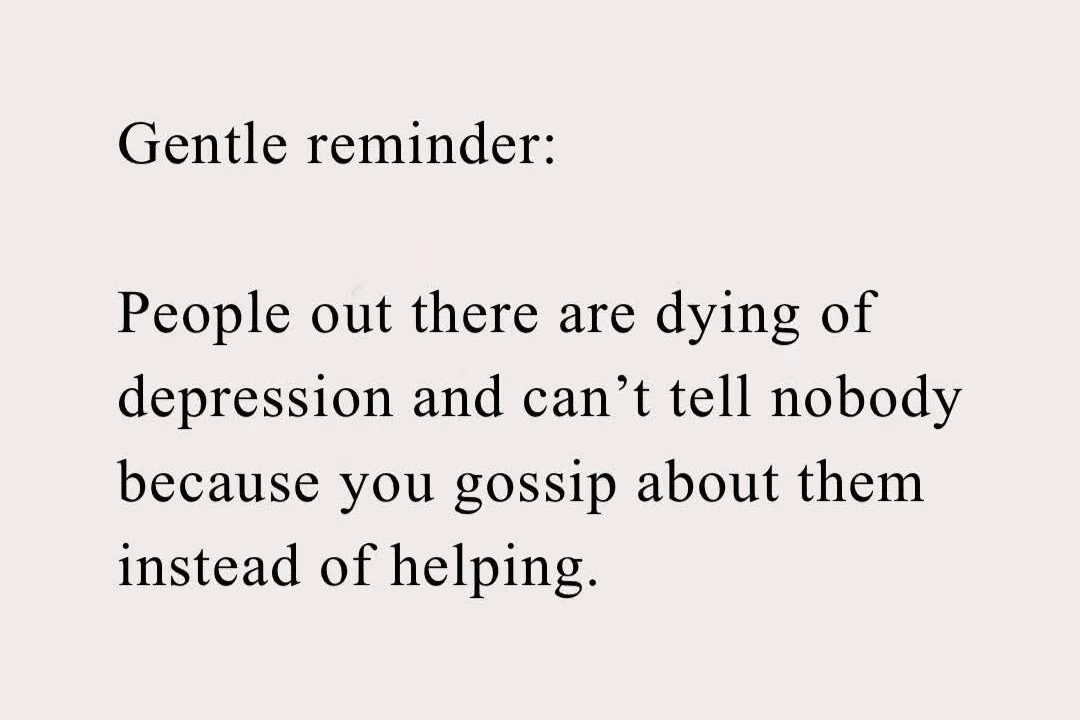
She had never brought anything particularly positive or meaningful into my life, nor given me any especially memorable experiences. Yet I had offered her the kind of friendship she herself had described as being one of the rare, genuinely fortunate things in her life: the sort of friend she felt lucky to have met.
In the end, I made the firm decision to walk away and remove her from my life completely.
Sometimes, I can't help reflecting on how, out of compassion or simply out of politeness, we pour into other people the warmth and happiness they never received in childhood. And in return, they give us the hurt and pain we never deserved.
Later, when I moved to Uppsala to study, I found that the friends and classmates I invited to my home were all exceptionally considerate and well-mannered. Even when they noticed opened packets of snacks lying around my apartment, they would never simply reach over and help themselves, even if the snacks were right beside them. If they enjoyed the food I'd cooked or the snacks I'd prepared and wanted more, they'd ask me first and wait for me to say yes before taking another serving.
有一次过万圣节这个女的来我家化妆拍照玩,在美国念大学时的每个万圣节后来都会办成普通或者派对女的模样,当时头发还没留长的我还会戴上波浪大卷的假发穿上紧身黑裙子给自己打扮成平时朋克摇滚风的自己绝对不会打扮成的样子,那年还尝试了尖尖的美甲贴片,但后来因为要练琴做家务和泡实验室不方便贴上还不到半小时就被自己暴躁地全卸了个干净。结果回去后这个女的不久就给我发社媒上刷到的模特庆祝万圣节照片帖子,明里暗里还颇有一副拿我的万圣节造型和有专业造型和摄影团队的职业模特作比较的意思。
我当时:?
One Halloween, this chick came over to my place to put on makeup and taking photos. During my university years in the United States, I eventually got into the habit of dressing up as a fairly conventional party girl for Halloween out of sarcastic reasons. Back then, before I'd grown my hair long, I'd put on a wig with big, bouncy curls and a tight black dress, transforming myself into someone who looked nothing like the punk-rock version of myself I usually presented to the world.
That year, I even tried wearing pointed press-on nails. But since they made it difficult to practice piano, do housework, and work in the lab, I became so irritated that I ripped every single one off within half an hour.
Not long after she went home, she sent me a social media post she'd come across featuring a professional model celebrating Halloween. The way she shared it seemed to carry an unmistakable implication: she was comparing my Halloween look with that of a professional model who had an entire styling and photography team behind her.
Me at the time: ?
不过好在自己从不喜欢雌竞,而且在心里想说我做不了她的工作,她也学不来我的专业,根本没有可比性。还给对方发消息回复说:嗯确实很漂亮诶~
Fortunately, I'd never been interested in competing with other women for validation or male attention. Besides, I thought to myself, I couldn't do her job, and she couldn't study my field of engineering. We were in completely different worlds, so there was no point comparing us in the first place.
I simply replied to her message, “Oh, she really is beautiful~”
过了一阵子她又给我发另一个职业模特的照片,还语气笃定地说她大腿上有块肌肉突起的地方绝对是修图没修好。我当时看了照片立马就明白她为什么会这么认为,因为这个女的身高不高,腿也很短,试穿我12厘米的高跟鞋穿上后也还是比我矮个半头。而她圈出的那块肌肉只有长在腿长的人身上才会明显得肉眼可见,自己一伸手就能摸到那块肌肉,当时又为了不伤到她脆弱的自尊心,而且知道如果惹她不高兴自己接下来的几天日子也不会好过,所以也没有选择和她直接讲实话,只是发了一句:“嗯她就是修图了”作为回复,当场就结束了这个话题。
A while later, she sent me a photo of another professional model, confidently declaring that a bulging muscle on the model's thigh was definitely a Photoshop mistake.
The moment I saw the photo, I understood why she'd come to that conclusion. This chick was rather short, with short legs. Even when she tried on my twelve-centimetre heels, she was still half a head shorter than me. The muscle she'd circled was the sort of thing that only became visibly prominent on someone with long legs. I could even reach out my hand and feel it on my legs myself.

如图所示。/ As shown in the picture.
Still, I didn't want to hurt her fragile self-esteem. I also knew that if I upset her, the next few days would probably be rather a living hell for me. So, instead of telling her what I actually thought, I simply replied, “Yeah, she must have messed up the retouching.”
And just like that, I brought the conversation to an end.
相处久了也发现对方不是那种可以分享关于自己好消息的人,比如我听说认识的人拿到了实习,或者得到了心仪的工作,第一反应是“恭喜”并为对方感到高兴,而她每次总是态度很冷淡,过一整子在她的社媒看到她认识我并不认识的其他人有在她看来比我更好一些的实习或者工作还会特地截图转发给我看,并表示觉得对方很厉害,再反观她倒是从来没有靠自己的努力得到不错的实习或者工作的。
As time went on, I also realized that she wasn't someone I could share good news with. When I heard that someone I knew had landed an internship or secured a job they really wanted, my first reaction would naturally be to congratulate them and feel genuinely happy for them. She, on the other hand, would invariably respond with indifference.
Then, sometime later, I'd find her sending me screenshots from social media of people she knew but I didn't, people who, in her eyes, had landed better internships or jobs than I had. She would go out of her way to share these posts with me and comment on how impressive those people were.
Meanwhile, she herself had never managed to secure a decent internship or job through her own efforts.
偶尔和这个女的妈直接或间接打交道隔着屏幕也能感受到对方傲慢的态度,在上海实习遇到恶心的男同事和男上司向母亲抱怨时母亲也是安慰我并认同我的评价,而给她发消息时她当时正好跟她妈一同出游,结果她告诉我她妈说让我不要大惊小怪的这种事情很常见。给我的感觉是完全拒绝和我共情,我心想说敢情是嘴没欠到你女儿身上去,不过按过往经历来看也不可能会有男的对你女儿嘴欠。后来也自己分析说因为母亲是在学校工作,身处的环境和接触的人都比较单纯,同事也多是一些做事讲话有分寸的知识分子,而这个女的的爸妈都是在三教九流聚集的乌烟瘴气的娱乐圈相关行业工作,所以能发表出这种言论也就不奇怪了。
Even in the occasional direct or indirect interaction I had with this woman's mother through a screen, I could sense her arrogance.
When I complained to my own mother about some disgusting male coworkers and managers I'd encountered during my internship in Shanghai, she comforted me and agreed with my assessment of their behavior. But when I messaged this woman about it, she happened to be traveling with her mother at the time. She told me that her mother had said I shouldn't make such a big deal out of it because this kind of thing was common.
I got the distinct impression that she was completely unwilling to empathize with me. I remember thinking, Well, of course you don't think it's a big deal when nobody's been running their mouth at your daughter. Although, based on my past experiences with her, I couldn't imagine many men bothering to make snide remarks to her in the first place.
Later, I tried to make sense of their attitudes. My mother works as a professor, in an environment that was relatively sheltered, surrounded by people who generally knew how to conduct themselves and communicate with some degree of tact. Most of her colleagues were well-educated professionals who understood the importance of boundaries and basic courtesy.
By contrast, both of this chick's parents worked in entertainment-related industries, where they were exposed to all kinds of people and, as I saw it, a much more chaotic social environment. Given that background, perhaps it wasn't so surprising that her mother would make a comment like that.
再回看她帮我做的一些事也就是一些认识人的往来之间的最低限度罢了,而且帮过我的次数用一只手就能数得过来,每次就帮过那么一回,种类也相当简单,换了谁都会愿意且能帮到我,甚至还能比她做得好得多,送她有发展意向的男性朋友礼物都是大几千的潮牌卫衣,而送我的则是她网购为了凑单抑或是买三送五得来的杂牌廉价项链,随手扔给我连包装都没有,而当时我自己已经在戴西太后的经典款,在国内念初中时朋友送我的生日礼物就是放在礼盒里包装得好好的银质项链了。而她对我产生的负面影响也远大于我认识的任何人,不是说她完全可以被取代,而是她从一开始就丝毫没有在我人生中出现的必要,把她从我的生活中完全剔除后我的生活质量也肉眼可见地提高非常多,一些之前反复经历承受的情绪问题也再也没出现过。而我从生活起居到学业工作,帮过她的次数不计可数,同样的问题她反复遇到也只会来找我帮忙而已,说我是单方面对她进行扶贫做慈善丝毫不夸张也不过分,因为对方从始至终都没有当和我平起平坐朋友的资格能力以及条件,到最后反而对我是一副颐指气使的态度,丝毫没有感激的情绪,还一副理所当然的样子,她对我进行的伤害完全都是有意为之,意识清醒且自我标榜能明辨善恶是非却持续性有意识地在情绪以及心理上选择伤害我和她认识的人,还要以己度人觉得别人都同她一样。
Looking back, the things she had done for me amounted to little more than the bare minimum of what people do for one another in the course of an ordinary acquaintance. I could count the number of times she'd actually helped me on one hand, and each time, it was only a single, relatively simple favor. Anyone else would have been willing and able to help me with those things, and many could have done a much better job than she did.
When it came to gifts, she'd spend several thousand yuan on designer streetwear hoodies for male friends she was interested in pursuing, but what she gave me was a cheap, no-name necklace she'd picked up while shopping online, either to meet a minimum order amount or as part of a buy-three-get-five-free deal. She simply tossed it to me without even bothering to wrap it.
By that point, I was already wearing a classic Vivienne Westwood piece. Back in middle school in China, a friend had given me a silver necklace for my birthday, beautifully presented in a proper gift box.
The negative impact she had on my life was also far greater than that of anyone else I'd ever known. It's not that she was irreplaceable; it's that there was never any reason for her to have been part of my life in the first place. After I cut her out of my life completely, my quality of life improved dramatically, to a degree that was obvious even from the outside. Some of the emotional distress I'd repeatedly experienced and endured before never resurfaced again.
Meanwhile, I'd helped her countless times with everything from everyday life to academic and career matters. Whenever she encountered the same problems repeatedly, I was still the person she'd turn to for help. Calling my role in that relationship a one-sided charitable aid program would be neither an exaggeration nor an unfair characterization.
From beginning to end, she lacked the qualifications, ability, and basic conditions necessary to be my equal as a friend. Yet, by the end, she treated me as though she had every right to order me around. She showed no gratitude whatsoever, behaving instead as if everything I'd done for her were simply what she was entitled to receive.
The hurt she inflicted on me was entirely deliberate. She was fully conscious of what she was doing and even prided herself on being able to distinguish right from wrong, yet she repeatedly and consciously chose to hurt me and others she knew on an emotional and psychological level. Worse still, she assumed everyone else operated the way she did, projecting her own motives and behavior onto other people.
DC有很多看演出的场馆,其中自己最喜欢的中型演出场馆要数The Anthem, 没有Capital One Arena规格大,但检票安检程序要快捷简单很多,地处DC房价最贵区域之一的码头附近,附近的街区也很漂亮干净整洁,每次去那看的演唱会也都令我印象深刻。大一才开学的时候被别人介绍与她认识,当时中美两国线上支付软件都没发展成熟,所以被她邀请并由她买票我用现金付了我那张票去看了生平第一次的大型演唱会,而自己从小是被母亲带去看演奏会的,后来受她的不良影响大学四年时间里本被自己喜爱的演奏会也只有在圣何塞的时候去看过一场久石让的吉卜力主题的演出,为了缓解学业生活的压力以及寻找精神刺激,记得玩得最疯的一整子一周连着去DC及DC附近看了四场演唱会和演出。当时各类倒卖贩售演出门票的网站还未出现,所以票价也不贵,内场价格也只要90美金出头,看完回去后因为内场音响效果,自己和同去的人又聋又哑了至少三天,讲什么都要靠用在演唱会上被吼哑的嗓子重复几遍,因为听力也被演出现场震耳欲聋的音效折腾到几近全无,回想起来当时现场还有父母抱着还不会走路的小孩带着隔音耳机去看演出的,想想也是心大。到了乌普萨拉念书之后各在斯德哥尔摩和维也纳看了交响乐团的演出后觉得自己还是更喜欢出入交响乐厅这类场所,演唱会也再也没去过,似乎早年从演唱会上发展得的多巴胺成瘾在找回自己自童年起就真正喜欢并享受的事物后也不治而愈了,回忆起来每次看完演唱会后回去总会因为精力不足而颓几天,无法集中精神做任何事,和自己不怎么喜欢的户外运动相反,虽然每次出门徒步划小船或者是在公寓附近的树林散心,虽然结束回家会有些疲劳,但隔天或是接下来的几周精神都会放松许多,注意力也很容易集中。记得后来有一次去The Anthem买喜欢乐队的演唱会门票,她正好也在,在售票处看到演出预告的时候看到当时名气还不小,但作品在一个不爱听说唱的人眼里都知道不能算是说唱的说唱歌手的演出,她当时就要掏钱买票,被我拦了下来,不过不久后也听说这位说唱歌手因为犯事被关进局子演出也被取消了。后来她参加抽奖活动抽中组票都要来问我去不去看,好巧不巧这些演出的场所都在美国治安非常不好的地区,而且交通费和住宿费算下来也都不便宜。当时我每次和别人出去吃饭社交后来无意和她提起时她表情都会变得嫉妒扭曲,发认识的人的照片到自己的社媒上她甚至还要嫉妒到评论挑刺,我一开始并不明白为什么,后来才发现她偶尔和别人出去社交后会带着一脸炫耀的意味在我面前提及,我才隐隐约约意识到她当时的某些行为是出于什么原因,还间接导致我后来但凡听到她带着炫耀意味地提及她和别人出去玩都会长舒一口气 。奇怪的是“朋友很多”的她每次遇到这种场合却只能叫上我一同前去,甚至有一次是据她说问了一圈的人后没有人来应才来问我的,我每次去也多半是出于担心认识的人的目的,而各种花销到最后还是要我均摊的,一次交通费还是我出的全款,遇到需要定行程酒店和工作人员打交道也全是由我来安排和沟通,怎样算对她而言我都是做到了问心无愧而且毫无亏欠的,倒是她对我的态度日渐傲慢无礼,言辞和行为都缺乏分寸感,有一次因为觉得当地治安不好而陪她去看自己并不感兴趣的演出还影响耽误到了重要的专业课考试。某次她抽中一组一个墨西哥说唱歌手的门票,到了现场一看才意识到是因为除了初中生以外根本没人会花钱看他糟烂的现场演出所以主办方才会以抽奖的形式把余票送掉。自己去看演唱会时总喜欢观察去看演出的观众的,当时在DC看演出时观众的打扮多是以金属摇滚风为主,还有一些打扮简洁文艺和极具个人风格在舞台下尽情享受演出随着音乐蹦蹦跳跳的随性同龄人,自己也会按照演出歌手的风格和演出主题挑选相应的服装并搭配妆容。而自己在应她的约之前也在网上做了搜查研究,用自己的黑唇液在脸上画上了在当时的说唱歌手中很常见的脸部刺青,去之前在演出场馆不远处的日料店吃晚饭的时候还被餐馆里用餐的中年人用惊恐的眼神盯着看。到了检票口看到其他观众时才发现自己在妆造选择上还算准确,后来演出中途在被观众挤来挤去的时候还被几个初中生盯着说“你好酷哦”,这次却轮到我露出了惊恐的眼神,因为毕竟刚听到她们不久前对着一个一看小小年纪就因为滥用药物而眼神涣散举止反常的同龄男生说“酷”,还在他不在场的时候四处询问他去哪了,俨然一副把他当作她们认识的同学中最受欢迎的那一个。排队进场的时候就发现有很多女生都一副打扮,就像有人对她们进行了简单的复制黏贴一样,自己观察下来发现她们之间也并不互相认识,当时给我的感觉就十分诡异,而其中几个还带了男友来,后来再在网上一搜发现这些女生当时其实都打扮成了那个墨西哥说唱歌手当时的女友的样子。
我:……………………………所以她们是带着自己的男朋友去看自己的理想男友?
There are plenty of live music venues in Washington, D.C., and my favorite mid-sized concert venue has always been The Anthem. It's not as large as Capital One Arena, but the ticketing and security procedures are much faster and simpler. It's located near The Wharf, one of the most expensive areas in D.C., and the surrounding neighborhood is beautiful, clean, and well-maintained. The concerts I've seen there have all left a lasting impression on me.
I first met this chick shortly after my freshman year of college began, through a mutual acquaintance. At the time, neither China nor the United States had fully developed the online payment systems we take for granted today. She invited me to a concert and bought the tickets, and I paid her back in cash for mine. It was my first rock music concert experience.
Growing up, my mother had taken me to classical music concerts, and I'd always loved them. Yet, partly because of this woman's negative influence, during my four years of college, I attended only one classical performance that I genuinely wanted to see: a Studio Ghibli-themed concert featuring the music of Joe Hisaishi, when I was in San Jose.
At the time, I was looking for ways to relieve the stress of academic and everyday life and to find some excitement. During the wildest period I can remember, I went to four concerts and live performances in D.C. and the surrounding area in a single week.
Back then, the various ticket-resale websites and scalping platforms we have today hadn't yet appeared, so tickets were relatively affordable. Even floor tickets cost only a little over $90. After one of those shows, the sound system had left both me and the person who went with me practically deaf and hoarse for at least three days. We had to repeat everything we said several times because our voices had been screamed raw at the concert. Our hearing had also been nearly obliterated by the deafening sound levels.
Looking back, I even remember seeing parents at the venue holding babies who weren't yet old enough to walk, with noise-canceling headphones on their little heads. They certainly seemed to have nerves of steel.
After moving to Uppsala for graduate school, I attended symphony orchestra performances in both Stockholm and Vienna. I realized that I much preferred going to places like concert halls, and I haven't been to another pop concert since. It was almost as though my early addiction to the dopamine rush of live concerts had cured itself once I rediscovered the things I'd genuinely loved and enjoyed since childhood.
Looking back, I remember that after every concert, I'd return home and spend several days feeling completely drained, unable to concentrate on anything. It was quite the opposite of how I felt after outdoor activities, which I never particularly enjoyed in the first place. Even though going hiking, paddling a small boat, or taking a walk through the woods near my apartment would leave me a little tired when I got home, I'd feel much more relaxed the following day and often for weeks afterward. My ability to focus would improve, too.
I remember one time when I went to The Anthem to buy tickets for a band I liked. She happened to be there as well. While looking at the upcoming shows posted at the box office, she spotted a performance by a rapper who was still fairly well-known at the time. Even someone like me, who barely listened to rap, could tell that his music hardly qualified as rap at all. Yet she immediately reached for her wallet to buy tickets. I stopped her, but not long afterward, I heard that the rapper had gotten himself arrested and that the show had been canceled.
Later, whenever she won tickets to concerts through giveaways, she'd ask me if I wanted to go with her. By an unfortunate coincidence, these shows were always in areas of the United States with particularly bad reputations for crime, and once transportation and accommodation were factored in, the trips weren't cheap, either.
At the time, whenever I casually mentioned having gone out to eat or socialize with other people, I'd notice her expression twist into something visibly jealous and resentful. If I posted photos of people I knew on social media, she'd even find something to criticize in the comments. At first, I had no idea why she behaved that way.
Only later, when she occasionally went out with other people and then brought it up in front of me with an unmistakable air of self-satisfaction, did I begin to understand what might have been behind some of her earlier behavior. It also had an unintended effect on me: whenever she later mentioned going out with someone else in that same boastful tone, I'd find myself letting out a long sigh of relief.
What I found particularly strange was that, despite supposedly having so many friends, whenever she wanted someone to accompany her to these events, I was the only person she could turn to. On one occasion, she even admitted that she'd asked everyone else she knew first and only came to me after nobody agreed to go.
Whenever I accompanied her, it was usually because I was worried about her safety. Yet, in the end, I still had to split most of the expenses with her. On one occasion, I even covered the entire transportation cost myself. Whenever the trip required booking hotels, planning itineraries, or communicating with venue staff, I was the one who handled everything.
By any reasonable standard, I'd done more than enough for her. I had a clear conscience and owed her nothing. Meanwhile, her attitude toward me grew increasingly arrogant and disrespectful, and she seemed to have little sense of appropriate boundaries in either her words or her actions. Once, I even accompanied her to a concert I had absolutely no interest in because I was worried about the safety of the area, and the trip ended up interfering with an important exam for one of my major courses.
On another occasion, she won a pair of tickets to see a Mexican rapper through a giveaway. It wasn't until we arrived at the venue that I realized why the organizers were giving away the remaining tickets in a contest: practically nobody wanted to pay to see his atrocious live performance, except perhaps middle schoolers.
Whenever I went to concerts, I liked observing the audience as much as I enjoyed the music. At the shows I attended in D.C., most people dressed in metal or rock-inspired styles. There were also young people who dressed in simple, artsy outfits or had distinctive personal styles, dancing and jumping around freely beneath the stage, completely absorbed in the music.
I also liked choosing my outfits and makeup to match the performing artist's style and the theme of the show.
Before agreeing to go to this particular concert with her, I'd researched the event online. I used my black liquid lipstick to draw fake facial tattoos on myself, a look that was fairly common among rappers at the time. Before the show, we stopped at a Japanese restaurant not far from the venue for dinner. While I was eating, several middle-aged diners stared at me with expressions of genuine alarm.
It wasn't until we reached the entrance and I saw the other concertgoers that I realized my styling choices had actually been pretty accurate. Later, while the crowd was pushing us around in the middle of the show, a few middle school girls stared at me and said, “You're so cool!”
This time, I was the one who looked at them in alarm. After all, I'd only recently heard these same girls call a male peer “cool” when he was clearly very young but already displaying the glazed eyes and erratic behavior of someone abusing drugs. Even when he wasn't around, they kept asking other people where he was, behaving as though he were the most popular boy among all the classmates they knew.
While waiting in line to enter the venue, I'd also noticed that many of the girls were dressed almost identically, as though someone had simply copied and pasted the same outfit onto each of them. From what I could tell, they didn't even know one another, which made the whole thing feel rather bizarre.
A few of them had brought their boyfriends along, too. Later, after doing some online research, I discovered that these girls had actually dressed up to resemble the Mexican rapper's girlfriend at the time.
Me: .................................... So they brought their own boyfriends to see the guy they wish were their boyfriend?

相当费解,这难道不算当众出轨?/Very confused, isn’t that cheating tho?
因为这个墨西哥说唱歌手的业务能力太差,唱的几首歌就没有一句在调上的,也不知道他发表的那些歌当时在录音棚里录完后被调音师花了多久才调好。
This Mexican rapper was so bad at his job that he couldn't sing a single line of any of his songs in tune. I could only wonder how many hours the sound engineers must have spent fixing his vocals in the studio after he recorded those tracks.
看演出前在他的社媒上看了几张照片,外貌长相十分普通,自己也出于部分看乐子以及周五课业全都完成找些活动休闲娱乐当消遣的原因才应了约。到了现场发现其实他有些不上相,结果脱离了照片看动态真人更致命(这也是我坚决反对使用约会软件的原因之一,有的人上相有的人不上相,有的人动态远不如静态,谈吐举止个人修养家教如何只能现实生活中有接触才能看出来),毕竟对方的眼神也明显看上去因为药物滥用显得涣散,说话的语调语气都带有一副极其反常的散漫和迟钝感,走动时脚步也有些拖拉。
Before the concert, I'd looked at a few photos on his social media. His appearance was fairly ordinary, and I only agreed to go partly out of curiosity and partly because I'd finished all my coursework for Friday and wanted to find something entertaining to do with my free time.
When I saw him in person, I realized that he actually looked worse in photos than he did in real life—or rather, that seeing him move and interact in person made things much worse. This is one of the reasons I'm firmly against dating apps. Some people photograph well, while others don't; some look much better in still photos than they do in motion. And you can only really assess someone's conversational skills, manners, personal character, and upbringing through actual, face-to-face interaction.
His eyes looked noticeably unfocused, as though he might have been affected by drug abuse. His tone and manner of speaking were unusually sluggish and detached, and even his steps seemed slow and dragging.
当时还因为演出体验太差而提前离场了,站在舞台后面的空间看眼前大半空的场馆只觉得滑稽,出来的时候发现门口也站满了等演出结束接小孩回家的家长,当时在门口等车准备回去的时候那个眼神涣散的受欢迎男初中生不知道什么原因(好像是在场馆内使用药物)被工作人员踢了出来,被他在门外等候的家长(大概是母亲)揪着衣服并排走,他的家长看脸色也是一副操劳疲惫的模样。
The concert was such a miserable experience that me and that chick ended up leaving early. Standing in the space behind the stage and looking out at the mostly empty venue in front of us, I couldn't help finding the whole thing absurd.
When we left, I noticed that the entrance was also crowded with parents waiting to pick up their kids after the show. As we waited outside for our ride home, I spotted that popular middle school boy with unfocused eyes. For reasons I never quite figured out—apparently, he'd been using drugs inside the venue—he'd been kicked out by the staff. His parent, presumably his mother, had been waiting outside and was now walking alongside him, gripping him by the clothing.
Judging by her face, she looked exhausted and worn down, as though she'd been carrying the weight of the world on her shoulders.
再和认识的人回忆分享这段经历也是评价说觉得荒谬诡异,自己看过最糟糕的演出之一,从观众到演出人员都相当一言难尽。
When I later recounted the experience to people I knew, they agreed that the whole thing sounded absurd and bizarre. It was easily one of the worst live performances I'd ever seen, with both the qualities of audience and the performers leaving me rather speechless.
另一次自己一个人单独去看CHVRCHES在Anthem的演出,没开场前按照习惯在吧台买了瓶啤酒配青柠片正在喝的时候,被一个老头盯上,对方一开始就莫名其妙地硬要和我搭讪并列举一些他知道关于乐队以及苏格兰语的冷知识,后来在工程学院直男接触多了自己也发现他们经常通过此类行为来吸引异性或者有发展意向对象的注意力,自己也把这种举动总结称之为“孔雀开屏”。自己当时听着就觉得有些不耐烦,只是想一个人照常静静地喝啤酒并等开场乐队演出,不怎么想搭理对方的同时并慢慢地往对方的反方向移动,终于在对方开始提出说“我年轻的时候在越南当过兵”的时候直接听懂暗示直接在观众席的人缝找了空挡钻走逃离了。任何熟悉上世纪美军在东南亚的相关历史的人都能听明白他当时的言下之意,后来和家人朋友吐槽也是直接一针见血地点破说:“傻逼胆子挺大敢在演唱会这种公共场合骂我是妓女。”后来和学校以及工作中的白人中老年男同事或者教授相处的时候也感受到了明显的差异,因为大多数情况下对方和我寒暄闲聊的时候会在开始就主动提及到他们的儿女或者孙辈,并把我放在同他们类似的位置上和我作交谈。不过后来自己连演唱会也很少再去看了。
On another occasion, I went to see CHVRCHES at The Anthem by myself. As usual, before the opening act started, I bought a bottle of beer with a lime wedge at the bar and was quietly enjoying my drink when an old man set his sights on me.
For some inexplicable reason, he insisted on striking up a conversation with me, listing random bits of trivia he knew about the band and the Scottish language. After spending more time around straight male engineering students, I'd come to realize that men often resorted to this kind of behavior to attract the attention of women they were interested in, or those they hoped to pursue romantically. I eventually came up with a name for it: peacocking.
I was already getting impatient as I listened to him. I just wanted to drink my beer in peace and wait for the opening act to come on. I wasn't particularly interested in engaging with him, so I gradually moved farther away from him. Finally, when he started saying, “I served in Vietnam when I was young,” I immediately understood the implication. I spotted a gap in the crowd and slipped through it, making my escape.
Anyone familiar with the history of the American military presence in Southeast Asia during the last century would have understood what he was getting at. When I later vented about the incident to family and friends, I called it out for what it was: “That fucking asshole had some nerve calling me a prostitute at a public event like a concert.”
Later, when interacting with middle-aged and older white male colleagues and professors at school and work, I noticed a marked difference. In most cases, when making small talk with me, they would naturally bring up their children or grandchildren early in the conversation, treating me more like someone from their own family generation than someone they might be trying to hit on.
Eventually, though, I stopped going to concerts at all.
和这个女的打交道时也多是吃喝玩乐为主,对我课业事业以及个人成长方面毫无帮助,回看大学时期令自己印象深刻的经历都是做了什么成功的课题,被导师系主任称赞专业水平或者课业拿A等,对于什么演唱会之类倒是感觉很平淡,多巴胺带来心理上的刺激只能短暂维持,是远不及事业以及学业上的成果和教授对自己专业上的认可给我带来的满足感的。当时的我平时看到有什么她兴趣专业相关的工作或实习机会会顺手转发给她,偶尔带她出去参加的一些户外活动也是一般只有当地人才会去,或者是要在私立学校交高昂的学费并且成绩优异才有机会参加的,对身心健康有益,花销却是我当时能找到的非常亲民的选择了,也从未向她收过额外费用。而她偶尔有作业在被课上的教授要求她找人帮忙做的时候“朋友挺多”的她也只会来找我,几次在吃完晚饭后还赖在我的公寓里,我出于礼节不好意思明面赶客,只是拿出当时在学的法语课的作业来做,还故意地把口语作业念得有些大声,就算这样了她还是坐在我公寓里外放刷抖音,爱标榜自己喜欢日本文化却从来都是一副完全不会读空气的样子。其实遇到的很多人都一样,标榜自己喜欢日本文化但日本人的礼让不学,周到待人不学,国际化的生意头脑不学,只会学怎样和人攀比自己消费了多少日产货或者日系商品给自己挣了多少面子,刷抖音或者其他平台的短视频都是仅为满足私欲跟风随大流,有时候还要强迫并不喜欢出镜的朋友合拍跟风,抖音上流行什么消费模式以及网络流行语是非常清楚的,但教学怎样做饭怎样穿衣打扮怎样提升自己的内容刷到了也权当没看到,就像自己之前提到过的,跟风学坏相当容易,但是学好是需要一定的决心和毅力的。
Most of my interactions with this woman revolved around eating, drinking, and having fun. She contributed absolutely nothing to my academic or professional development, or to my personal growth.
Looking back, the university experiences that left the deepest impression on me were the projects I'd successfully completed, the praise I'd received from my professors and department chair for my technical competence, and the A's I'd earned in my classes. Concerts and similar forms of entertainment, by contrast, felt rather inconsequential. The psychological rush from dopamine was only temporary, nowhere near as satisfying as academic and professional achievements or the recognition I received from professors for my expertise.
At the time, whenever I came across a job or internship opportunity related to her academic interests, I'd casually forward it to her. I also occasionally took her along to outdoor activities that were either popular mainly among locals or typically accessible only to students at private schools who paid steep tuition and maintained excellent grades. These activities were beneficial to both physical and mental health, and the options I found were among the most affordable ones available to her at the time. I never charged her anything extra for joining me.

在波多马克河上划小船。/ Kayaking on Potomac River. 🚣🏻♀️🍋
Meanwhile, whenever she had an assignment for which her professor told her to seek outside help, she would turn to me, despite supposedly having so many friends.
On several occasions, she even lingered in my apartment after we'd finished dinner. Out of politeness, I didn't feel comfortable explicitly telling her to leave, so I'd pull out the French homework I was working on at the time and get on with it. I'd even deliberately read my French speaking assignments a little louder than usual, hoping she'd take the hint. Yet she'd still sit there scrolling through TikTok with the sound playing out loud, completely oblivious to the situation. This was someone who liked to proclaim her love of Japanese culture, yet seemed utterly incapable of reading the room.
In fact, I've encountered plenty of people like this. They claim to love Japanese culture but make no effort to learn from the Japanese emphasis on courtesy, consideration for others, or their internationally minded business acumen. Instead, the only things they seem interested in copying are ways to compare how much money they've spent on Japanese mechandises and how much social status they've gained from their consumption.
When they scroll through TikTok or other short-video platforms, it's usually just to satisfy their own desires or follow whatever trend everyone else is following. Sometimes, they even pressure friends who aren't comfortable appearing on camera into making trendy videos with them.
They're perfectly up to date on the latest consumption trends and internet slang circulating on TikTok, yet when videos about learning to cook, dressing well, or improving oneself appear in their feeds, they pay no attention to it at all.
As I've said before, picking up bad habits by following the crowd is remarkably easy. Learning to do better, however, takes a certain amount of determination and perseverance.
后来在瑞典的朋友家做客提到说她跑去德国交换的那一学期时也是评价说那是我在美国八年过得最快乐生活质量最高的一个学期,成绩上去了!买菜做饭都只用做一个人的!一个人不用顾及身高问题踩点打车出门仗着自己个子高站场馆中后排看自己喜欢的歌手的演唱会!还有机会和当时其他认识的人出门社交!去DC的潮汐湖边野餐看书赏樱花!那段时间生活中最大的情绪垃圾来源没有了!整个人的皮肤都好得闪闪发光诶!当时如果交到一个男朋友那就算真正的梦幻完美学期!我对把她哄走的德国人感激不尽!
Later, while visiting a friend in Sweden, I mentioned that the semester she spent on exchange in Germany was actually the happiest semester I'd had in my eight years in the United States. My quality of life was at its absolute peak. My grades improved! I only had to grocery shop and cook for one person! I could leave at the last minute, hop in a cab, and stand toward the back of a concert venue to watch my favorite artists perform without having to worry about anyone else's height blocking her view! I even had opportunities to go out and socialize with other people I'd like to meet!
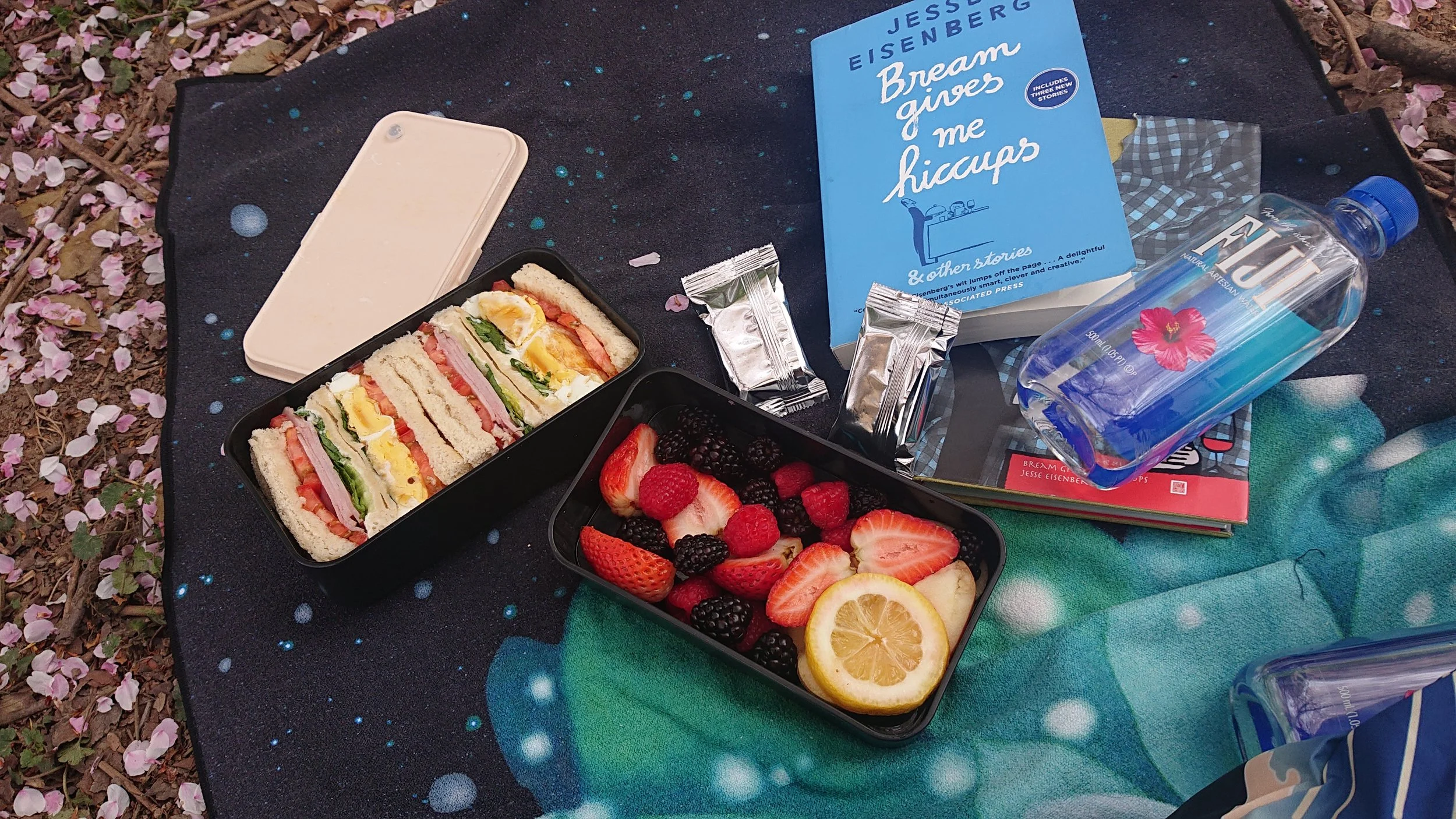


那个完美的学期!以后一定要把未来男朋友在那段时间死哪儿去了查个清楚!/ That perfect semester! Gonna investigate the hell out of my future partner where he has been during that time!
I also got to picnic by D.C.'s Tidal Basin, read books, and admire the cherry blossoms!
The biggest source of emotional stress in my everyday life was finally gone! My skin even looked so much better that I was practically glowing!
If I'd managed to get a boyfriend during that time, it would have been the genuinely perfect, dream-come-true semester.
I remain eternally grateful to the Germans who abducted her away!
压死骆驼的最后一根稻草时,疫情期间因为国内封锁,她的父母迫不得已被长时间地关在一起后受不了对方最终决定离婚。“距离产生美“这一点在任何关系中都适用,自己在上海工作时也赶上好几次疫情封城,其中一次独居居家办公,就经常听见隔壁的夫妻以各种由头吵架向对方怒吼,自己听了有时候也会盯着空白的墙面摇摇头说“如果这是婚后生活的常态的话那我这辈子不要结婚好了”。结果那段时间她的表现就变得相当奇怪,行为举止也变得有些反常不健康,甚至跑去学校的食堂打工,不为提升自己的生活质量,而仅为了给自己追的爱豆砸钱买专辑刷销量再跑去网上和别人吵架给自己和爱豆充面子。我情商再高再会察言观色也是做不到会读心的,她也从未主动告诉我她家庭状况,我最多能做到的也只是得空请她来我的公寓免费吃我做的饭菜闲聊罢了,还要照顾她的自尊心找各种借口,她反而评价我以后去北京玩可以去她家做“保姆”做饭打扫卫生以置换住宿费,我当时听到这个评价就有些被震惊到不知道如何回复,后来分享给父母听两人暴怒直接让我和对方彻底断绝联系。后来就看她语气阴阳怪气地把我平时跟她讲过的我高中后过生日只会插17岁的蜡烛用调侃的语气发在认识人的社媒动态的评论区,以示对我的不满和嘲讽。自己当时每次生日这么做也是因为在美国遇到并确定自己喜欢的人的时候正好是17岁,想一直保留这段美好的回忆,并打算大学毕业工作稳定后再找机会去找如果还是单身的他相处,并没有自己不想长大不想承担任何社会责任和义务的意思,反观自己从小就是社区里年龄偏大的小孩,每次出门有相似年纪却比我小几个月的却被家长一直要求照顾他们,或者谦让迁就他们,与其从未和我主动沟通交流问问题却无端揣测我有“彼得潘症候群”,倒不如看看现实,自己在年纪尚小的时候就是机会完全没有什么可以放开做小孩或者青少年的机会可言的,就算在和同龄人出行的时候也一直被要求带队或者照顾别人,有时在场的母亲也会动不动就把“你年纪比他们大让着他们一点”时常挂在嘴边,未成年的时候就一再被要求承担本就不属于自己的责任和义务,照顾有巨婴综合症,生活和情绪都不能自理作为独生子女的同龄人,时间久了也身心俱疲。
The final straw came during the pandemic, when lockdowns in China forced her parents to spend extended periods confined together. Unable to tolerate each other any longer, they eventually decided to get divorced.
The saying “Absence makes the heart grow fonder” applies to all kinds of relationships. When I was working in Shanghai, I also experienced several COVID lockdowns. During one of them, I was living alone and working from home, and I could frequently hear the couple next door arguing and shouting at each other over all sorts of things. Sometimes, I'd stare at the blank wall in front of me, shake my head, and mutter, “If this is what married life is like, I'd rather never get married at all.”
During that period, her behaviour became increasingly strange. Some of her actions began to seem rather abnormal and unhealthy. She even took a job in the university dinning hall, not to improve her own quality of life, but simply to earn money to buy multiple copies of albums by her favourite idols, boost their sales figures, and then go online to argue with other fans to defend both her own status and that of the celebrities she worshipped.
No matter how emotionally intelligent I might be, or how good I am at reading social cues in Asian setting, I still can't read people’s minds. She had never voluntarily told me anything about her family situation. The most I could do was invite her over to my apartment whenever I had time, let her eat my home-cooked meals for free, and chat with her. Even then, I tried to find excuses to make the invitations seem casual so that I wouldn't hurt her pride.
In return, she once suggested that if I ever visited Beijing, I could stay at her place and work as her “maid,” cooking and cleaning in exchange for accommodation.
I was so taken aback by that comment that I genuinely didn't know how to respond. When I later told my parents about it, they were furious and immediately told me to cut off all contact with her.
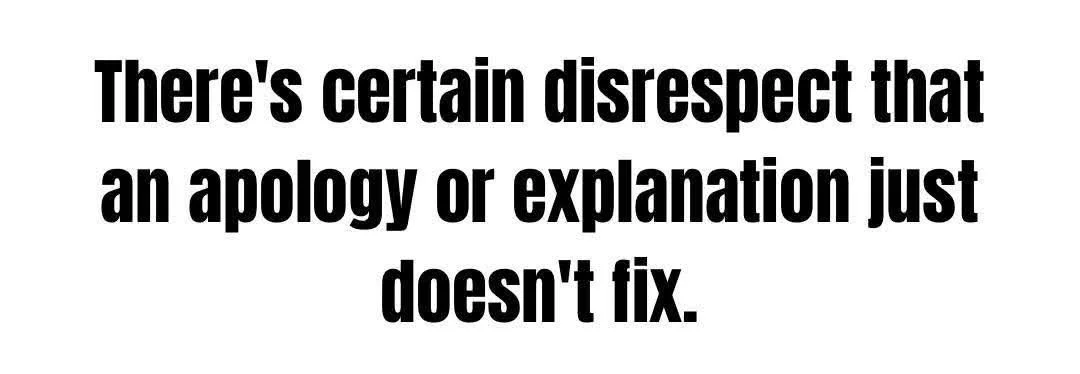
Afterward, I noticed her making sarcastic remarks on social media. She took something I'd casually told her before—that ever since high school, I'd continued putting candles marked “17” on my birthday cake—and brought it up mockingly in the comments under posts by people we knew, clearly intending to express her displeasure with me and ridicule me.
The reason I'd kept doing that was simple. I had been seventeen when I met someone in the United States whom I liked before. I wanted to preserve that beautiful memory, and I'd planned to reconnect with him after graduating from college and establishing myself in a stable job, only if he was still single. It had absolutely nothing to do with refusing to grow up or avoiding the responsibilities and obligations of adult life.
Looking back, I had actually been one of the older kids in my community since childhood. Whenever I went out with other children around my age, even those just a few months younger than me were often treated by their parents as people I was expected to look after, accommodate, or give way to. My own mother would frequently remind me, “You're older than them, so you should let them have their way.”
Rather than making baseless assumptions that I had “Peter Pan syndrome” without ever asking me about my life or trying to understand my perspective, she could have looked at the reality of my childhood.
From a very young age, I'd barely had any opportunities to simply be a child or teenager and enjoy myself without being expected to take responsibility for someone else. Even when I went out with my peers, I was often expected to lead the group or look after everyone. Sometimes, my mother would be there herself, yet she'd still constantly remind me to be the more accommodating one simply because I was older and wiser.
Before I was even an adult, I was repeatedly expected to shoulder responsibilities and obligations that were never mine to begin with. I had to look after other only children my age who displayed what I'd describe as adult-baby syndrome—people who couldn't manage their own daily lives or regulate their emotions. Over time, the burden left me physically and emotionally exhausted.
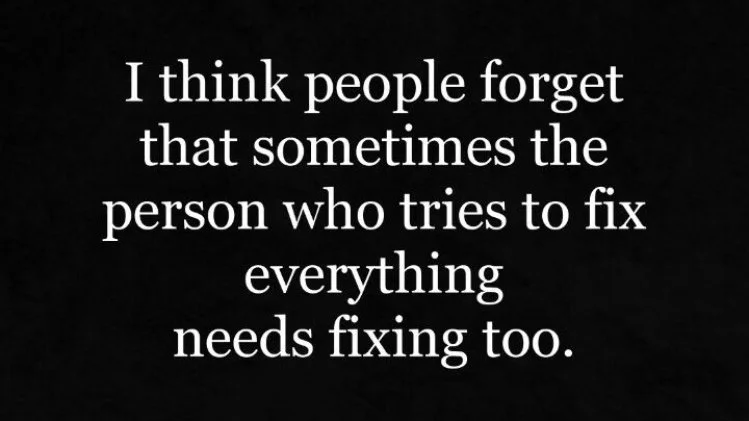
不过她肆意把我珍视的回忆随便用戏谑的语气发上网这一举动也彻底把我点着了,我这个人牙尖嘴利起来没有任何人能招架得住,结果没骂两句就看到她在社媒上发的在追星软件上给所谓的“爱豆”发她爸妈离婚了心情不好觉得天塌了的聊天消息的截图,对面的账户但凡有脑子的人一想都知道不可能是爱豆本人,也不可能会有任何回复。结果这样把我的怒火烧得更旺了,我直接表示如果你事先声明心情不好,需要朋友作伴发泄情绪,你之后怎样情绪失控骂我讽刺我我都可以接受,毕竟没有哪次她生活学业需要帮助来找我我有回绝过的,戳别人的痛处将别人珍视的回忆用讽刺性的语气发上网,以此并为由做个不良性沟通但选择哗众取宠的婊子,在陌生人面前,尤其是虚拟形象几乎完全依靠自己叙述所架构塑造的网路上,装得一副正义善良的模样,但私下里对朋友极尽糟糕,动不动就言语羞辱讽刺,让别人猜她的心思主动找她了解事情缘由,结果目的没达到事后再找借口求饶卖惨,我绝对不接受。疫情期间谁的心理状态都不好,做不到相互理解包容就算了,拒绝有效沟通的同时还无端给别人添堵,搞得我直接忍无可忍毫不犹豫地借此机会将她和另外一个臭味相投的女生的联系方式删了个干净,并用同等待遇对待她,将她评价她父亲“洗钱”的言论也用同样戏谑的口吻直接发上了网,结果反倒她扮演起了受害者,说我做人不厚道。
However, her decision to casually post my cherished memories online in such a mocking tone was the final straw. When I decide to get sharp-tongued towards someone, absolutely no one can hold their own against me. I hadn't even said much before I came across a screenshot she'd posted of a conversation on a fan app, where she'd told her so-called “idol” that her parents had gotten divorced, that she was feeling terrible, and that it felt as though her whole world had collapsed. Anyone with half a brain would realize that the account on the other end couldn't possibly belong to the idol himself, and that she wasn't going to get any response, either.
Seeing that only made me even angrier. I told her outright that if she'd told me beforehand that she was in a bad place emotionally and needed a friend to keep her company and vent to, I could have accepted her subsequently losing control of her emotions, lashing out at me, and making sarcastic remarks. After all, whenever she'd come to me for help with her personal life or academics, I'd never once turned her away.
But deliberately hitting people where it hurts, taking the memories they hold dear and posting about them online in a mocking tone, and then choosing to be a toxic, attention-seeking bitch rather than communicating properly? That was something I would never accept. She wanted to put on a show for strangers, especially online, where her entire public persona was built almost entirely on her own version of events, portraying herself as a righteous and kind-hearted person. Yet in private, she treated her friends horribly, constantly humiliating and ridiculing them verbally, expecting them to guess what was on her mind and take the initiative to approach her to find out what was wrong. When things didn't go her way, she'd come back afterward with excuses, pretend it never had happened and playing the victim to gain sympathy.
I had absolutely no tolerance for that kind of behaviour.
During the pandemic, everyone's mental health was suffering. If we couldn't understand or accommodate each other, so be it, I understand life and academic work can be overwhelming. But refusing to communicate constructively while needlessly making life more miserable for other people was beyond what I could put up with. I finally reached my limit. Without a moment's hesitation, I took the opportunity to delete every contact I had for her and another girl who was just as toxic as she was. I then gave her a taste of her own medicine, taking her remark about her father supposedly “laundering money” and posting it online in the same mocking tone she'd used against me.
And somehow, she turned around and played the victim, accusing me of being a terrible person.
其实以公司甚至资本名义进行购买或者投资抑或是拍卖的艺术品,小说,或者影视剧话剧一类的文化副产品,尤其是一些审美品味在普通人眼里都十分糟糕的所谓“作品”,都仅只有洗钱的功能罢了,对社会没有任何正面价值的同时反而会传播一些不良价值观。虽然对方的父亲在中国高考时是某省当年的理科状元,但走出校园进入社会还是比不过那些有家庭背景以及经济实力的同辈人,有些差距在求学时就能明显感受出来。听她描述她的父亲也经常和一些整容脸的网红接触打交道,安排她们拍摄所谓的当时饱受大众诟病且粗制滥造剧情荒谬的“网络大电影”,她自己也推测那些都是“洗钱行为”。
In fact, artworks, novels, films, television dramas, stage plays, and other cultural products purchased, invested in, or auctioned off under the names of companies or even capital itself often serve little more than a money-laundering function. This is especially true of certain so-called “works” whose aesthetic quality is downright appalling even by ordinary people's standards. They offer no positive value to society and instead spread questionable values.
Although her father had been the top science-track student in his province in China's National College Entrance Examination (Gaokao), once he left academia and entered the real world, he still couldn't compete with his peers who had family connections and greater financial resources. Some of these disparities were already glaringly obvious during their school years.
According to her own accounts, her father also frequently interacted with influencers who all seemed to have the same surgically altered look, arranging for them to star in so-called “online films”—a format that was heavily criticized by the public at the time for its shoddy production and absurd plots. She herself suspected that these projects were all part of money-laundering schemes.
之前在国内偶尔参加追星活动去剧场看话剧时,曾经见过这样一种场景:一些表面上看起来还算斯文、体面的中年男性,会带着年轻女性一起来看演出。那些女性有时妆容浓重,面部的医美痕迹也比较明显,穿着则相对暴露。当她们撒娇似地要求男性帮自己拍照时,对方往往表现得十分配合,甚至带着一种近乎宠溺的神情。当时的我并不完全理解这种组合背后的关系,只是觉得两个人之间的互动与他们各自呈现出来的社会形象之间,似乎存在某种微妙的反差。
Back when I was still in China, I occasionally attended fan events and went to the theater to see stage plays. On a few of those occasions, I witnessed a particular kind of scene: middle-aged men who appeared, at least on the surface, fairly refined and respectable would bring young women along to watch the performance. The women sometimes wore heavy makeup, had noticeable signs of cosmetic procedures, and dressed rather provocatively. When they asked the men to take pictures of them in a coquettish manner, the men were usually more than happy to oblige, sometimes even wearing an almost indulgent expression.
At the time, I didn't fully understand the nature of the relationships behind these pairings. I just felt there was something subtly incongruous between the way the two interacted and the respective social images they presented to the outside world.
说起来,我自己在辨别女性是否做过医美这件事上,其实也和很多理工男一样迟钝。只要不是特别明显的程度,我通常很难看出其中的端倪,有时甚至还会单纯因为觉得对方的容貌还算有几分姿色,而忍不住多看几眼。也正因如此,当时那位女性给我的印象才格外深刻:她的面部塑胶感已经明显到了一种让我本能地感到不适的程度,以至于即使是对医美痕迹并不敏感的我,也很难忽略这种不自然感。
Come to think of it, I'm actually just as oblivious as many male STEM types when it comes to telling whether a woman has had cosmetic procedures. Unless the changes are particularly obvious, I usually have a hard time spotting the signs. Sometimes, I might even find myself sneaking a few extra glances simply because I think the person is reasonably attractive.
That was precisely why that particular woman left such a deep impression on me. Her face had taken on such an unmistakably artificial, almost plastic-like appearance that I instinctively found it unsettling. It was so unnatural that even someone like me, who isn't particularly good at noticing the telltale signs of cosmetic procedures, could hardly fail to notice.
那次在话剧开场前,我像往常一样观察周围的观众。坐在我身边的一位因为追星认识的站姐,一看到那位女性举起手机自拍,便立刻开始警惕镜头的方向,尽量避免自己进入她的画面,站姐当时还把我拉到一旁,反复提醒我,千万不要出现在这类人的照片里。当时我并不完全理解她们为什么会有这么强烈的反应,后来才逐渐意识到,这种警惕未必只是出于对某个人外表或行为的不认同,更可能是一种对潜在社交风险的本能防范。在追星活动这样的公共场合,一张看似无关紧要的照片,一旦被发布到社交平台,就可能脱离拍摄者原本设想的传播范围,被转发、截图,甚至被不认识的人辨认和解读。对于长期混迹于特定社交圈的人来说,照片里出现了谁、谁和谁同时出现在某个场合,有时都可能成为他人打听关系、建立联系或传播闲话的线索。如果照片恰好被某些具有社会资源或一定影响力的人看到,事情或许会发展成不必要的攀附与纠缠;如果被与拍摄者存在复杂人际关系的人注意到,也可能招来陌生人的打探、搭讪,甚至难以预料的麻烦。当然,这并不意味着照片中的人必然拥有某种背景,也不能仅凭一张照片就推断谁与谁存在特殊关系。但对于不愿意被卷入陌生人际网络的人而言,最稳妥的办法往往就是从一开始便避免出现在不熟悉的人发布的照片里。与其等照片传播出去之后再解释自己为什么会出现在那里,不如在镜头举起的那一刻就主动避开。
Before the stage play began that day, I was observing the audience around me as I usually did. A fan-site photographer I'd gotten to know through fan activities was sitting next to me. The moment she saw that woman raise her phone to take a selfie, she immediately became alert to where the camera was pointing and tried her best to stay out of the frame. She even pulled me aside and repeatedly warned me to make absolutely sure I didn't appear in photos taken by people like her.
At the time, I didn't fully understand why she reacted so strongly. Only later did I gradually come to realize that this kind of vigilance might not simply stem from disapproval of someone's appearance or behavior. It could just as easily be an instinctive precaution against potential social risks.
At public events like fan gatherings, a seemingly insignificant photograph can take on a life of its own once it's posted on social media. It can spread far beyond the audience the photographer originally intended, being reposted, screenshotted, and even recognized or interpreted by people who don't know anyone involved.
For people who have spent a long time in particular social circles, details such as who appears in a photograph or who happens to be at the same event as someone else can sometimes become clues that others use to investigate relationships, establish connections, or spread gossip. If a photograph happens to catch the attention of someone with considerable social connections or influence, it might lead to unwanted attempts to cultivate a relationship or other forms of entanglement. If it attracts the attention of someone who has a complicated relationship with the photographer, it could also invite inquiries or unwanted approaches from strangers, or even lead to trouble that no one could have anticipated.
Of course, none of this means that the people in a photograph necessarily have any particular connections or background. Nor can we infer that two people have a special relationship simply because they appear in the same picture. But for those who have no desire to get drawn into unfamiliar social networks, the safest approach is often to avoid appearing in photographs posted by people they don't know well in the first place.
Rather than waiting until a photograph has circulated and then having to explain why you were there, it's better to step out of the frame the moment a camera goes up.
后来,随着自己经历的事情越来越多,也观察到更多类似的人际关系与社会现象,我才逐渐意识到,这种看似不太协调的组合,未必完全是偶然的。不同的人可能在不同的人生阶段,因为各自的成长经历、情感需求、审美观念和现实处境而走到一起。
Later, as I gained more life experience and observed more interpersonal dynamics and social phenomena of a similar nature, I gradually came to realize that these seemingly incongruous pairings might not be entirely coincidental. Different people may come together at different stages of their lives, shaped by their respective upbringings, emotional needs, aesthetic preferences, and real-life circumstances.
例如,有些男性在年轻时长期承受东亚社会普遍存在的升学竞争压力,生活轨迹主要围绕学习、考试和职业发展展开;也有人成长于家教较为严格的家庭,青春期缺乏与异性自然相处、独处和建立亲密关系的机会。在这样的成长环境中,一个人即使在学业或事业上取得了不错的成绩,也不意味着他必然拥有成熟的情感经验,或者已经建立起健康、平等的亲密关系观念。如果一个人长期缺少与异性建立真实关系的机会,他对亲密关系的理解就可能更多地来自影视作品、社会舆论、同龄人的评价,以及流行文化所塑造的想象,而不是来自充分的现实互动。
For example, some men spend much of their youth under the intense academic pressure that is widespread in East Asian societies, with their lives revolving primarily around studying, exams, and career advancement. Others grow up in families with strict parental expectations, leaving them with few opportunities during adolescence to interact naturally with girls or women, spend time alone with them, or develop intimate relationships.
Growing up in such environments, a person may achieve considerable academic or professional success without necessarily having mature emotional experience or having developed a healthy, egalitarian understanding of intimate relationships.
When someone has had few opportunities to form genuine relationships with women over an extended period, their understanding of intimacy may come largely from movies and television, public discourse, the judgments of their peers, and the fantasies shaped by popular culture, rather than from meaningful real-life interactions.
与此同时,东亚社会长期存在的某些并不健康的审美标准,也可能进一步影响人们对异性吸引力和亲密关系的理解。当年轻、精致的外表、特定的身材特征,以及某种迎合男性审美的女性形象被反复强调时,一些人便可能逐渐将这些外在特征与魅力、地位,甚至个人价值联系起来。如果一个人此前缺乏丰富的情感经验,又没有机会认真反思这些审美标准,他就可能更容易受到这类形象的吸引,并将其视为自己过去未曾获得、如今终于有机会体验的东西。
At the same time, certain unhealthy beauty standards that have long persisted in East Asian societies may further shape how people understand attraction and intimate relationships. When youthful, polished appearances, particular body types, and specific female images designed to cater to the male gaze are repeatedly emphasized, some people may gradually begin to associate these outward features with attractiveness, status, and even personal worth.
If someone has little prior romantic experience and has never had the opportunity to critically reflect on these beauty standards, they may be more susceptible to the appeal of such images, viewing them as something they were unable to experience in the past but now finally have the chance to attain.
等到进入职场、积累了一定的经济资源,或者到了人生的某个阶段,部分男性可能开始拥有更多接触不同人群和生活方式的机会。经济条件能够扩大一个人的社交选择,也可能改变他在某些关系中的议价能力。当经济资源、年龄差距、外貌吸引力和情感需求共同发挥作用时,某些关系便有可能形成。对其中一方而言,这段关系可能意味着获得陪伴、被需要的感觉,或者实现年轻时未曾体验过的情感与生活想象;对另一方而言,则可能意味着获得经济支持、社会资源、生活便利,或者其他形式的满足。当然,这并不意味着所有具有年龄差距的关系都是如此,也不能仅凭外表、穿着或两个人的互动方式,就判断他们的关系本质。真正的动机往往比旁观者所看到的复杂得多。
Once they enter the workforce, accumulate a certain level of financial resources, or reach a particular stage in life, some men may begin to have more opportunities to interact with people from different backgrounds and experience different lifestyles. Financial security can broaden a person's social options and may also change their bargaining power in certain relationships.
When financial resources, age differences, physical attraction, and emotional needs all come into play, certain relationships may take shape. For one person, the relationship might offer companionship, the feeling of being needed, or the chance to experience emotions and a lifestyle they had imagined but never experienced when they were younger. For the other, it might provide financial support, access to social connections, greater convenience in daily life, or other forms of fulfillment.
Of course, this doesn't mean that all relationships with significant age gaps follow this pattern, nor can we determine the true nature of a relationship simply from people's appearances, clothing, or the way they interact with each other. The motivations behind such relationships are often far more complicated than they appear to an outside observer.
我后来逐渐明白,人与人之间的关系并不总是按照旁观者所理解的学历、职业、社会形象或生活方式来组合。一个人在公共场合表现得斯文体面,并不意味着他在亲密关系中必然拥有成熟的判断力;一个人在事业上取得成功,也不意味着他一定能够识别自己的情感需求,或理解自己究竟在寻找什么。同样,一个人看起来符合某种刻板印象,也不代表我们就能准确判断她的性格、经历和关系动机。
Over time, I gradually came to understand that relationships between people don't always form along the lines of educational background, profession, social image, or lifestyle as outsiders might expect. A person who appears refined and respectable in public doesn't necessarily exercise mature judgment in intimate relationships. Professional success doesn't necessarily mean someone can recognize their own emotional needs or understand what they're truly looking for, either. Likewise, just because someone appears to fit a particular stereotype doesn't mean we can accurately judge her personality, life experiences, or motivations for entering a relationship.
也正因为如此,我开始意识到,自己最初感到不解的,或许并不只是某些人的外表与行为之间的反差,而是人们在不同的成长环境、社会规范和现实条件下,可能形成截然不同的择偶标准与关系模式。那些曾经被压抑的需求、缺失的经验,以及后来获得的经济和社会资源,都可能参与塑造一个人的选择。理解这些形成机制,并不意味着必须认同每一种关系模式,更不意味着要为其中可能存在的不平等或利用行为开脱。它只是让我逐渐学会把个人偏好、社会环境和关系中的权力结构区分开来,不再仅仅停留于表面的惊讶或评判,而是尝试理解:究竟是什么样的经历与条件,让某些人最终选择了彼此。
For this very reason, I began to realize that what had initially puzzled me might not simply have been the contrast between certain people's appearances and behavior. It was that people growing up in different environments, shaped by different social norms and real-life circumstances, could develop vastly different preferences in partners and patterns of relationships.
Needs that had once been suppressed, experiences they had missed out on, and the financial and social resources they acquired later in life could all play a role in shaping their choices.
Understanding these underlying mechanisms doesn't mean I have to agree with every type of relationship, much less excuse any inequality or exploitation that might exist within them. It has simply taught me, little by little, to distinguish between individual preferences, social environments, and power dynamics within relationships. Rather than stopping at superficial surprise or judgment, I now try to understand what kinds of experiences and circumstances ultimately lead certain people to choose one another.
后来也因为在国内的时候一些第三方媒体以及中介对于个人数据以及隐私的滥用,深受其扰,遂把社交软件都删了个干净,保留的从大学时用到现在的软件也只有声破天一个,所以早就和当时的许多人都彻底断了联系,但我也乐得清静,回想大学那几年和身边一些人相处的自己,简直就像是得了斯德哥尔摩综合症一样,不怎么爱社交的自己主要为了求得自己的清静对一些垃圾败类盲目忠诚反而严重约束了自己的个人发展。而脱离了对我有负面影响的人事物的环境后自己也像被解救后的斯德哥尔摩综合症的受害者一,因为不再处于持续的胁迫或控制之下,对加害者的情感依赖感直线下降,逐渐恢复理性判断。在写这篇博客的时候收到领英的消息推送说这个女的大概是因为手欠查看了我的档案的访问记录,结果我当即就把在所有社交平台上能找到的她的账号全都屏蔽了个干净,还和朋友说幸亏你不用某个软件,在一些应用上也没加我,我也想象得到她会对我以及我认识的人仅凭几张社交媒体上的照片就能作出怎样子虚乌有的负面评价。后来还和妈妈以及朋友形容说,那感觉就跟看到一条沾满了屎的活蛆冲你拱过来了一样。
Later, while I was still in China, I became so fed up with third-party media outlets and intermediaries abusing people's personal data and privacy that I deleted every social media app I had. The only one I kept, which I'd been using since college, was Spotify. As a result, I'd already completely lost touch with most of the people I'd known back then. But honestly, I was more than happy to enjoy the peace and quiet.
Looking back at how I interacted with certain people during my college years, I sometimes feel as though I'd developed a kind of Stockholm syndrome. As someone who never particularly enjoyed socializing in the first place, I had blindly remain loyal to some truly awful people, largely in the hope of keeping the peace and avoiding unnecessary drama. Ironically, that very loyalty ended up seriously constraining my own personal growth.
Once I removed myself from an environment filled with people and things that had a negative impact on me, I began to feel like a Stockholm syndrome victim who had finally been rescued. No longer under constant pressure or control, my emotional dependence on those who had mistreated me plummeted, and I gradually regained my ability to judge things rationally.
While I was writing this blog post, I received a LinkedIn notification suggesting that this chick had probably gotten curious and gone out of her way to check my profile. The moment I saw it, I immediately blocked every account of hers I could find across all social media platforms. I even told a friend how relieved I was that she didn't use a certain app and that we weren't connected on some other platforms, either.
I could already imagine the kinds of baseless, negative judgments she might make about me and the people I knew, based on nothing more than a few photographs on social media.
Later, when describing the feeling to my mother and friends, I put it this way: it was like seeing a living maggot covered in shit wriggling its way toward you.
注:斯德哥尔摩综合症(Stockholm Syndrome) 是一种心理现象,指受害者在长期受到胁迫、威胁或虐待的情况下,反而对加害者产生同情、依赖或情感认同。其名称源自 1973 年瑞典斯德哥尔摩的一起银行劫持事件,当时人质在几天的困境中对劫匪产生了依赖和情感。心理机制上,这种现象通常源于自我保护和情感混淆:受害者通过认同加害者来降低伤害风险,同时在恐惧与安全感之间产生矛盾情感。表现包括为加害者辩护、对外界救援保持抵触,甚至产生忠诚或感情。这一症状不仅出现在绑架事件,也可能出现在家庭暴力、虐待关系、邪教组织或高压职场中。
Note: Stockholm syndrome is a psychological phenomenon in which victims develop sympathy, emotional dependence, or a sense of identification with their abusers despite being subjected to prolonged coercion, threats, or abuse.
The term originated from a 1973 bank hostage crisis in Stockholm, Sweden, during which hostages developed feelings of dependence and emotional attachment toward their captors over several days of captivity.
Psychologically, this phenomenon is generally understood as a response involving self-preservation and emotional confusion. By identifying with their abusers, victims may attempt to reduce the risk of further harm, while developing conflicting feelings of fear and security.
Manifestations may include defending the abuser, resisting outside intervention, and even developing feelings of loyalty or affection toward them. The phenomenon is not limited to kidnapping situations; similar dynamics may also occur in domestic violence, abusive relationships, cults, and high-pressure workplace environments.
不过自己对与认识的人的父母见面一直兴趣平平,高中时有放假回去见对象的父母并且和我发消息说觉得自己男朋友的母亲不喜欢自己的觉得难过不知道要怎么办,而我当时却因为和一些人相处时发现对方极度缺乏家教,个人能力和素质又极差,甚至连对方还未见过面的父母都一起讨厌,更不用说见面了。很多时候有认识的人听说我父母要来看我,或者有机会见到我的父母,反而会莫名其妙地变得兴奋,仿佛见了我的父母就好像意味着什么似的。最典型的一个例子就是在国内工作的第一家公司在离职后发现他们还在无底线地跟踪我,获取我的私人信息,当时还在那上班的时候就意识到男上司会垂涎男员工的空姐女友,而女上司则会嫉妒女员工的生活以及对象,然后再以己度人,但凡有任何女性接近被她招进公司来的前男友合伙人,哪怕只是讨论工作上的事,都会被她用恶狠狠的眼神盯着看。面试的时候就对我谎话连篇,我问公司有没有自己的生产线,结果作为一个检测行业的咨询公司和我说“有”。还说公司的其中一个合伙人的专业水平是业内第一水平,我后来搜了她的博士论文来看,结果看了没两页就看得我直接怀疑人生,而且业内第一水平的人才绝对不可能是甘心在上海开咨询公司的水平,毕竟上海在上世纪才开放作为外贸交易的港口城市时就有“一等女人留洋,二等女人日韩新马泰,三等女人留在上海”的说法。后来时间久了也知道他们在监控我的私人社交媒体,并直接一次周六在男上司毫无边界感并不提加班费让我去加班的情况下直接在中文社媒上*转发*平时自己拿来当乐子看的,胡说八道为主的伪职场博主所发表的“同事周末打电话或者发消息问工作上的事我直接说我和男朋友现在正在做爱不方便回复”的相关博文没有加任何自己原创的caption表示不满,并选择对他的消息不闻不问已读不回。结果没过几天男上司就直接在工作日一对一开会讨论工作上的事情的时候没头没脑地忽然冲我地来了一句“我觉得你很恶心”。
我当时心里相当清楚他为何作此评价,窃笑的同时只是觉得对方既然觉得恶心又硬要全方面窥视员工的隐私也很了不起呢!
I've never been particularly interested in meeting the parents of people I know, though. Back in high school, one person I knew went home during a school break to meet her boyfriend's parents. She later messaged me saying that she felt his mother didn't like her, and she was upset and didn't know what to do. My reaction, however, was quite different. After interacting with certain people and discovering just how poorly brought up they were, how lacking they were in personal competence and basic decency, I found myself disliking even their parents, whom I'd never met. Meeting them in person was certainly the last thing I wanted to do.
Quite often, when people I knew heard that my parents were coming to visit me, or learned that they might have an opportunity to meet them, they would become inexplicably excited, as though meeting my parents were somehow supposed to mean something special.
One of the most striking examples came from the first company I worked for in China. After I left, I discovered that they were still tracking me and obtaining my private information without any apparent limits. Even while I was still working there, I'd noticed that my male supervisor lusted after the flight-attendant girlfriend of male employee, while my female supervisor envied the lifestyles and romantic partners of female employees and projected her own feelings onto them. Any woman who approached her ex-boyfriend, who had been hired by her as a business partner, would receive a hostile glare from her—even if they were doing nothing more than discussing work.
During my interview, the company had already been lying to me about all sorts of things. I asked whether they had their own production line, and this consulting firm in the testing industry simply said, “Yes.” They also claimed that one of the company's partners was the best in the entire industry. Later, I looked up her doctoral dissertation and tried reading it, but I hadn't even made it through two pages before I was questioning her credibility. Besides, someone genuinely at the top of their field would hardly be content to run a consulting firm in Shanghai. After all, when Shanghai first opened up as a port city for foreign trade in the last century, there was a saying about women in China: “First-class women go western countries to study; second-class women go to Japan, South Korea, Singapore, Malaysia, or Thailand; third-class women stay in Shanghai.”
As time went on, I also realized that they were monitoring my private social media accounts. One Saturday, my male supervisor asked me to work overtime without even mentioning overtime pay, showing absolutely no regard for personal boundaries. In response, I reposted a post on Chinese social media by one of those fake workplace influencers whose mostly nonsensical content I usually read for entertainment. The post said something along the lines of, “When a coworker calls or messages me about work over the weekend, I just tell them I'm having sex with my boyfriend right now and too busy to respond.” I added no original caption of my own to express my dissatisfaction; I simply reposted it and then ignored my supervisor's messages, leaving them on read without replying.
Just a few days later, during a one-on-one meeting on a regular workday to discuss work matters, my male supervisor suddenly blurted out, completely out of nowhere, “I think you're disgusting.”
I knew perfectly well why he'd made that judgment. I couldn't help snickering to myself. If he found me so disgusting, it was quite an achievement that he still insisted on prying into every aspect of his employees' private lives!
更何况如果出于担心自己公司的行业机密被员工偷走卖给同行是不需要这么事无巨细地监视比自己小十多岁的年轻女员工的,“恶心”这一评价大概也是他自己投射到我身上的,他反而不觉得自己的此类举动有任何的问题。
Besides, if he was genuinely concerned about employees stealing his company's trade secrets and selling them to competitors, there would be no need to monitor every little detail of the life of a young female employee more than ten years younger than him. His description of me as “disgusting” was probably just a projection of his own feelings onto me. He, on the other hand, apparently saw absolutely nothing wrong with his own behavior.
也因此自出生起到现在都还是处女的我自那之后被不同的男男女女不停地荡羞辱,想想也觉得可笑,同时也感叹身为女性在个人贞洁观方面遭受的恶意如此之大,在倾向封建保守的文化中处女都不能当处女而是被人捕风捉影公然认作荡妇来羞辱了,简直是荒谬至极。当时因为自己去医院体检的时候身上有伤口,检验结果其中一项是白细胞过多,推测结果是有感染或者炎症,结果在毫无隐私,个人信息随意被倒卖的国内又被人直接妄下结论说是因为我私生活不检点导致的,倒把我气笑了,因为白细胞(WBC)是免疫系统的一部分,感染伤口时会聚集到受伤部位帮助对抗细菌这一点是苏教版中学教材中的知识,也便决定不再和傻逼文盲纠缠论长短了。在乌普萨拉的新公寓住了一阵子后被发了免费的HPV 筛查的广告,出于好奇便去了市中心的诊所问询,结果看了诊所内做检测的床铺设置,惊恐地问医生说等等就这一种检测方式吗?得到肯定的回答之后直接吓得和对方表示说我从未有过性生活诶。得到医生不用做筛查的答复后直接一路小跑出了诊所,去超市买晚饭的路上都在惊恐地喘气。回想在美国角膜擦伤去医院问诊的时候,因为两只眼睛一直在流泪只能勉强睁开,完全不能自己填写医院的表格,所以由在班的护士帮我填写,对方一列“最近喝酒了吗?”“最近抽烟了吗?”“最近有发生过性行为吗?”“有在用药用大麻吗?”“最近有在用什么药物吗?”“对什么过敏吗?”问题问下来结果我全都毫不犹豫地回答“没有”的时候,问到最后对方直接吃惊地抬头看了我一眼,好像很久都没有遇到生活习惯如此简单健康的人,而我也是完全没必要和医生撒谎的。不过后来在乌普萨拉和在乐队认识的法国女生聊天时,她也提起说因为自己在高中时的性经历被学校里的女生造谣并荡妇羞辱的时候回复“那我就当你是在夸我了哦!”还回敬对方是“童贞女玛利亚”,我听了再次感叹东西方文化差异,并表示如果有人这么评价我的话我反而会觉得对方是在夸我洁身自好诶。就和高中时看美剧《摩登家庭》里其中一个小孩角色被人评价“Know it all”觉得委屈并开始哭的情节觉得不解一样,向作为当地人的住家妈妈表示不解并说“万事通不算正面评价吗?东亚人很喜欢这种聪明人诶!”住家妈妈想了一下说“看字面意思我能理解你想表达什么,但这个评价是偏向有自作聪明的人的意思的。”
And so, despite having remained a virgin from birth to the present day, I found myself repeatedly subjected to slut-shaming by men and women alike. Looking back, I can't help finding the whole thing laughable. At the same time, it makes me reflect on just how much hostility women can face over their personal views on chastity. In cultures that lean toward feudal and conservative values, even a virgin can be publicly labeled and humiliated as a slut based on nothing more than speculation and baseless assumptions. The sheer absurdity of it is beyond belief.
At the time, I had gone to the hospital for a medical examination and had some wounds on my body. One of the test results showed an elevated white blood cell count, suggesting a possible infection or inflammation. In China, where privacy is practically nonexistent and personal information is casually bought and sold, people jumped to conclusions and directly attributed the result to my supposedly promiscuous private life. I was so angry that I actually laughed. White blood cells (WBCs) are part of the immune system, and they gather at sites of injury to help fight bacteria. This is basic biology taught in middle school textbooks published by the Jiangsu Education Institution. At that point, I decided there was no point wasting any more time arguing with a bunch of ignorant idiots who couldn't even be bothered to learn basic science.
After living in my new apartment in Uppsala for a while, I received an advertisement offering free HPV screening. Out of curiosity, I went to a clinic in the city center to ask about it. But when I saw how the examination beds were set up for the test, I was horrified. I asked the doctor in disbelief, “Wait, is this really the only way to do the test?” When the doctor confirmed that it was, I was so startled that I immediately explained, “But I've never been sexually active!”
After the doctor told me I didn't need to undergo the screening since I have never been sexually active, it would be unnecessary, I practically ran out of the clinic. Even on my way to the supermarket to buy dinner, I was still breathing anxiously, completely shaken by the experience.
It also reminded me of the time I went to the hospital in the United States after suffering a corneal abrasion. Both of my eyes were constantly tearing up because of the pain and scratch in my eyes, and I could barely keep them open, so I was completely unable to fill out the hospital forms myself. A nurse on duty helped me complete them instead. She went down the list of questions: “Have you had any alcohol recently?” “Have you smoked recently?” “Have you had sex recently?” “Do you use medical marijuana?” “Are you taking any medications?” “Do you have any allergies?”
I answered “no” to every single question without hesitation. By the time we reached the end of the list, the nurse actually looked up at me in surprise, as though she hadn't encountered someone with such a simple and healthy lifestyle in a long time. Of course, I had absolutely no reason to lie to a medical staff in the first place.
Later, while chatting in Uppsala with a French girl I'd met through a band, she told me about how girls at her high school had spread rumours about her and slut-shamed her because of her sexual experiences. Her response had been, “I'll take that as a compliment, then!” She even fired back by calling them “Virgin Marys.”
Hearing that made me reflect once again on the cultural differences between East and West. I told her that if someone said something like that about me, I'd actually take it as a compliment for maintaining my boundaries and keeping myself chaste.
It reminded me of another instance when I was in high school and watching the American sitcom Modern Family. One of the child characters was called a “know-it-all,” felt hurt, and started crying. I couldn't understand why that would be such an insult, either. I asked my American host mother, who was familiar with the local culture, why the character had reacted that way. “Isn't being a know-it-all a compliment?” I asked. “East Asians really admire smart people!”
( •᷄ࡇ•᷅ ): https://youtube.com/shorts/_UOB9fb0u0Q?si=suEByZb5isqecXvm
My host mother thought about it for a moment before replying, “I can understand what you mean if I take the phrase literally, but it tends to describe someone who acts as though they know everything, even when they're being rather conceited.”
不过我缺乏这类经历也在这篇博客的开头自己对爱情的设想方面有所体现,在描写我和理想男友相处模式和动态时,有关性的场景和感受也是因为我根本没有此方面的经历而无法进行任何探讨和设想的,和土耳其女生朋友聊天吐槽到这点时对方听了也是哈哈大笑说“Lettie你可不能因为要写博客而去随便发展性关系哦!” 我:“安啦!我不会的!”不过也因为如此,朋友们的感情史也全都比我要丰富,搞得我每次和喜欢的男生有些什么互动都要询问几乎身边所有的朋友揣测他的举动有什么特别的含义,土耳其女生还告诉我说“男的就最喜欢你这种完美无瑕纯真小天使诶!”
我:笑死虽然我是女生但俺也一样,我喜欢的人最好也是完美无瑕毫无感情经历的纯真小天使,因为我从来不拿自己做不到的标准去要求别人!
However, my lack of experience in this area is also reflected in the way I imagined love at the beginning of this blog. When describing the dynamic and the way of interacting between myself and my ideal boyfriend, I couldn't explore or even speculate about sexual situations or feelings simply because I had absolutely no experience in that area.
When I complained about this to a Turkish girl friend, she burst out laughing and said, “Lettie, you absolutely cannot go out and have random sexual encounters just because you want to write about them in your blog!”
Me: “Relax! I'm not going to!”
Still, this also means that my friends all have much richer romantic histories than I do. Whenever I have any kind of interaction with a guy I like, I end up asking practically every friend around me to help figure out whether his behaviour means anything special.
My Turkish friend even told me, “Guys absolutely love someone like you—the perfect, innocent little angel who's never been touched by the messiness of romantic relationships!”
Me: This is hilarious. I'm a girl, but my preference is the same! The guy I would agree to date or marry had better be a perfect, innocent little angel with absolutely no romantic experience, either. After all, I never hold other people to standards that I can't meet myself!
不过经过个人观察下来部分西方人似乎会拿有性经历当作自己有性吸引力,或是受异性或同性喜欢的体现,不过在本就讨厌肢体接触动不动就要说“臭男人不要碰我”的自己眼里,一夜情或者和朋友聊天时对方提到过的“纯机械性毫无感情只为满足欲望的性行为”是完全不能被我个人接受甚至想象的事情。但虽然说自己毫无这方面的经验,但也不会随意评价指摘别人,遇到行事风格和个人性格与自己实在差异过大相处不来的当下也不会说什么,只是会选择逐渐减少联系并之后找机会彻底断联,就像和朋友聊天时说的“我不在乎你们的私生活,更不会随意评价别人这方面的事情”,“ 只要你是个好人,而且没人来碰我搞我,我对谁都没意见。”
However, from my own observations, some Westerners seem to regard having sexual experience as proof of their own sexual desirability or as evidence that they are attractive to, or wanted by, people of the opposite or same sex.
But from my perspective, as someone who dislikes physical contact in the first place and is always ready to say, “Keep your f*cking filthy, stinky male hands off me!” at the slightest provocation, one-night stands and what a friend once described in conversation as “purely mechanical sex with no emotional connection, just to satisfy physical urges” are things I simply cannot accept or even imagine for myself.
That said, although I have absolutely no experience in this area, I don't go around judging or criticizing other people for their choices, either. When I meet someone whose behaviour and personality differ so drastically from mine that we simply cannot get along, I don't make a fuss about it. I just gradually reduce contact and eventually find an opportunity to cut ties completely.
As I once put it to a friend: “I don't care about your private life, and I'm certainly not going to judge people over this kind of thing. As long as you're a decent person and nobody comes over to touch me or f*ck me, then I don’t have any problem with anyone.”
而且同有感情史的朋友聊到相关话题时他们也表示,和现任发生亲密关系的时候有时也会想到前任,我追问,那比如逛商场看电影呢,和现任一同去与前任去过的地方呢?有的朋友表示会想到他们哦,有精神洁癖的我听了表示是完全不能容忍这一点的,觉得既然喜欢现任并同意与现任交往的话,为什么还没有把前面感情的七零八碎处理干净?为什么明明人站在现任的旁边或者坐在现任的面前心里却想着或者闪回前任的影子?如果是只有嫌恶厌弃的情绪我还觉得可以接受,但如果真的觉得对方美好不可替代,为什么又要分开同别人在一起呢?这样于现任一点也不公平。但也有的表示说和新人创造新的快乐的回忆就是为了把旧人同旧人的回忆彻底抹去的,我倒是认可这种行为。
Moreover, when I discussed this topic with friends who had romantic histories of their own, they told me that sometimes, even when being intimate with their current partners, thoughts of their exes would cross their minds.
I pressed them further. What about going shopping at the mall or watching a movie together? What about visiting places with their current partners that they'd previously visited with their exes? Some friends admitted that they would think about their exes in those situations, too.
As someone with what I would call a kind of emotional and psychological fastidiousness, I found this completely intolerable. If you like your current partner and have agreed to be in a relationship with them, why haven't you sorted out all the emotional loose ends from your previous relationship? Why would you be standing beside your current partner or sitting right in front of them while thinking about your ex or having flashbacks of them?
If all you felt toward your ex was disgust and aversion, I could probably accept that. But if you genuinely still considered them wonderful and irreplaceable, why did you break up with them and get together with someone else? That hardly seems fair to your current partner.
Some friends, however, explained that creating new, happy memories with someone new in old places was precisely how they intended to erase their old partners and the memories associated with them completely. That, at least, is an approach I could agree with and wouldn’t start unreasonable arguments with them.
就像麦当娜《Like a Virgin》里所表达的感觉,遇到一个真正喜欢的人,会让你仿佛重新变回“第一次心动”的自己:明明经历过肉体上的亲密,也经历过精神和情感上的连接,却还是会因为对方的一句话、一个眼神而心跳加速,变得新鲜、敏感又害羞,像第一次喜欢一个人那样小心翼翼。不是因为过去的一切都不存在了,而是因为遇见一个真正让你心动的人,会让你重新感受到那种久违的纯真和悸动。不过终究也只会是“like” a virgin, 不会是“as” a virgin罢了,就算后来遇到再喜欢的人再娇羞也不可能重新回到真正第一次那样,听朋友们的感情经历也好,论述自己遭遇过的不顺心的友谊也好,都发现人最真挚热烈的情感都是慢慢被旧人或者劣人消磨殆尽的,后来就算再遇到更好的人,也很难拿出第一次心动或者初识时的赤忱真诚了,取而代之的是被伤害过之后小心翼翼的防备与试探。和一些年纪偏小的男生接触相处时就能明显感受得到他们要比我同龄或者年纪大的男的态度要真诚许多,后者打交道一阵子不论国籍种族家庭背景,都能感受到对方对我有所防备和隐瞒,有些还一副城府颇深的模样。就个人而言我也情愿被未经世事毫无感情经历,在相处时会有些莽撞横冲直撞的货真价实的漂亮处子伤害得遍体鳞伤,覆地垂泪,也绝对不愿意被一个情场老手温柔以待,毕竟你不知道那些让你觉得心动或者体贴的瞬间,是否是因为被他之前用在无数女生身上奏效经验证过后或出于算计也好,他仅存的一丝真情也罢,才又一次使在你身上的。未经历过感情过的处子虽没有经验,时常不会处理且处理不好感情中的细碎零落,但你好歹能确信,那些相处时的瞬间,愉快也好不愉快也罢,都是纯粹而未经修饰的,对于两个人而言都是第一次经历的不掺任何杂质的,最纯粹,最真切,最热烈的也是最新鲜的感受。
It's a feeling captured by Madonna's “Like a Virgin”: when you meet someone you genuinely fall for, it can make you feel as though you're experiencing that first rush of falling in love all over again. Even if you've already experienced physical intimacy and formed deep emotional and psychological connections with someone before, a single remark or glance from this new person can still make your heart race. You become fresh, sensitive, and shy all over again, approaching the relationship with the same tentative care you had when you first fell for someone.
It's not that everything in your past suddenly ceases to exist. Rather, meeting someone who truly makes your heart flutter can bring back that long-forgotten sense of innocence and excitement.
Still, in the end, you can only be “like” a virgin, never “as” a virgin. No matter how deeply you fall for someone later on or how bashful they make you feel, you can never truly return to the state of being in love for the very first time.
Listening to my friends recount their romantic experiences, or reflecting on the disappointing friendships I've gone through myself, I've come to realize that people's most sincere and passionate feelings are gradually worn away by people from their past, or simply by people who treat them badly. Even when they eventually meet someone better, it's difficult to offer the same wholehearted sincerity they once had when they first fell in love or first met someone they liked. In its place comes the cautious defensiveness and tentative testing of the waters that follow being hurt.
I've noticed this quite clearly when interacting with younger guys in their early 20s in Uppsala, or Sweden in general. They often seem much more sincere in their approach than men my own age or older. After spending some time dealing with the latter, regardless of their nationality, ethnicity, or family background, I can usually sense a certain guardedness and reluctance to be transparent with me. Some even give off the impression of being particularly calculating and sophisticated in their dealings with others.
Personally, I'd rather be hurt to the point of complete heartbreak, left devastated and in tears, by a genuinely innocent and pretty young man who is inexperienced, has never been in a relationship, and sometimes charges headfirst into things without thinking, than be treated with tenderness by a well-seasoned player.
After all, how can you know whether those heart-fluttering or thoughtful moments that make you feel so special are genuinely spontaneous? Perhaps he's simply repeating gestures that have already worked on countless girls before you, refined through experience and deployed calculatedly. Or perhaps they're the product of whatever minimum amount of genuine feelings he still has left. Either way, you can't be sure.
Someone who has never experienced a romantic relationship may lack experience and often struggle to handle all the little complications and emotional intricacies that come with one. But at least you can be certain that the moments you share, whether pleasant or unpleasant, are genuine, unpolished and uniquely only yours. For both people, they're experiences neither of them has had with someone else they are romantically involved before, untainted by anything or anyone else, which are the purest, most authentic, most passionate, and freshest feelings they get to experience together.
还有一次有级别比我高的员工在男上司午睡的隔壁办公室唱歌,我当时纯粹出于礼节提醒了他一句建议他不要唱了,毕竟多数人都有过工作繁忙的父母午睡休息被吵醒后冲自己发脾气的经历,结果不知被谁声情并茂绘声绘色地讲给他听了反而被男上司误解意淫为对他有意思。新入职的同事也有工作能力差但嘴却是极其零碎的,一次公司开完例会后一位工作马虎的男的跟我感叹说上司对其中一个工作能力不错女实习生很欣赏哦,我回复诶呀人家是老员工而且还是男上司的校友,不要和她比了。结果大概是一日晚上加班晚饭的时候那头碎嘴子和几位上司和合伙人添油加醋地把我的话传给他们听了,再开例会的时候男上司当中全公司的人的面阴阳怪气地说他听说有人暗示有员工受宠不是因为工作能力而是因为校友这层裙带关系。
我:……………………………这人脑子里都尽在想些什么龌龊的东西?
On another occasion, an employee senior to me was singing in the office next door while my male supervisor was taking a nap. I reminded him, purely out of courtesy, that he might want to stop singing. After all, most people have probably experienced having busy parents who, after finally getting a chance to nap, wake up because someone disturbs them and then take their frustration out on their own children. I thought it was a perfectly reasonable suggestion.
Yet somehow, someone managed to relay the incident to my supervisor in such an elaborate and emotionally charged manner that he completely misinterpreted my intentions and, in his own imagination, took it as a sign that I was interested in him romantically.
There was also a newly hired colleague who wasn't particularly competent at his job but certainly had an awful lot to say about everyone else. One day, after a regular company meeting, a male colleague who was rather careless in his work remarked to me that our supervisor seemed to speak highly of one of the female interns, who was actually quite capable.
I replied half jokingly, “Oh, come on. She's been here longer than we have, and she's also your supervisor's university alumni. Don't compare yourself to her.”
Then, one evening, while we were working late and having dinner, that same loose-lipped colleague must have embellished my words and relayed them to the supervisor and business partners.
At the next regular company meeting, my male supervisor made a sarcastic, passive-aggressive remark in front of the entire company, saying that he'd heard someone implying that an employee was favoured not because of her professional competence, but because of nepotism arising from her university or personal connection with him.
Me: .................................... What on earth goes on in this man's mind? How does he manage to turn everything into something so sordid?

只是觉得奇怪,平时一个毕业已经五六年但没事把自己的留美院校挂在嘴边当人生的最大成就时不时就提一下,甚至恨不得把自己名字都改与学校同名的人居然不懂排名对于北美院校的意义,以及当地校友以及兄弟会文化。一个成功的校友能给学校带来许多资源与机遇,而学校有时候也会举办活动给在校生社交以及拓展人脉,也不知道当时那头碎嘴子恶意曲解我的话到了什么地步才能让男上司在开会的时候专门挑来阴阳怪气地说。
I just find it strange that someone who had graduated five or six years earlier, yet still constantly brought up his alma mater in the United States as though it were the greatest achievement of his life, and who seemed so obsessed with the school that he might as well have changed his own name to match it, could fail to understand the significance of university rankings in North America, let alone the local alumni networks and fraternity culture.
Successful alumni can bring their universities substantial resources and opportunities, while universities themselves sometimes organize events to help current students socialize and expand their professional networks.
I still wonder just how maliciously that loose-lipped colleague must have twisted my words for my male supervisor to single them out and make such a pointed, passive-aggressive remark about them in front of everyone at the next meeting.
不过自己也在举办晚宴聚会的时候让来做客的朋友同学猜我最知名的高中校友是谁作为破冰话题之一的,答案是帕里斯希尔顿,只不过她只在沙漠小镇里的高中念了一年书,当时学校还是改名之前的名字,所以很少有人知道。大学的知名校友倒是以科技创业男为主,就比如安德玛创始人凯文·普朗克,谷歌联合创始人谢尔盖·布林等等。个人认为最有趣的是科密特青蛙的创作者吉姆·亨森。学校里还有他坐在长椅上和科密特谈天的雕像,疫情期间双方还都被戴上了口罩。因为受在美国教育的影响,研究生第二年被选成了系里的学生代表,其中一项责任则是联系校友参加相关活动,自己看到学校里有相关院系办的晚宴名字里带校友一次还毫不犹豫地报名去参加了。
That said, I've also used the identities of famous alumni as an icebreaker at dinner parties I've hosted, asking my friends and classmates to guess who the most famous alumnus of my high school was, as a party trick. The answer is Paris Hilton. She had attended the school in a small desert town for only one year, and it was still operating under its former name at the time, so very few people knew about that connection.
“It’s hot. Don’t pollute.” : https://youtu.be/-VuGzMFH-Hk?si=rnU-ENxUm337yUiK
My university's famous alumni, on the other hand, were predominantly male tech bros, including Kevin Plank, the founder of Under Armour, and Sergey Brin, the co-founder of Google. Personally, I think the most interesting alumnus is Jim Henson, the creator of Kermit the Frog.
聊点别的。/ I don’t want to talk about it.
There's even a statue on campus of Henson sitting on a bench chatting with Kermit. During the pandemic, both of them had masks put on them, too.
Perhaps because of my American educational background, when I was elected as a student representative for my department during the second year of my master's program, one of my responsibilities was to contact alumni and invite them to relevant events. When I came across a dinner organized by one of the university's departments that had the word alumni in its title, I signed up without a second thought.
还有几次因为工作文件和流程上的事情连续被他挑刺要求修改,改来改去到最后觉得有被对方用煤气灯效应操控的嫌疑,觉得有些不快就在工作间隙和那头碎嘴子吐槽了两句,结果被追问“煤气灯效应”是什么,结果因为出处电影中夫妻的角色设定,可能是又被他夸大其词地讲了出去,搞得一些人误以为对极其遭我厌恶的男上司有想法。
On several other occasions, my male supervisor repeatedly nitpicked my work documents and procedures, demanding revision after revision. After going back and forth with him so many times, I eventually began to suspect that he might be trying to manipulate me through gaslighting. Feeling frustrated, I vented about it briefly to that loose-lipped colleague during a break at work.
He then asked me what “gaslighting” meant. Since the term originated from a film featuring a married couple, he may have exaggerated and embellished my explanation when passing it along to others, too. As a result, some people apparently got the mistaken impression that I had feelings for the male supervisor I absolutely despised.
注:Gaslight / Gaslighting(煤气灯操纵)指一种心理操控方式,即一个人通过反复否认事实、扭曲事件或否定对方的感受,让对方逐渐怀疑自己的记忆、判断力、感知,甚至现实感。这个词来源于1938年的英国戏剧《Gas Light》及其后来的电影改编,故事中丈夫故意调暗家里的煤气灯,却否认灯光发生变化,以此让妻子怀疑自己是否出现了幻觉或精神问题。
Gaslighting is a form of psychological manipulation in which someone repeatedly denies facts, distorts events, or dismisses another person’s feelings, causing them to question their own memory, judgment, perception, or even sanity. The term comes from the 1938 British play Gas Light and its later film adaptations, in which a husband deliberately dims the gas lights in their home while denying that anything has changed, making his wife doubt her own perception of reality.
当时刚到上海时我住在浦东自家的公寓,因为小区名字比较拗口,每次打车回去都会习惯性地输入楼下便利店或者马路对面电子公司较为简单名字。结果有几次导航自动给我定位到了公寓马路对面的整形医院上,自己也没太在意,几次加班报销车费的时候被公司干杂活的女的看了去和其他人八卦,才入职时出于客套夸的各种“美女”“白富美”也在发现我对他们除了工作上的事都态度冷淡后逐渐转变成了建议我去整容夹杂着恶意伪装成玩笑的评论。我只是抬眼朝他们歪瓜裂枣一般的怪脸看看也不接话。其中黑皮吊眼离异二手比我大十岁还多的男上司看我对他毫无兴趣之后还阴阳怪气地说父亲好看女儿才会长得好看诶,明里暗里鼓动我和公司里的其他女生雌竞,我看了看他那张脸表示:第一次见有人在择偶市场上亲自把自己给说淘汰了的。一次周末去医院看自己崴伤的脚的时候正好看到楼下有整形科,因为当天下午正好没事,医保卡上还有不少钱,所以出于好奇便去挂了个号。见了医生还没进行任何交流,就觉得对方作为整形医生说话可信度绝对高,因为当时还处于疫情风控期间,在公共场合的所有人还必须要戴口罩,虽然看不见对方下半张脸的长相,但对方的皮肤光滑细腻是没有一丝毛孔的,露出来的部分五官也没看出有什么问题。结果对方听了我从几位同事那听来并复述的整容建议后满脸问号地说:啊?你听谁说的?你的脸没有问题不要动啊?
那我也只好听有多年从业经验的专家建议,而不是盲目接收成天只会在抖音上刷整容脸网红的同事的恶意咯。
When I first arrived in Shanghai from US, I lived in my family's apartment in Pudong. The name of the residential complex was rather cumbersome, so whenever I took a taxi home, I got into the habit of entering the simpler name of the convenience store downstairs or the electronics company across the street instead. On several occasions, however, the navigation system automatically pinned the destination to the plastic surgery clinic directly across the road from my apartment. I didn't think much of it at the time.
It wasn't until I had to submit taxi receipts for reimbursement after working overtime a few times that some woman at the company who handled miscellaneous administrative tasks noticed the addresses and started gossiping about them with other people.
When I first joined the company, people had been throwing around polite compliments like “beautiful lady” and “pale skinned, rich, pretty girl.” But once they realized that, apart from work-related matters, I was rather distant toward them, those compliments gradually turned into suggestions that I should get plastic surgery, mixed with malicious remarks disguised as jokes.
I'd simply raise my eyes, look at their own grotesque, misshapen faces, and say nothing.
Among them was my male supervisor, who had dark skin and upturned, narrow eyes, was divorced, and was more than ten years older than me. After realizing that I had absolutely no interest in him, he started making sarcastic remarks, saying things like, “A daughter can only be pretty if her father is good-looking.” He also kept trying, both overtly and covertly, to encourage competition between me and the other girls in the company for male attention.
I'd look at his face and think: That's the first time I've seen someone disqualify himself from the dating market with his own words.
One weekend, I went to the hospital to have my sprained ankle checked. I happened to notice that there was a plastic surgery department downstairs. Since I had nothing else to do that afternoon and still had quite a bit of money left on my health insurance card, I decided to make an appointment out of curiosity.
I hadn't even exchanged a word with the doctor before I was already convinced that, as a plastic surgeon, this person had to be highly credible. At the time, China was still under COVID restrictions, and everyone in public places was required to wear a mask. Although I couldn't see the lower half of the doctor's face, her skin was so smooth and fine that not a single pore was visible, and there seemed to be nothing wrong with the facial features I could see.
Then I repeated the plastic surgery suggestions I'd heard from several coworkers, and the doctor looked utterly bewildered.
“Huh? Who told you that? There's nothing wrong with your face. Don't touch it!”
Well, in that case, I'd much rather follow the advice of an experienced medical specialist than blindly absorb the malicious suggestions of co-workers who spend their days scrolling through TikTok and looking at influencers with surgically altered faces. ٩(ˊᗜˋ*)و ☆
后来发现一些对我敌意满满的人对我作出的一些恶劣评价也是出于对于他们自身的投射,把这一观察讲给对方听了对方还用相同的逻辑攻击我,我只好耸耸肩表示,因为我从小接受的是科学教育和培训,只是简单描述自己观察到的现象并作总结罢了,就好比你说我长得丑需要整容是因为你自己外貌欠佳生活不顺再加上内心扭曲,我说草履虫喜好温和的环境是因为观察到它们倾向于避开高浓度盐水,这两者有本质区别。而且自己也有一套处事准则,就如中文谚语所说的“人不犯我,我不犯人。” 平心而论,从小到大我从不主动攻击,只有被攻击时才会反击,有的人在我拿他们对待我的方式对待他们时反而会被冒犯到,做不到推己及人,换位思考,反而相当擅长以己度人,而我也从来只会防守,不会进攻,每次当有人以恶劣的态度对待我时,我就默认对方能承受住我牙尖嘴利的回击,往往结果却是对方觉得被严重冒犯到。
Later, I realized that some of the nasty judgments made about me by people who were openly hostile toward me were actually projections of their own insecurities and issues. When I explained this observation to one of them, they turned around and attacked me using the exact same logic. All I could do was shrug and explain that, having received a scientific education and training since childhood, I was simply describing the phenomena I'd observed and drawing conclusions from them.
It's like the difference between them saying they think I'm ugly and need plastic surgery, it is because because they're unhappy with their own appearance, dissatisfied with their life, and deeply twisted inside, and I saying, paramecia prefer mild environments because observations show that they tend to avoid highly concentrated salt solutions, not because I was in the salty solution myself. These two statements are fundamentally different in nature.
I also have my own principles for dealing with people, summed up by a Chinese proverb: “If you don't offend me, I won't offend you.”
To be fair, throughout my life, I've never been one to attack people unprovoked. I only fight back when I'm attacked first. Some people, however, actually take offense when I treat them the same way they've treated me. They seem incapable of putting themselves in someone else's shoes or extending the same consideration to others that they expect for themselves. Yet they're remarkably good at projecting their own thoughts and motives onto other people.
As for me, I only ever go on the defensive; I don't go on the offensive. Whenever someone treats me badly, I simply assume they're prepared to handle a sharp-tongued response in return. More often than not, however, they end up feeling deeply offended by what I say.
离职的时候因为公司管理不善,招的几个员工能力也不足,导致离职再加上被辞退连着好几个,而我刚入职公司就觉得不对劲,平时闲着也在招聘网上看职位准备随时跳槽,到最后经常被要求加班,连着几周在盛夏高温没有空调的实验室处理样品,短时间里完成新上手的任务还经常被挑刺,平时提出什么问题也被一贯反驳打压,每天通勤的时间都在三小时以上,非常疲惫的同时间接导致一次精神麻木到被女上司要求送样品去工业区的时候,她随口说的一句出了地铁站可以打车去目的地拿好发票回来报销,我直接在地图里输了地址也没在意,出了地铁站之后也直接听从女上司的吩咐直接在打车软件上下了单,上车之后司机一脸诧异地问我:“就八百米诶小姑娘你确定要打车吗?”才意识到自己已经被工作折磨麻木到已经失去了基本的思考能力。后来拿了收据回公司报销反而被在背后阴阳怪气说自小在国外念书就是被宠坏了,就八百米距离还要打车。后来看上司因为新老员工接连离职上司每天都气鼓鼓的,怕被再刻意针对自己自打入职起就想走也是拖着不敢直接提,打小就把居里夫人当作人生楷模的自己随便找了个借口。当时公司刚进了一台XDS仪器,因为购入清单都是英文,所以是由我经手处理的,明明是从别处买的旧仪器,男上司却一直和英文不好的员工吹牛说是全新的仪器,当时再加上另外一个项目上工程师犯了错误搞坏了样本,听几位合伙人在商讨怎么处理的时候男上司直接提议说造假,搞得我忍无可忍说随口编说自己怕XDS(谁还记得居里夫人是因为什么获得的诺贝尔奖?而我的本科专业有课程详细介绍过XDS的运作机制)仪器运作时产生的辐射借口离职了。
When I eventually left the company, its poor management had already led to several employees leaving or being fired in quick succession, partly because the people they'd hired simply weren't competent enough for their jobs. I'd sensed that something was wrong from the moment I joined, so whenever I had some free time, I'd browse job listings and prepare to jump ship at a moment's notice.
Eventually, I was constantly being asked to work overtime. For several consecutive weeks in the middle of a sweltering summer, I had to process samples in a laboratory without air conditioning. I was expected to master unfamiliar tasks and complete them within a short period, only to have my work nitpicked repeatedly. Whenever I raised questions or concerns, they were routinely dismissed or shut down. My daily commute alone took more than three hours.
I was so exhausted that, at one point, I became almost mentally numb. One day, my female supervisor asked me to deliver some samples to an industrial area. She casually told me that I could take a taxi from the subway station to the destination, keep the receipt, and claim reimbursement afterward. I simply entered the address into the map app without giving it much thought. When I got off the subway, I followed her instructions and booked a ride through the taxi app without questioning it.
Once I got into the car, the driver looked at me in disbelief and asked, “It's only 800 meters, young lady. Are you sure you want to take a taxi?”
That was when I realized I'd been so worn down by work that I'd practically lost the ability to think for myself, even about something as basic as whether it made sense to take a taxi for such a short distance.
Later, when I returned to the office with the receipt and submitted it for reimbursement, people made sarcastic remarks behind my back, saying that having studied abroad from a young age had spoiled me, and that I was so pampered I couldn't even walk 800 meters.
As I watched my supervisor grow increasingly furious every day over the steady stream of departures among both new and long-standing employees, I became afraid that I'd be deliberately targeted next. I'd wanted to leave ever since I joined, but I kept putting off telling them directly because I didn't want to provoke any further hostility.
Having regarded Marie Curie as my role model since childhood, I eventually came up with a convenient excuse to leave.
The company had just acquired an X-ray diffraction (XRD) instrument. Since the purchasing documents were all in English, I was the one who handled the paperwork. The instrument was clearly secondhand, or even being resold multiple times, purchased from another source, yet my male supervisor kept boasting to employees with limited English proficiency that it was brand-new.
Around the same time, an engineer working on another project made a mistake and ruined a sample. While listening to several business partners discuss how to handle the situation, I heard my male supervisor propose falsifying the records.
That was the final straw. I couldn't take it anymore, so I made up an excuse about being afraid of the radiation produced by the XRD instrument during operation and used it as my reason for resigning.
(Seriously, who remembers what Marie Curie won her Nobel Prizes for? And my undergraduate degree included coursework that covered the operating principles of X-ray diffraction in considerable detail.)
不过后来也听说造假的那几组数据送去客户那里被一眼看穿,送造假报告的合伙人还直接被骂了个狗血淋头。
Later, though, I heard that the fabricated data from those samples had been sent to the client and immediately spotted for what it was. The business partner who submitted the falsified report was then chewed out mercilessly.
到了乌普萨拉念书时也有出现过不到八百米的距离自己刷一辆电动滑板车的距离来骑的情况,一次时因为在学校熬了通宵清晨快到家的路上觉得自己是实在没有精力走完余程了。还有一次时麻烦同学帮忙参加自己硕士论文的访谈,想要按照惯例给对方买一杯星巴克和点心作为答谢,结果只有课间一刻钟的时间去学校附近的超市买,急急忙忙跑出教学楼的门为了赶时间又刷了一辆滑板车去超市买来并回学校递给对方。
When I was studying in Uppsala, there were also times when I scanned an electric scooter to cover a distance of less than 800 meters. On one occasion, I'd stayed up all night at school, and as I was making my way home in the early morning, I felt so exhausted that I simply didn't have the energy to walk the rest of the way.
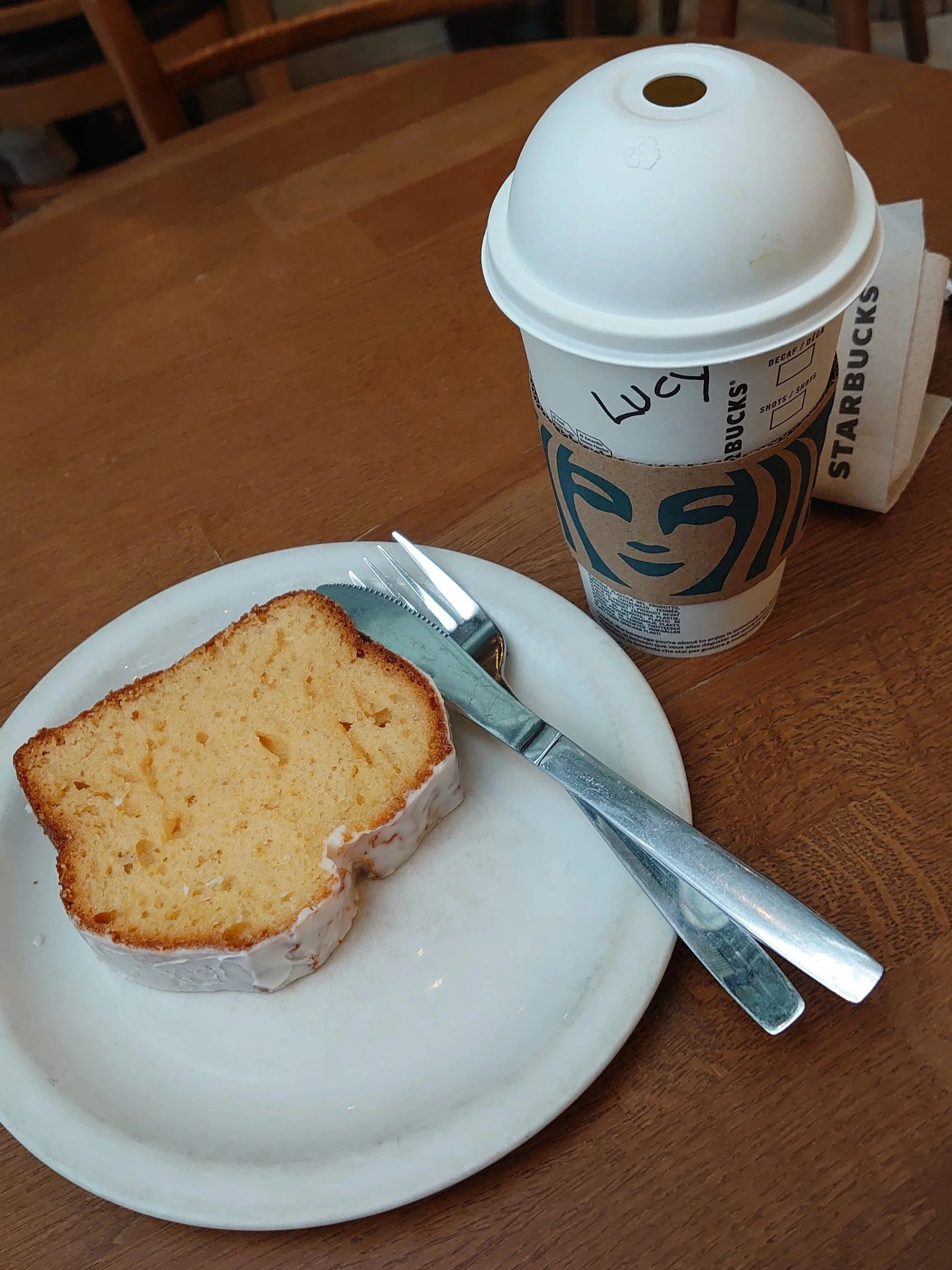
标准待遇。/ Standard treatment.
On another occasion, I asked a classmate to help me by participating in an interview for my master's thesis. As a customary thank-you gesture, I wanted to buy him a Starbucks drink and a snack. The only problem was that I had just a fifteen-minute break between classes to get to a nearby supermarket and buy everything. In a rush, I dashed out of the classroom building, scanned an electric scooter to save time, hurried to the supermarket, picked up the refreshments, and raced back to school to treat the classmate.
离职后让当时正好在上海陪我的母亲一起去营业厅要求解除相关套餐,结果他们只派了公司干杂活的那个员工,讲话讲不到一半还开始假哭和营业厅的工作人员卖惨,我因为在公司见过她平时对普通员工颐指气使发淫威的样子,就说:“请你不要再演了!”结果还哭得更惨,营业厅的工作人员见她一副营养不良个子小小的模样还劝我说:别为难人家小姑娘,我无语:她岁数比我大。
After I left the company, I took my mother, who happened to be visiting me in Shanghai at the time, to the service center to cancel the relevant service packages. Yet the company sent only that employee who handled miscellaneous administrative tasks to deal with the matter. She hadn't even finished explaining the situation before she started fake-crying and playing the victim in front of the service center staff.
Having seen how she normally threw her weight around and bullied ordinary employees at the company, I couldn't stand the performance and said, “Please stop acting!”
Naturally, she only started crying even harder.
Seeing how tiny and undernourished she looked, the service center staff tried to persuade me, saying, “Don't be so hard on the poor little girl.”
I was speechless. “She's older than I am.”
接着跑去公司找管理层去要求停止对我的跟踪以及骚扰,面相眼神猥琐的男上司见是我妈陪我一起来的,脸上却露出莫名其妙的猥琐笑容还主动提出说自己的这一套办公室月租可是五万人民币好贵的呢~
我当时听了差点两眼一黑想问说你以为你是在炫耀给谁看吗?你知不知道我父母一个月收租收多少钱?井底之蛙就五万还好意思拿出来说?丢死人了。当即就摇摇头拉母亲准备离开,觉得之前自己来这家公司工作也是十分掉价的行为,毕竟听说离职当天管理层放着手头的工作不做专门赶出了一份PPT开了一个“Lettie是个非常阴险邪恶的人”的主题会议,我现在想起来都要拍大腿狂笑,没做什么触及公司利益的事纯粹因为被出于嫉妒和恶意的窥视被人记恨到这种地步,只能耸耸肩说这也算是我个人魅力得到了集中体现罢了。
毕竟,得不到就毁掉,毁不掉就诬蔑造谣在这个世界上也不算什么新鲜事,更不是第一次发生在我身上了。也算是终于理解了东野圭吾《恶意》中的那句“有些人的恨是没有原因的,你的优秀、你的天赋、你的善良和幸福都是原罪。”
After that, I went straight to the company to demand that management stop tracking and harassing me. When my male supervisor, whose face and eyes gave off a distinctly sleazy impression, saw that my mother had accompanied me, he broke into a bizarrely lecherous smile and even volunteered, “My office suite here costs 50,000 yuan a month to rent. It's pretty expensive, you know~”

Subtitle Translation: It is so expensive! Costs a whole 20 yuan!
I nearly blacked out on the spot. I wanted to ask him, “Who exactly do you think you're trying to impress? Do you have any idea how much rental income my parents collect every month? You ignorant little frog at the bottom of a well, are you being serious right now by bragging about 50,000 yuan? How embarrassing.”
Instead, I simply shook my head, turned around, and prepared to leave with my mother. I felt embarrassing that I have worked for this company in the first.
After all, I'd heard that on the very day I resigned, the management team had put aside their actual work, specifically prepared a PowerPoint presentation, and held a meeting titled “Lettie Is an Extremely Sinister and Evil Person.”
Even now, whenever I think about it, I practically slap my thigh laughing. I'd done absolutely nothing that threatened the company's interests, yet they'd grown so resentful of me simply because their jealous, malicious scrutiny of my private life had turned into a grudge against me.
All I can do is shrug and say that, in its own way, this was a concentrated demonstration of my personal charisma.
After all, if you can't have something, destroy it; and if you can't destroy it, slander it and spread rumors about it. None of this is particularly new in this world, nor is it the first time it's happened to me.
I suppose I've finally come to understand that line from Keigo Higashino's Malice: “Some people's hatred has no reason. Your excellence, your talent, your kindness, and your happiness are all sins in their eyes.”
后来自己去上班时母亲叫了警察去给对方开保证书并签字,对方见了警察却一脸谄媚相,端茶倒水还搬出椅子给对方坐,磨磨唧唧就是不肯签字的同时最后还不忘提一句自己那“每个月五万块钱好贵的呢~”的房租。
Later, while I was at work, my mother called the police and had them come over to make the other party sign a written undertaking promising to stop the behavior. Yet when the man saw the police officers, he immediately put on an obsequious smile, serving them tea and water and even bringing out chairs for them to sit on. He dragged his feet and did everything he could to avoid signing the document, all while somehow finding the opportunity to bring up his “very expensive rent of 50,000 yuan a month~” one last time.
后来在外面遇到事情也是尽量自己解决,也是不想再把自己碰上的废物拎到工作繁忙的父母亲面前丢人。而遇到大多数中国人的父母也很难有像我父母一样包容开明的,往往一上来就要冲我拿架子立威,提醒我他们作为长辈的身份,实在令人讨厌。
After that, whenever I ran into problems out in the world, I tried to resolve them on my own as much as possible. I didn't want to keep dragging the useless people I encountered into my parents' lives and embarrassing myself in front of them when they were already busy with work.
Besides, when dealing with the parents of most Chinese people I knew, it was hard to find anyone as open-minded and understanding as my own parents. More often than not, they would immediately start throwing their title or social status around and trying to establish their authority over me, reminding me that they were the elders and that I was expected to defer to them in Eastern Asian society. I found that behavior thoroughly irritating.
而在和捷克室友的母亲见完面之后再听说要和哪个欧洲同学的父母见面那种无奈和不安感又会重新浮上心头。来瑞典第一学期刚开学时一次德国学长在他宿舍附近的公共开放区域办烧烤,还提前通知大家说他的母亲来乌普萨拉看他,也会加入下午的聚会。我当时条件反射差点一句“你妈支持中国哪个地区的独立?”没问出口,下午去烧烤聚会时见了学长的母亲向她问了好,对方全程也是笑眯眯的,气质也很典雅,语气温和地和在场的同学们聊天。也把自己在美国的经历讲给学长听,他反而有些尴尬地笑笑说可我妈从未去过中国诶。
After meeting my Czech roommate's mother, the same sense of dread and unease would resurface whenever I heard that I was going to meet the parents of another European classmate.
During the first semester of my studies in Sweden, shortly after the term began, a German classmate one year higher in the same programme organized a barbecue in outdoor area near his corridor. He let everyone know in advance that his mother was visiting him in Uppsala and would be joining us for the afternoon gathering.
My immediate, reflexive reaction was to almost blurt out, “Which region of China does your mother support becoming independent?” Fortunately, I managed to stop myself before actually asking.
That afternoon, when I arrived at the barbecue, I greeted my classmate’s mother. She spent the entire time smiling warmly, had a very elegant demeanor, and chatted with the students around her in a gentle, friendly tone.
I also told the German student about my experiences in the United States during the barbecue. He gave an awkward little smile and replied, “But my mom has never even been to China before.”
在国内工作时平时出门骑车手机抓在手里看自己不熟悉地区的街道,被污蔑成间谍用手机镜头扫上海敏感街区的街景传到国外,建议遣送去美国寻求政治避难。
When I was working in China, I'd sometimes ride my bike while holding my phone in my hand to check the map for streets in unfamiliar areas. This was twisted into an accusation that I was a spy, using my phone's camera to scan street scenes in sensitive areas of Shanghai and transmit the footage overseas. They even suggested that I should be deported to the United States to seek political asylum.
因为自己不喜欢红色,而红色又是中国象征吉祥如意的代表色之一,而作为社会主义并趋向共产主义的国家,各种公共区域以及商业大楼上总缺不了一些宣传标牌和标语。在苹果工作时住在陆家嘴附近,从公寓电梯旁的窗子探出头就能看到三件套。其中一次出门吃饭前看到上海中心大厦顶上的圆环在闪红色标语,也没在意其宣扬社会主义的内容,就等标语变蓝色的时候拍了张照发Instagram Story说:“终于把那个丑陋的红光圈给换了。”被打上反动派的标签,建议遣送去美国寻求政治避难。
I don't like the color red, even though it's one of the colors traditionally associated with good fortune and prosperity in China. And as a socialist country that aspires toward communism, China has no shortage of propaganda signs and slogans displayed throughout public spaces and on commercial buildings.
When I was working at the last company in Shanghai, I lived near Lujiazui. From the window next to the elevator in my apartment building, I could simply lean out and see the three iconic skyscrapers known as the “Lujiazui trio.”
One time, just before heading out for dinner, I noticed that the circular structure atop the Shanghai Tower was flashing red slogans. I didn't pay any attention to the socialist messaging itself. I simply waited until the slogans turned blue, took a picture, and posted it to my Instagram Story with the caption, “Finally, that ugly red halo has changed color.”
And just like that, I was labeled a reactionary and told that I should be deported to the United States to seek political asylum.
注:当时周末出去吃饭觉得无聊的时候还搜了一下陆家嘴为什么叫陆家嘴:陆家嘴得名于明代文学家、翰林院学士陆深,因为黄浦江在此形成一块突出的沙嘴,而陆深曾在此地建有宅邸和祖坟,故称“陆家嘴”,意指“陆家所在的沙嘴”,一次路过徐家汇的时候也查了一下徐家汇为什么叫徐家汇:“徐家汇”这个名字可以理解为“徐家 + 汇”,其中“徐家”与明代著名科学家、天文学家徐光启及其家族有关,而“汇”则指当地历史上河流、水道交汇的地方。徐家光启家族长期在上海生活,徐光启也葬于这一带,因此这里逐渐被称为“徐家汇”,后来成为上海著名的地名。

陆家嘴三件套。/ Lujiazui trio.
Note: One weekend, when I was out for dinner and feeling bored, I even looked up why Lujiazui was called Lujiazui in the first place.
The name dates back to the Ming dynasty and is associated with Lu Shen, a literary figure and Hanlin Academy scholar. The Huangpu River forms a protruding sandbank at this location, and since Lu Shen once had a residence and ancestral graves there, the area came to be known as Lujiazui, literally meaning “the sandbank where the Lu family lived.”
On another occasion, when I was passing through Xujiahui, I also looked up the origin of its name.
The name Xujiahui can be understood as “the Xu family's confluence.” The “Xu family” part is associated with Xu Guangqi, a renowned Ming dynasty scientist and astronomer, and his family, while hui refers to a place where rivers and waterways converge. The Xu family lived in the Shanghai area for generations, and Xu Guangqi was also buried nearby. Over time, the area came to be known as Xujiahui, which eventually became one of Shanghai's best-known place names.
自己在美国待得久了也知道背后是谁在搞鬼,上世纪的时候美国为了统一内部人民纠纷,把前苏联等共产主义国家摆在了对立面,拿意识形态上的差异制造话题,转移矛盾的焦点。我也只是觉得自己当时的境遇有些好笑,以毒攻毒周末的时候直接一家接一家去社会及共产主义国家开在上海的餐馆打卡,以表抗议以及“我不吃你那套”,从俄罗斯菜吃到朝鲜菜,回家休养的时候把家里宠物兔兔的名字由源自资本主义美国迪士尼出品的《疯狂动物城》里的朱迪(Judy)也改成了共产党员(commie),落地瑞典后在Nation工作时也喝了不少古巴可乐,不过心里也清楚,这世界上早就没了国家之间的界限,存在的只是资本之间的纷争。
Having spent so much time in the United States, I had a pretty good idea of who was pulling the strings behind the scenes. Back in the last century, the United States positioned communist countries, including the former Soviet Union, as ideological adversaries in an effort to unite its own population and manage internal divisions. By emphasizing ideological differences, it created convenient talking points that diverted attention away from domestic conflicts.
I simply found my own situation somewhat amusing. So, in an attempt to fight fire with fire, I spent my weekends going from one restaurant to another in Shanghai, checking in at establishments serving cuisine from socialist and communist countries as a way of protesting and essentially saying, “I'm not taking your bullsh*t.”
I worked my way from Russian food to North Korean cuisine. When I returned home to recover, I even renamed my sister’s pet rabbit. She had originally been named Judy, after Judy Hopps from Zootopia, a film produced by Disney, that quintessentially capitalist American corporation. I changed her name to “Commie,” short for communist.
After arriving in Sweden, I also drank quite a bit of Cuban cola while working at a student nation.
Deep down, though, I understood that national borders had long since ceased to be the real dividing lines in this world. What remained were conflicts between different pools of capital.
不过自己也乐意看资本们套着国家的外壳互相挤兑的乐子,一些利益纠纷上升到国家级别的层面就显得格外小气好笑。研究生第二年刚开学的时候去朋友们住的地方因为系里的事开会顺便小聚,自己还带了在家烤的肉桂卷去分给大家吃,结果就在他们住处的共享空间里遇到从韩国来乌普萨拉交换的两位化学系的学生,寒暄的时候对方说他们是从北京转机来的瑞典,因为俄罗斯不让韩国的飞机从他们的领土上空经过。我当时听了咬紧牙关努力压下试图上扬的嘴角硬是强迫自己别笑出声。
That said, I do enjoy watching different pools of capital use nation-states as their respective façades to take jabs at one another. When disputes over material interests escalate to the level of international politics, the pettiness of it all becomes particularly amusing.
At the beginning of the second year of my master's program, I went to my friends' place for a meeting about departmental matters, which also gave us an excuse to get together. I'd brought some homemade cinnamon rolls to share with everyone. While hanging out in the communal area of their accommodation, I happened to meet two chemistry students from South Korea who were in Uppsala on exchange.
During our small talk, they mentioned that they'd traveled to Sweden via Beijing because Russia wouldn't allow South Korean aircraft to fly through its airspace.
I clenched my teeth and struggled to keep the corners of my mouth from turning upward, forcibly suppressing the urge to burst out laughing.
在瑞典的第二个夏天去斯德哥尔摩城市博物馆参观的时候看到馆内也有相关介绍说其实早在几世纪前就有俄罗斯商人来斯德哥尔摩做生意,自己在斯德哥尔摩市中心逛农贸市场的时候也买过俄裔商人卖的鸡油菌,但看馆内文字介绍说每次遇上和俄罗斯关系紧张的时刻瑞典政府总是要让他们收了摊子甚至还要把他们赶回家的。我当时看了介绍也是咬牙硬逼自己不要在安静的馆内笑出声,第一次意识到自己印象中性格温和大度的瑞典人似乎也有如此“斤斤计较”的一面,不过就和中日关系最紧张时中国人开始回溯两国的历史关系上街游行抗议砸日系车,日本停止进口中国物美价廉的蔬果,美国在芯片战争期间对中国出口的外贸商品收高关税,中印边境起冲突时中方会在各大媒体新闻上刻意和巴基斯坦拉近关系挤兑印度一样,人在记仇并在触及自身利益时会开始事无巨细地翻旧账并付诸行动这一点上倒是很有共通之处,自己也是概莫能外。
During my second summer in Sweden, I visited the Stockholm City Museum and came across an exhibit explaining that Russian merchants had been doing business in Stockholm as far back as several centuries ago. I'd also bought chanterelle mushrooms from a Russian vendor while browsing a farmers' market in central Stockholm. Yet according to the museum's displays, whenever relations between Sweden and Russia grew tense, the Swedish government would make these merchants pack up their stalls and, at times, even send them back home.
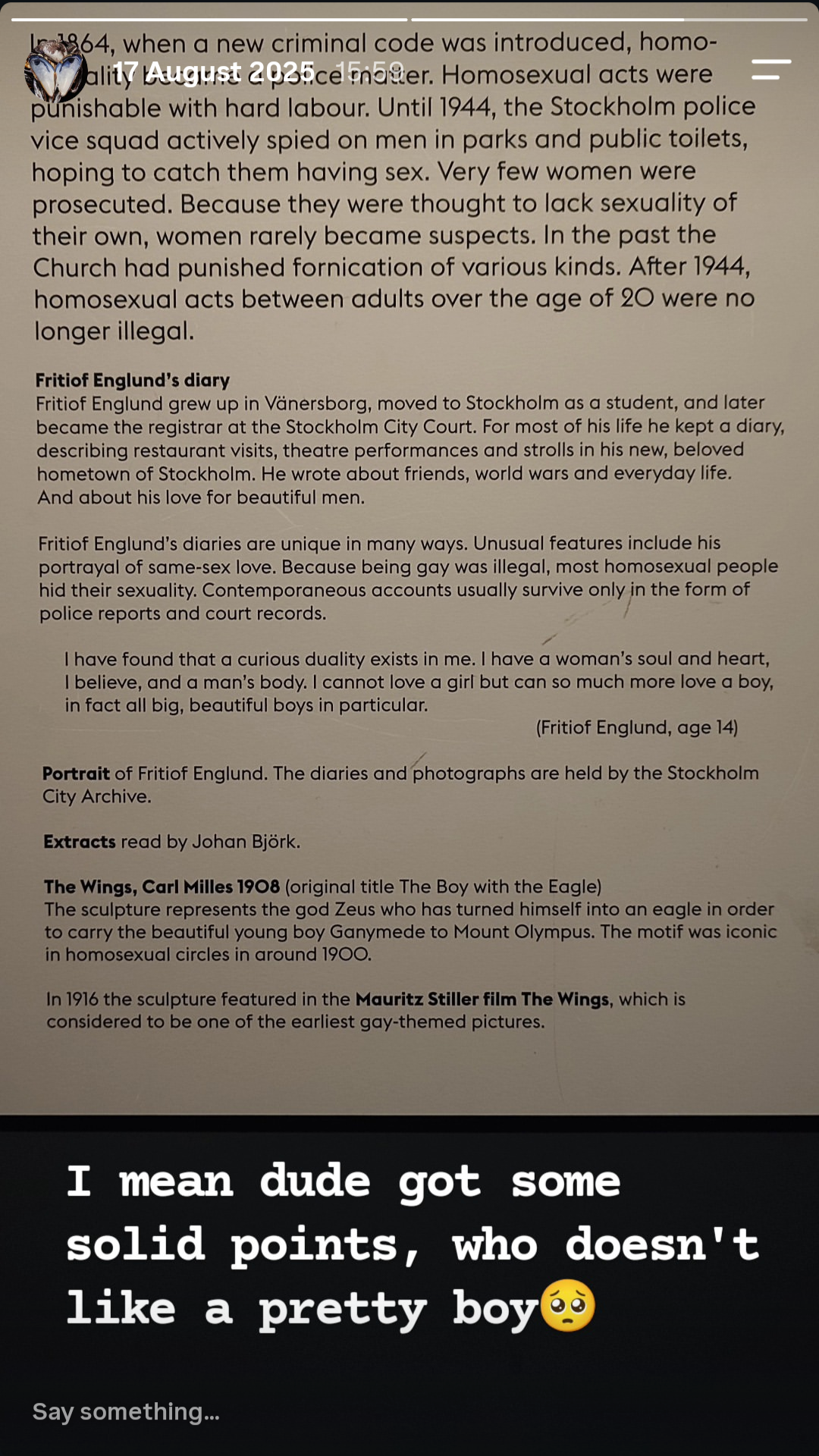
当天在馆内看到的一段自白。/ A personal confession I came across inside the museum on the same day.
Reading that account, I once again clenched my teeth and desperately tried not to burst out laughing in the quiet museum. It was the first time I'd realized that Swedes, whom I'd always thought of as gentle and magnanimous, could also be so “petty” when it came to international relations.
But then again, there are plenty of parallels elsewhere. When relations between China and Japan reached their lowest points, people in China began revisiting the history between the two countries, organizing street protests, and vandalizing Japanese branded cars. Japan stopped importing China's affordable, high-quality fruits and vegetables. During the semiconductor trade war, the United States imposed steep tariffs on Chinese exports. And when clashes broke out along the China–India border, Chinese state media made a point of emphasizing closer ties with Pakistan, seemingly to needle India.
In this respect, people everywhere seem to share a common tendency: when they hold a grudge and their own interests are at stake, they start digging through every last detail of the past and taking concrete action to settle old scores. And I'm certainly no exception.
在学校和同学交流的时候发现欧洲大多数公民去俄罗斯是需要签证的,而写这篇博客的不久前俄罗斯也正式取消了对中国公民的旅游签证,当时还以此作为论据对已经入瑞典籍的俄罗斯同学窃笑说“我比你更俄罗斯人诶!”但后来再琢磨着怎么把自己送去莫斯科晃一圈的时候发现自己平时常用的Expedia 上根本没有去俄罗斯的航班,搜索相关行程也是一片空白,还被朋友警告说:“你真打算去的话欧洲人以后不会有多信任你了!”也就作罢。
While talking with classmates at school, I discovered that most European citizens need a visa to visit Russia. Not long before I wrote this blog post, Russia had also officially abolished tourist visa requirements for Chinese citizens. At the time, I even used this as an argument to tease a Russian classmate who had already become a Swedish citizen, snickering, “I’m more Russian than you are!”
But when I later started figuring out how to get myself to Moscow for a little sightseeing, I discovered that Expedia, the booking site I usually use, had no flights to Russia listed at all. Searches for related itineraries turned up absolutely nothing. A friend also warned me, “If you really travel there, Europeans probably won’t trust you as much anymore!” So I dropped the idea immediately.
记得开在上海的朝鲜餐厅是要点菜吃的,觉得一个人点不了多少菜,就算点了没几道也吃不完,于是就叫上当时在上海出差的父亲,带上他随行的员工一起去上海长宁区古北路的平壤高丽餐厅开了间包厢吃午饭。
I remember that the North Korean restaurant in Shanghai was a place where doesn’t offer lunch or dinner deals for individual customers. I figured I couldn't order that many dishes on my own, and even if I did, I wouldn't be able to finish them. So I invited my father, who was in Shanghai on a business trip at the time, and went with him and some of his accompanying employees to the Pyongyang Koryo Restaurant on Gubei Road in Changning District, Shanghai, where we had lunch in a private dining room.
去朝鲜餐厅的路上车开在长宁区的延安路高架的时候还和父亲讨论了国内一些的腐败问题。印象当中移民去美国的大伯是自己认识最聪明谦和的人,有时候还觉得不甘以他的资历明明能更有所作为为什么却选择在美国当普通中产。听父亲讲小时候他和父亲一起念书,放学后说好一起写作业,结果成绩欠佳喜好玩乐的父亲在去大伯家的路上看到田边有泥鳅,连忙扔下书包课本下田去抓了,写作业的事情也忘得一干二净。后来在乌普萨拉和土耳其女生朋友聊到这件事的时候对方也是一副意料之中的摇摇头说:“这不是典型的父亲行为么?”看来全世界的男人——至少大部分中国男的和土耳其男的——都一副德行。我听了表示:但是我大伯也是我表亲的父亲呀!为什么他就能做到放学后好好学习并自觉做家务!
On the way to the North Korean restaurant, as we drove along the Yan'an elevated highway in Changning District, Shanghai, my father and I also got into a discussion about corruption and other problems in China.
As far as I can remember, my uncle, who immigrated to the United States, has always been the smartest and most humble person I've ever known. Sometimes, I even felt a little frustrated on his behalf, wondering why someone with his qualifications and abilities had chosen to live an ordinary middle-class life in America when he could clearly have accomplished so much more with his intelligence and capability.
Then my father told me a story about their childhood. He and my uncle had gone to school together, and one day, they agreed to do their homework together after class. But my father, who wasn't a particularly good student and preferred having fun, spotted loaches in a field on his way to my uncle's house. He immediately dropped his schoolbag and textbooks, ran into the field to catch them, and completely forgot about the homework they'd agreed to do.
Later, when I told a Turkish girl friend about this in Uppsala, she simply shook her head with an unsurprised expression and said, “Isn't that just typical dad behavior?”
Apparently, men everywhere—or at least most Chinese and Turkish men—seem to operate on the same principles.
I couldn't help pointing out, though: “But my uncle is someone’s father, too! How come he managed to study properly after school and complete his share of the housework without being told?”
在美国念书的时候几次过节去大伯家,一次大伯还带我去参观他开的公司的办公室,还提到说在美国他是没有经历过什么贪污腐败的问题,举例说一次FBI派职员来查公司的业务,到了午饭时间大伯提出要请对方吃午饭,对方直接回绝,大伯便提出要不就买个简单的三明治给对方,对方仍旧拒绝,大伯再提出说给对方在自动售货机里买一瓶水吧,对方想了想才接过去,查完业务之后就直接回去了,也没任何要收贿赂的暗示。讲给父亲听了父亲也说按大伯的性格也适合在美国发展,分享说当时大伯年轻的时候在北京的医院实习,系里进了国外进口的医疗仪器设备,负责相关业务的他的领导收回扣就能收一台仪器的钱(上世纪九十年代的几百万人民币),大伯听了都觉得害怕,后来再加上大妈一味地坚持要移民,大伯也正好有这个能力,便一起搬去了美国念博士学位。父亲还反问我:你说他领导要顺手给他个五万的回扣他敢不接?这算不识好歹顶撞上司,但他要接了后面账查起来也免不了连带送他进局子。在大伯家做客的时候也听他说如果当初留在国内,不出差错的话应该也是能坐到很高的位置,不过他的几位同学也因为贪污腐败等相关问题被查从高位跌落被送进了局子,人到中年仕途全无。
During my years studying in the United States, I visited my uncle's home several times over the holidays. On one occasion, he even took me to see the offices of the company he owns. He mentioned that he had never really encountered corruption or bribery in the United States. As an example, he told me about a time when the FBI sent an employee to investigate his company's business operations.
When lunchtime came, my uncle offered to take the investigator out for lunch, but the offer was immediately declined. He then suggested buying the investigator a simple sandwich instead, but that was rejected, too. Finally, he offered to buy the investigator a bottle of water from the vending machine. The investigator thought about it for a moment before accepting. Once the inspection was complete, the investigator simply left, without making even the slightest hint that he expected a bribe.
When I told my father this story, he agreed that the United States was probably a good place for my uncle to develop his career, given his personality. He then shared another story about my uncle's younger days, when he was doing clinical training at a hospital in Beijing.
The department had acquired some imported medical equipment from overseas, and my uncle's supervisor, who was responsible for the related business dealings, could reportedly pocket kickbacks worth the price of an entire machine for each transaction—millions of yuan in the 1990s. My uncle was frightened just hearing about it.
Eventually, with my aunt persistently insisting that they immigrate, and my uncle having the qualifications and ability to do so, they moved to the United States together to pursue his doctoral degree.
My father then asked me a rhetorical question: “If his supervisor had casually offered him a 50,000-yuan kickback, do you think he would have dared to refuse it? Refusing would have meant offending his superior and being accused of not knowing how to appreciate a favor. But if he had accepted it, he could easily have ended up being implicated and sent to prison when the accounts were audited later.”
During visits to my uncle's home, I also heard him say that if he had stayed in China, he probably could have risen to a very senior position, assuming nothing went wrong. However, several of his former classmates had been investigated over corruption and related offenses. They fell from positions of power and ended up in prison, their political careers were completely destroyed in their middle age.
和父亲去朝鲜餐馆吃饭的经历现在回想起来也是十分好笑,去之前做攻略时就查到说店内不允许拍照,之前在美国念书时也看过一个美国年轻人在中国通过旅行社跟团去了朝鲜后因为在酒店不守规矩把墙上朝鲜领导人的海报拿下来准备带回美国,被以有“敌对行为”被朝鲜方面关押新闻。结果父亲进包厢后刚坐下不久掏出他的华为手机做出要拍店内装修的样子,因为当时上海因为封城解禁刚不久,站在一旁带着口罩的朝鲜籍女服务员语气温柔甚至有些嗲地提醒说:“店里是不可以拍照的哦~”
我:爸我来之前查过她的直系老板可是金正恩你不想被核爆的话还是守点规矩不要拍了。
我爸假模假样地瞪了我一眼说:就拍!但还是放下了手中的手机立马改用我从未在他那听过的温和语气对女服务员说:给我们的菜快点上哦~
我:……………………………怎么还有两幅面孔呢?
I remember that the North Korean restaurant in Shanghai was a place where you had to order dishes to eat, there’s no lunch or dinner deal for single customers. I figured I couldn't order that many dishes on my own, and even if I did, I wouldn't be able to finish them. So I invited my father, who was in Shanghai on a business trip at the time, and went with him and a few of his accompanying employees to the Pyongyang Koryo Restaurant on Gubei Road in Changning District, Shanghai, where we had lunch in a private dining room.
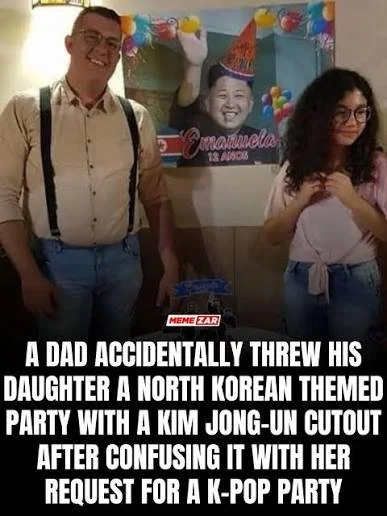
有求必应如我爸。/ No one grants my wishes quite like my dad.
Looking back, the whole experience of eating at a North Korean restaurant with my father still strikes me as hilarious. When I was researching the place beforehand, I found out that photography was prohibited inside. Back when I was studying in the United States, I'd also read news reports about a young American who had joined a tour group to North Korea through a travel agency in China. He had apparently broken the rules at his hotel by taking down a poster of a North Korean leader, intending to bring it back to the United States, and was detained by the North Korean authorities for what they called “hostile acts.”
So, shortly after my father entered the private dining room and sat down, he pulled out his Huawei phone and started looking as though he was about to take pictures of the interior. At the time, Shanghai had only recently lifted its lockdown restrictions. A North Korean waitress standing nearby, wearing a mask, gently reminded him in an almost coquettishly sweet voice, “You're not allowed to take pictures inside the restaurant, okay~?”
Me: “Dad, I looked into this before we came. Her direct boss is Kim Jong Un himself. Unless you want to get nuked, you'd better follow the rules and put the phone away.”
My father gave me a deliberately stern glare. “Let me take the damn picture!” he declared.

But he still put his phone down. Then, in a gentle tone of voice I'd never once heard him use before, he immediately turned to the waitress and said, “Please bring our dishes out quickly, okay~?”
Me: “…………………………… How can you be so two-faced?”
期间上菜的时候就听我爸和化着浅粉色眼影的朝鲜女服务员用双向奔赴的夹子音作简单的中文交流。而我每当这种对话发生的时候总希望自己是美剧《办公室》里的一个角色,现场能有镜头能让我望过去,并和我看不见的观众们交换眼神并用无语的表情和他们表示:“你们也受不了这两位了是嘛?”
为什么说是双向奔赴呢?因为第二天早上我再去餐厅拿前一天吃饭时没开好的发票时就听到同一个女服务员粗着嗓子用流利且语速有些快的朝鲜话在和其他女店员交流。
我:……………………………怎么还有两幅面孔呢?
While the dishes were being served, I could hear my father and the North Korean waitress, who was wearing pink eyeshadow, exchanging a few words in Chinese in matching, exaggeratedly sweet, cutesy voices.
Every time one of these conversations took place, I wished I could be a character in the American sitcom The Office, with a camera there to catch the moment so I could glance straight at it, exchange a knowing look with the invisible audience, and wordlessly convey: “You guys can't stand these two either, right?”
My mentality the entire time in that North Korean restaurant(⊙_⊙): https://youtu.be/5-wlmE6W_I0?si=6NdYKCzD4Mnz0_op
Why did I say they were both equally invested in this little performance? Because the next morning, when I returned to the restaurant to pick up the fāpiào (official invoice) they'd failed to issue properly the day before by myself, I heard the very same waitress speaking fluent Korean to her female co-workers in a much deeper voice, at a fairly rapid pace.
Me: “…………………………… How can you be so two-faced?”
当天点了上桌的朝鲜菜里还有在韩国也算常见菜的参鸡汤和中国东北特色菜式之一的蒸松茸,五个人吃了一千块人民币左右,在上海也算中高档餐饮的价格范畴,也被我爸吐槽说金正恩做人不实在,一顿便饭卖共产主义兄弟这么贵,记得当时还在网上刷到说开在浦东新区的分店到了周末的晚饭时间还会有朝鲜舞和乐器的表演。
Among the North Korean dishes we ordered that day were samgyetang, a ginseng chicken soup that's also common in South Korea, and steamed matsutake mushrooms, a specialty associated with northeastern China. The bill came to around 1,000 RMB for five people, which put it firmly in the mid-to-high-end dining category even by Shanghai standards. My father couldn't help jokingly complaining that Kim Jong Un wasn't being very sincere as a fellow communist, charging his comrades that much for an ordinary meal.
I also remember coming across posts online at the time saying that the restaurant's branch in Pudong New District even featured North Korean dance and instrumental performances during weekend dinner service.
注:奥托·瓦姆比尔(Otto Warmbier)是一名美国大学生,2016 年以游客身份随旅行团前往朝鲜。朝鲜方面指称他在平壤一家酒店内试图带走一张政治宣传标语,并以“敌对行为”为由对其起诉。2016 年 3 月,朝鲜法院判处其 15 年劳动教养。2017 年 6 月,朝鲜以人道主义理由将其释放回美国,但其当时已处于昏迷状态,回国不久后去世。有关其认罪过程拘押期间情况,国际社会存在不同说法。
Note: Otto Warmbier was an American college student who travelled to North Korea as a tourist with a tour group from China in 2016. North Korean authorities accused him of attempting to remove a political propaganda poster from a hotel in Pyongyang and prosecuted him for “hostile acts.” In March 2016, a North Korean court sentenced him to 15 years of hard labour. In June 2017, North Korea released him on humanitarian grounds and returned him to the United States, but he was already in a coma at the time. He died shortly after returning home. Accounts of his confession and the conditions of his detention have differed internationally.
抛开朝鲜美国两国本就不算和谐友好的关系不谈,在欧洲出行时遇到的美国游客也确实能算得上最讨人嫌的之一,年纪越小越白目,嗓门大且不守规矩,一副素质不高的样子。尤其记得去第二次去阿姆斯特丹旅行时到喜力啤酒厂参观,当时同一时间段参观的多是一些欧洲其他国家的游客,交谈时也是低声细语的,厂内工作人员介绍啤酒酿造的流程时多数人也是安安静静地听着,结果全程就听其中的三个美国人用在场所有人都听得见的美国腔英文从早上早饭吃了什么一直聊到老家的邻居姓甚名谁。我当时站在人群里白眼连连就只恨自己为什么能听得懂英文。不过出了喜力啤酒厂就再没有喝过和厂里现酿的一样爽口鲜甜的喜力啤酒,放的时间越久苦涩味就越重,后来一次试着加了点雪碧兑着喝倒挺像在厂里喝到的鲜酿口味。
Setting aside the fact that relations between North Korea and the United States have never exactly been friendly, I have to say that American tourists I've encountered while traveling around Europe really do rank among the most obnoxious. The younger they are, the more clueless and inconsiderate they seem to be—loud, unwilling to follow the rules, and generally lacking in basic manners.
I particularly remember my second trip to Amsterdam, when I visited the Heineken brewery. Most of the visitors in my time slot were tourists from other European countries. They spoke quietly among themselves, and when the staff explained the beer-brewing process, nearly everyone listened attentively in silence.
Except, of course, for three Americans.
Throughout the entire tour, these three carried on a conversation in unmistakably American-accented English, loud enough for everyone in the room to hear. Their topics ranged from what they'd eaten for breakfast that morning to the names of their neighbors back home. Standing in the crowd, I kept rolling my eyes, wishing for once in my life that I couldn't understand English.
That said, ever since leaving the Heineken brewery, I've never had another Heineken that tasted quite as refreshing, crisp, and pleasantly sweet as the freshly brewed beer served there. The longer the beer sits, the more pronounced its bitterness becomes. On one occasion, I tried mixing a little Sprite into my Heineken, and to my surprise, it tasted remarkably similar to the fresh beer I'd had at the brewery.
不过中国人中也有以政治避难为由去美国的,但也算极少数,而且情况也都比较极端。其中最出名的例子要数凤姐,本名罗玉凤,是中国早期网络走红人物,大专毕业后在上海的家乐福当收银员期间因其在相亲节目和网络平台上发表的一系列夸张、自我评价极高的言论而受到广泛关注与争议,比如自己学历不高出身不好要求找的对象却必须是名校高材生毕业。2010年前后,因为夸张的言行遭受铺天盖地的网络霸凌,她前往美国,并在当地申请政治庇护,理由是其在中国因言论和网络舆论承受巨大社会压力,认为自身权利受到侵害。此后她长期居住在美国,从事过美甲师等基层工作,并通过网络持续发声。关于其政治庇护申请的具体法律细节,外界所知有限,相关经历主要来自其本人公开表述和媒体报道。
There are also Chinese people who have gone to the United States seeking political asylum, but they are relatively rare, and their circumstances tend to be rather extreme. One of the best-known examples is Feng Jie, whose real name is Luo Yufeng, an early Chinese internet celebrity.

I don’t want to translate it, and please don’t ask me to translate it.
After graduating from a junior vocational school, she worked as a cashier at Carrefour in Shanghai. She attracted widespread attention and controversy through a series of outlandish statements on dating shows and online platforms, in which she expressed an extraordinarily high opinion of herself. For example, despite her modest educational background and humble family origins, she insisted that any man she dated had to be a top academic graduate from an elite university.
Around 2010, after being subjected to a relentless wave of online bullying over her provocative statements and behavior, she moved to the United States and applied for political asylum there. Her stated grounds were that her remarks and the public backlash against her in China had subjected her to enormous social pressure, and that she believed her rights had been violated.
She has lived in the United States for many years since then, working in service-sector jobs, including in the nail salon, while continuing to express her views online. The specific legal details of her asylum application remain largely unknown to the public; accounts of her experience are based mainly on her own public statements and media reports.
和家人聊到相关问题也是说,东亚父权社会结构下的男性,按照他们自己的叙事角度给自己定位应该算相当精明的,如果绿卡的吸引力对人这么大,好处真有他们宣传的那么多,为什么没见他们自己上赶着排队等着娶凤姐拿绿卡?
When I discussed this issue with my family, we came to the same question: in a patriarchal East Asian society, men tend to see themselves as rather shrewd, at least according to their own narratives. If a U.S. green card is really that attractive, and all the benefits are as wonderful as they claim, why don't we see these men lining up to marry Feng Jie and get their green cards?
但这个世界上也真的会有人为了绿卡委曲求全,逆来顺受。
And yet, there really are people in this world who are willing to swallow their pride and put up with all kinds of mistreatment for the sake of a green card (“Me and Mohammed are intimate” still gives me nightmares😖): https://youtu.be/Esciac6Nhm4?si=Zn4tFIz16NJxsqIi
不过查了一下突尼西亚的人均GDP 也不算高就是了。
Then again, I looked up Tunisia's GDP per capita, and it wasn't particularly high either.
TO BE CONTINUED
Disclaimer: All conversations are slightly altered based on real-life events for the purpose of adjusting colloquial expressions into formal written language, AI generative tool was used for better wording choices and translation purposes.
未经允许,禁止转载。/ Without permission, reproduction is prohibited.
All photos are shot and edited with SONY’s products.
